USS Abraham Lincoln Returns to San Diego After Record 321-Day Deployment
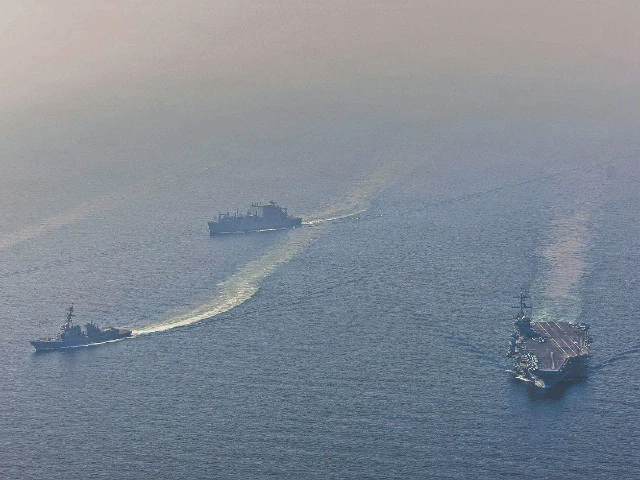
USS Abraham Lincoln returns to San Diego after a record deployment linked to the Iran conflict.
The USS Abraham Lincoln returned to its home port of San Diego on Thursday. The aircraft carrier completed a record-setting 321-day deployment that included operations linked to the US-Israeli war against Iran.
The carrier arrived at Naval Air Station North Island after spending 265 consecutive days at sea without a port visit. The period reportedly set a new Navy record.
US Defence Secretary Pete Hegseth boarded the ship at sea on Wednesday. He presented its crew with the Presidential Unit Citation, one of the US military’s highest unit honours, for its role in Operation Epic Fury.
Hegseth praised the strike group’s performance. He said it had accomplished something no other carrier strike group had achieved. He also rejected claims that the carrier had become a symbol of dysfunction or low morale.
Extended Deployment Raised Concerns Over Crew Welfare
The Lincoln carries around 5,000 sailors and Marines. It left San Diego last November for the Pacific before being redirected to the Middle East.
The change followed the launch of US and Israeli military operations against Iran on February 28.
During the deployment, media reports raised concerns about food supplies, basic necessities and crew morale. Reports also described declining mental health among personnel. Some accounts said two sailors had attempted to jump overboard.
Houthis Escalate Attacks on Saudi Arabia, Riyadh Airport Disrupted
Hegseth’s visit came amid these reports. His remarks highlighted the administration’s support for the carrier and its crew.
Iran Claims Weapons Production Has Increased
Iran’s Defence Ministry said the country’s armed forces remained equipped and ready for combat. Ministry spokesman Brigadier General Reza Talaei-Nik made the remarks in an interview broadcast by Press TV.
Talaei-Nik said weapons production had continued despite the recent conflict. He also claimed Iran had strengthened its supply chain and faced no shortage of military equipment.
According to the spokesman, weapons production during the seven months after what he called a 40-day war of aggression rose 2.5 times compared with the equivalent pre-war period.
The figures reflect Iran’s official claims. Independent verification was not provided in the supplied report.
Explosions Reported Near the Strait of Hormuz
Iranian state broadcaster IRIB reported several powerful explosions in the southern passage of the Strait of Hormuz on Thursday. It cited military sources who suggested that oil tankers may have struck naval mines.
The report said the vessels may have used routes that Tehran had not authorised. However, it did not identify the tankers or provide details about possible casualties or damage.
The reported explosions came amid heightened tensions around the strategic waterway. Iran has warned vessels against using routes it considers unauthorised.
The Strait of Hormuz is a critical route for global energy shipments. Any disruption could raise concerns about oil supplies and maritime security.
Trump Clarifies Remarks About California Cities
US President Donald Trump said on Thursday that his earlier comments about Iran potentially targeting California cities had been misinterpreted.
Trump made the remarks at a rally in Nebraska on Monday. He said higher fuel prices were a small sacrifice for keeping the United States and the wider world safe.
His comments included references to Los Angeles and San Diego being targeted. The remarks drew criticism from California Democrats and some fellow Republicans.
In a post on Truth Social on Thursday, Trump said he had been referring to the temporary rise in petrol prices. He described the increase as a small price to pay to prevent Iran from acquiring a nuclear weapon.
Trump also asked readers to consider the consequences if Iran attacked Los Angeles or San Diego. He said he loved both cities.
The comments came as the economic effects of the Iran conflict remained a political concern in the United States.