
Third World Culture Festival Karachi 2026 Concludes with Grand Celebration of Art and Culture
The 25-day festival brought together artists from 153 countries, featuring more than 200 performances and attracting thousands of visitors.
Culture Festival Karachi 2026 Concludes with Spectacular Performances at YMCA Ground
The Third World Culture Festival Karachi 2026 concluded with a spectacular closing ceremony at YMCA Ground. Organised by the Arts Council of Pakistan Karachi, the 25-day festival celebrated international art, music, theatre and cultural diversity.
Renowned singers Sajjad Ali and Sahir Ali Bagga, Ustad Noor Bakhsh and several local and international artists entertained a massive audience. Their performances received enthusiastic applause.
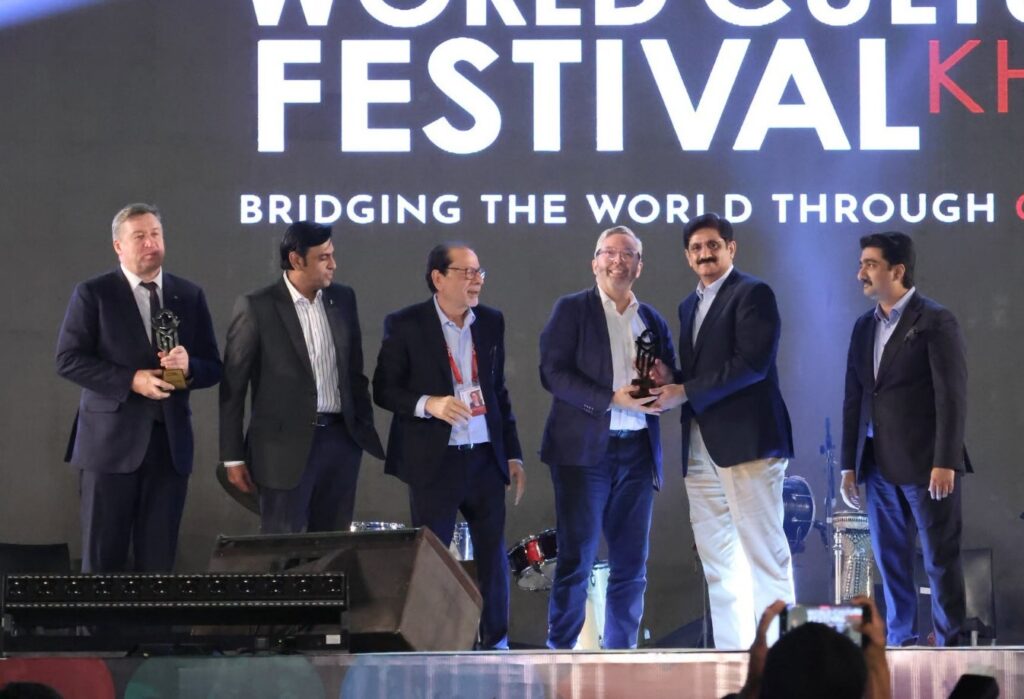
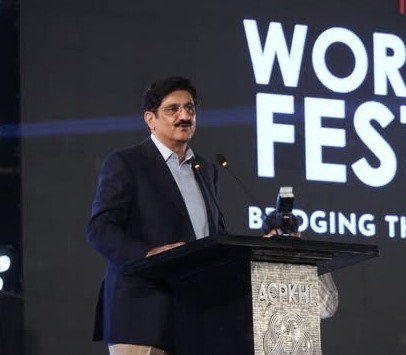
Sindh Chief Minister Syed Murad Ali Shah attended as the chief guest. Arts Council President Muhammad Ahmed Shah, Sindh Minister for Culture and Tourism Syed Zulfiqar Ali Shah, ambassadors, diplomats and other prominent personalities also joined the ceremony.
The programme opened with the recitation of the Holy Quran. Pakistani and international artists then jointly performed the national anthem.
Murad Ali Shah Praises Festival’s Global Impact
Addressing the gathering, Chief Minister Syed Murad Ali Shah said the festival had transformed Karachi into a hub of diverse cultures, ideas and creative expression.
He said the event delivered a message that peace knows no borders and humanity shares a universal language.
Al-Ghazi Tractors Represents Pakistan at EIMA International 2026 in Italy
Congratulating Muhammad Ahmed Shah, the Governing Body and the Arts Council team, the chief minister praised their efforts in organising the festival. According to him, more than 1,000 international artists from over 150 countries participated alongside more than 500 Pakistani artists.
The event, he said, had strengthened Pakistan’s presence on the global cultural landscape. Its greatest achievement was building friendships and encouraging dialogue among nations. He also credited Muhammad Ahmed Shah’s leadership with establishing the Arts Council as an internationally recognised cultural platform.
Culture, Heritage and Peaceful Coexistence
Murad Ali Shah emphasised that art and culture play an essential role in society. Supporting artists, writers, poets and intellectuals, he said, strengthens society’s spiritual, intellectual and moral foundations.

Describing Sindh as a land of Sufis, poets and humanists, he recalled the contributions of Lal Shahbaz Qalandar, Abdullah Shah Ghazi, Shah Abdul Latif Bhittai, Sachal Sarmast and Sheikh Ayaz. Their teachings promoted love, tolerance, peace and humanity.
Art transcends geographical, linguistic and national boundaries, the chief minister observed. At a time of conflict and intolerance, cultural events can encourage mutual respect and peaceful coexistence.
He added that the festival introduced international visitors to Pakistan’s rich culture, artistic talent and hospitality. It also gave Pakistani artists opportunities to present their work internationally and develop global connections.
Such exchanges could strengthen international relations and support creative industries, he said.
The Sindh government would continue supporting cultural institutions and artists, Murad Ali Shah assured the audience. It would also work to preserve the province’s heritage and promote international cultural exchanges.
Expressing hope that visiting artists would return home with positive memories of Pakistan, he urged them to share the country’s hospitality and message of peace.
In a lighter moment, the chief minister said preparations for the next festival had probably already begun. Knowing Muhammad Ahmed Shah, he joked, the next edition would be even bigger.
He concluded by saying that the festival’s success lay in the friendships and connections it had created. Sindh would continue to promote love, tolerance and peace, while Karachi would always welcome the world.
He ended his address with the slogan, “Pakistan Zindabad.”
Next Festival Announced for October 2027
Arts Council President Muhammad Ahmed Shah formally announced the successful conclusion of the festival. He said the next edition would take place from October 28 to November 21, 2027.
According to Ahmed Shah, artists from 153 countries participated in this year’s event. They presented more than 200 performances during the 25-day programme.
He described the festival as a collective achievement involving the Sindh government, ambassadors, diplomats and people across Karachi and Pakistan.
The festival’s central objective, he said, was to bring artists and cultures together. Its broader mission was to promote peace, harmony and mutual understanding.
Art as a Bridge Between Nations
Ahmed Shah noted that conflicts from the Middle East to Eastern Europe continued to claim lives. In such circumstances, he said, people must remember the values that unite humanity.
Artists are among society’s most sensitive voices, he observed. Through their work, they inspire hope and challenge divisions.
The Arts Council remained committed to bringing people closer through art and culture. Despite their differences, nations from Russia to the United States and from Palestine to Iran all enrich shared humanity through their traditions and creative expressions.
Ahmed Shah stressed that nations should resolve differences through dialogue and diplomacy rather than war.
He also acknowledged Pakistan’s diplomatic efforts to promote regional peace and encourage engagement among the United States, Iran and Saudi Arabia.
Arts Council Acknowledges Government Support
The Arts Council president thanked Chief Minister Murad Ali Shah for supporting cultural activities across Sindh.
He also acknowledged the cooperation of Sindh Chief Secretary Syed Asif Haider Shah and relevant government departments.
Ahmed Shah expressed gratitude to Culture Minister Syed Zulfiqar Ali Shah, Karachi Mayor Barrister Murtaza Wahab, the Inspector General of Sindh Police and the Commissioner Karachi.
Special recognition went to Irfan Soomro, Director General at the Ministry of Foreign Affairs. Ahmed Shah said Soomro had helped facilitate the arrival of international artists.
The festival featured a wide range of activities, including dance, music, theatre, meaningful films and visual arts.
Ahmed Shah also highlighted the city’s growing public art scene. Karachi had no murals until last year, he said, but 12 murals had now been created on buildings across the city.
He expressed hope that the next edition would offer an even bigger celebration of creativity and international friendship.
International and Pakistani Artists Light Up Closing Ceremony
The closing ceremony featured performances by an international music ensemble. Its members included Elio Villafranca, Erin English and Caroline from the United States; Farah Baba Ami and Saleha from Algeria; Sahib Pashazadeh and Kamran Karimov from Azerbaijan; Tomas Rendl from the Czech Republic; and Andrea from Italy.
Renowned Pakistani musicians Ashraf Sharif Khan, Rahat Inayat, Shahid Khan, Nisar Baloch, Bushrat Badr and M. Saeed also performed.
Artists from the Arts Council Music and Dance Alumni presented the song “Main Karachi”. The performers included Arman Rahim, Mustafa Baloch, Muneeb Khan, Jambroz and Aliza.
Shaina Ali captivated the audience with Sindhi folk music and dance. Russia’s MD Pride group also delivered an engaging dance performance.
Sahir Ali Bagga thrilled the crowd with his soulful singing. A joint performance by Khumariyaan Band and Ustad Noor Bakhsh Baloch added another highlight to the evening.
Local and international artists also performed a traditional dhamaal, which received a warm response.
Sajjad Ali Brings Festival to a Memorable Close
The organisers presented awards to artists and individuals for their outstanding contributions.
Legendary singer Sajjad Ali then took the stage for the closing performance. His appearance captivated the audience and brought the 25-day celebration to a memorable end.
The festival highlighted Karachi’s role as a meeting point for international cultures. It also reinforced the Arts Council’s efforts to promote artistic exchange, dialogue and friendship through culture.