Iran Reports Tanker Strike as Yemen Fighting Raises Red Sea Shipping Risks
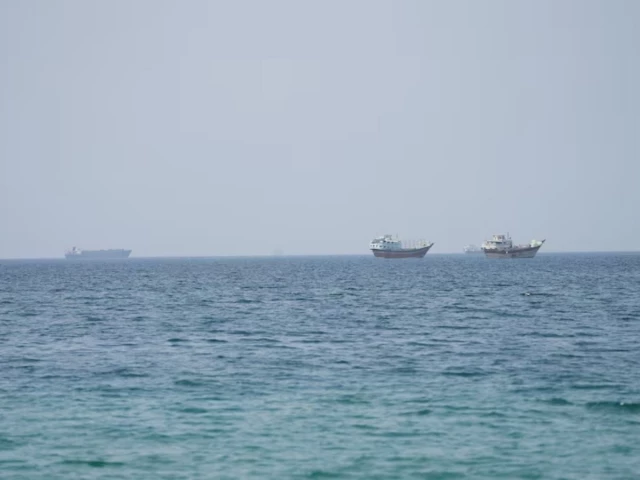
Shipping security concerns rise after Iran reports a tanker strike in the Strait of Hormuz.
Iran’s Revolutionary Guards said Friday that they struck and detained a Togo-flagged oil tanker in the Strait of Hormuz after accusing the vessel of attempting an “illegal passage.”
The claim came as the United Kingdom Maritime Trade Operations (UKMTO) reported that a ship in the strategic waterway had been hit by an unknown projectile. The incident caused a fire, which the crew later extinguished, according to the maritime agency.
Iran identified the tanker as the Trend. The Revolutionary Guards said the vessel caught fire after Iranian forces targeted it while it attempted to cross the strait.
Iran did not immediately provide details about the crew, cargo, injuries or the vessel’s condition. It also remained unclear whether the Iranian report and the UKMTO incident involved the same ship.
Hormuz Shipping Faces Continued Disruption
The latest incident adds to growing uncertainty around commercial shipping through the Strait of Hormuz.
Preliminary shipping data showed only four commodity vessels crossed the waterway on Thursday, well below the 10-day average of 16. Several LNG vessels also remained outside the strait as operators assessed the security situation.
Three Students Killed in Philippines School Shooting, Including Suspected Gunman
Iran has said it wants to control passage through the waterway and has warned vessels against routes it considers unauthorized.
The reported tanker incident could further complicate efforts by international shipping companies to maintain commercial traffic through the strategic channel.
Yemen Army Reports Heavy Fighting Near Taiz
Meanwhile, fighting intensified in Yemen as government forces reported heavy clashes with Houthi fighters west of Taiz.
Yemen’s army said 30 Houthi fighters died and more than 60 suffered injuries during 24 hours of clashes and airstrikes in Al-Waziyah district.
A military source said Yemeni aircraft also targeted Houthi vehicles, supply routes and gathering points. Government forces also reported strikes on Houthi positions in Taiz and the Red Sea port city of Mocha.
The casualty figures came from Yemen’s army and could not be independently verified.
Drones Reportedly Seen Over Sanaa
Residents also reported drone activity over Yemen’s capital, Sanaa, on Friday.
Witnesses said they saw drones over several neighbourhoods, including Saawan and Al-Hasaba. Houthi forces responded with anti-aircraft fire, according to residents and local reports.
Explosions and gunfire reportedly caused concern among people in the city. The Houthis did not immediately identify the drones or say who operated them.
Italy Prepares to Protect Merchant Shipping
Italy is also preparing measures to protect its merchant vessels passing through the Bab el-Mandeb Strait.
Defence Minister Guido Crosetto said Italy would not necessarily wait for the European Union’s Red Sea mission, Operation Aspides, before taking action to protect Italian shipping.
Crosetto said he had ordered military officials to assess the security situation and prepare options for ensuring safe passage. Italy’s frigate Bergamini remains in Djibouti, while around a dozen Italian-flagged or Italian-owned merchant vessels reportedly seek escorted passage.
The minister said disruptions to maritime routes can delay deliveries, raise transport costs and increase prices for businesses and consumers.
Yemen Crisis Adds Pressure on Regional Shipping
The wider conflict has also displaced large numbers of Yemenis.
The International Organization for Migration reported that at least 112,000 people have been displaced inside Yemen, while nearly 3,000 people have fled by sea to Djibouti amid the latest fighting.
Saudi Arabia and Houthi forces have exchanged strikes as the conflict spreads along Yemen’s Red Sea coast. Saudi authorities also reported that debris from an intercepted Houthi drone killed a Yemeni resident in Taif and injured two other people.
The fighting has increased concerns over the security of both the Strait of Hormuz and Bab el-Mandeb, two critical maritime routes for global energy and commercial shipping.
With vessel traffic already reduced through Hormuz and fighting intensifying around Yemen’s Red Sea coastline, governments and shipping operators face growing pressure to secure alternative routes and protect commercial vessels.