Iran Rejects US Pressure as Tehran Warns of Heavier Response to Aggression
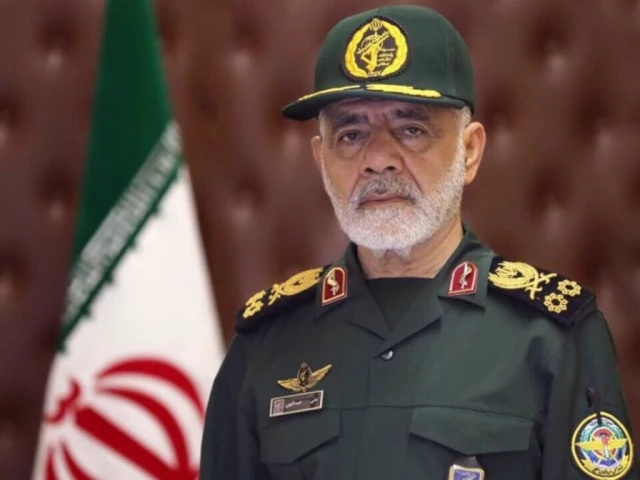
Iran warns of a stronger response as tensions with the United States escalate across the Gulf.
Iran has rejected pressure from the United States, with military and political leaders warning that any further aggression will face a stronger response.
Iran’s army chief, Major General Ali Abdollahi, said on Sunday that Tehran would not surrender to US pressure.
According to Press TV, Abdollahi said Washington was shifting towards economic, psychological and cognitive warfare after what he described as military setbacks.
He said Iran would withstand the campaign and accused the United States and Israel of trying to compensate for their alleged battlefield losses through other forms of pressure.
Iran Warns Against Further Pressure
Abdollahi described expectations of Iranian capitulation as a “false illusion”.
He also said Washington had become accustomed to facing little resistance from other countries over the past decades.
However, he argued that Iran would not follow that pattern.
The Iranian commander said the future global order would differ from the past. He also predicted a decline in US influence.
Ghalibaf Issues Strong Warning
Iranian parliament speaker Mohammad Bagher Ghalibaf also issued a warning on Sunday.
He said the era of what he called “proportionate responses” had ended.
Karachi DHA Accident Kills Woman, Leaves Husband and Son Injured
Ghalibaf warned that any aggression against Iran’s interests or security would receive a response that would be “faster, heavier, and more painful”.
According to IRNA, he also claimed that Iranian strikes against US bases had left American leaders in a difficult position.
The claims have not been independently verified.
IRGC Claims US Warships Targeted
The Islamic Revolutionary Guard Corps (IRGC) said its Aerospace Force launched ballistic missiles at a US aircraft carrier and a Navy destroyer.
The IRGC claimed both vessels were damaged and later left the area.
According to IRNA, the Guards said the warships had harassed Iranian vessels and were involved in a maritime blockade.
The IRGC also said US Central Command had acknowledged that two US Navy warships were targeted.
However, CENTCOM said Iranian ballistic missiles were launched towards two US Navy warships. It said the vessels evaded the attacks and that no US personnel were injured.
The competing claims could not be independently verified.
Strait of Hormuz Tensions Grow
The IRGC separately said its navy attacked a remotely operated US military vessel.
It claimed the vessel was attempting to enter a protected area of the Strait of Hormuz.
The Guards did not provide details about the alleged attack or confirm whether the vessel was damaged.
Iran has continued to insist that it controls the Strait of Hormuz and has called for US forces to leave the region.
Meanwhile, CENTCOM said US forces had redirected 92 commercial vessels while enforcing a maritime blockade against Iran.
It also said three vessels had been disabled and two had been boarded.
A US Air Force F-35A fighter was also patrolling regional waters, according to CENTCOM.
US Says Oil Tanker Sank
The confrontation has also spread to commercial shipping.
CENTCOM said it had sunk the oil tanker M/T Kylo in the Gulf of Oman.
The US military command described the operation as a precision strike carried out by American service members.
Iran has not been cited in the supplied report as confirming the circumstances surrounding the tanker’s sinking.
Iran Says Blockade Could Hurt US
IRGC spokesman Brigadier General Hossein Mohibi said the US economic and maritime blockade could ultimately cost Washington more than Tehran.
He argued that every dollar of economic damage imposed on Iran could create several dollars in costs for the United States.
Mohibi also rejected the idea that sanctions and economic pressure would force Tehran to surrender.
He claimed recent developments had demonstrated the limits of US military and economic pressure.
Those claims were not independently verified.
US Keeps Kharg Island Option Open
The confrontation has also raised concerns over Iran’s major oil-export infrastructure.
US President Donald Trump has previously threatened action against Kharg Island, a major Iranian oil terminal.
An AI-generated video posted by Trump on August 31 depicted the island being destroyed.
Iranian authorities have warned of a strong response if Kharg Island is attacked.
Iran is a major OPEC oil producer, and Kharg Island has historically handled most of the country’s crude exports.
The US blockade has already disrupted Iranian oil flows, according to the report.
Global Oil Markets Under Pressure
The Strait of Hormuz remains central to concerns over global energy supplies.
Before the conflict, the waterway carried about one-fifth of global oil supplies.
Any further escalation could therefore affect international energy markets.
Brent crude futures closed at $96.28 a barrel on Friday, their highest level since July 24, as investors assessed the risk of further supply disruptions.
Meanwhile, Turkish Foreign Minister Hakan Fidan and Iranian Foreign Minister Abbas Araghchi discussed regional developments by telephone.
According to Anadolu Agency, the ministers also reviewed the latest developments in negotiations with Washington.
With military threats, maritime confrontations and economic pressure continuing, diplomatic efforts remain under close scrutiny.