Artificial Exchange Rate Hurting Pakistan’s Exports, Exporters Warn as Trade Deficit Widens
Business leaders say a stronger rupee is reducing export competitiveness, encouraging imports and discouraging foreign investment in Pakistan’s manufacturing sector.
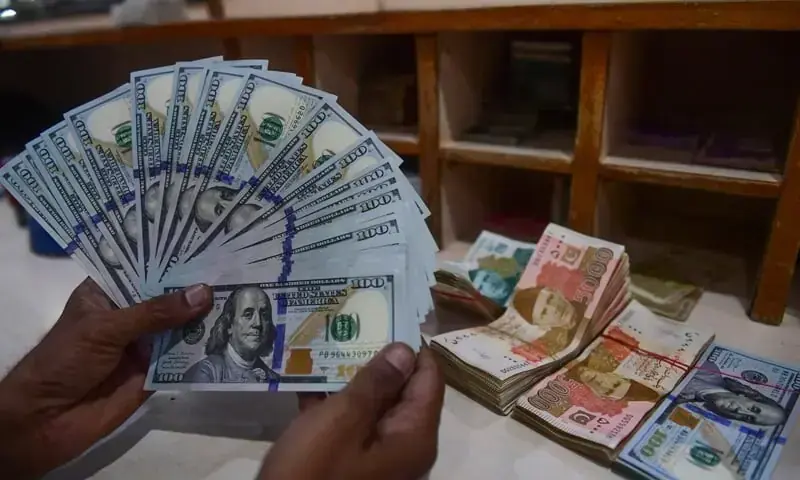
Exporters urge reforms to Pakistan's exchange rate policy to improve global competitiveness.
KARACHI: Exchange Rate policy is drawing sharp criticism from Pakistan’s exporters, who say the country’s managed rupee-dollar parity is weakening exports, encouraging imports and discouraging foreign investment in the manufacturing sector.
Exporters argue that the rupee has appreciated artificially against the US dollar over the past 18 months despite most regional currencies depreciating during the same period. They believe the stronger local currency has made Pakistani products less competitive in international markets while making imports cheaper, contributing to a widening trade deficit.
More than 100 words into the debate, Exchange Rate concerns remain at the centre of exporters’ complaints. They argue that the current policy has pushed Pakistan’s trade deficit to $39 billion in FY2025-26, despite workers’ remittances reaching $41.5 billion, limiting the country’s export-led growth.
Hangu Terror Attack Leaves Nine Police Officers Martyred as Security Forces Kill 15 Militants
Exporters Seek Gradual Currency Adjustment
Former Karachi Chamber of Commerce and Industry President Javed Bilwani said Pakistani manufacturers face production costs that are around 12% higher than those in China, making it difficult to compete globally.
He argued that a gradual depreciation of the rupee, rather than maintaining an artificially strong currency, would improve export competitiveness and enable exporters to reinvest earnings into expanding production.
Bilwani added that the stronger rupee has failed to boost exports while encouraging higher imports, including a significant increase in automobile imports.
Trade Deficit Raises Fresh Concerns
Exporters said cheaper imports have widened Pakistan’s trade gap and weakened domestic manufacturing.
Some financial analysts pointed to the Real Effective Exchange Rate (REER), which has climbed to 106.4, above the benchmark level of 100 that many economists consider more favourable for export competitiveness.
They argued that the elevated REER suggests the rupee is overvalued, reducing Pakistan’s attractiveness for export-oriented foreign investment.
Industry Highlights Rising Costs
Exporter Amir Aziz said the exchange rate policy, combined with high financing costs, has placed additional pressure on manufacturers.
He warned that some exporters are considering shutting down operations as production costs continue to rise.
Aziz also raised concerns over smuggling and under-invoicing, claiming that goods from neighbouring countries, particularly China and Iran, continue to enter Pakistan’s markets, increasing pressure on local industries.
Export Targets Under Scrutiny
The State Bank of Pakistan recently maintained its policy rate at 11.5%, while exporters said existing incentives, including subsidised financing, have not been sufficient to revive manufacturing.
The government aims to increase Pakistan’s exports to $60 billion, while Deputy Prime Minister Ishaq Dar has expressed the goal of doubling bilateral trade with the United States to $20 billion within five years.
However, exporters questioned how those targets could be achieved without stronger growth in manufacturing and export-oriented industries.