CPNE Periodicals Committee Calls for Fair Advertisement Distribution and Stronger Support for Magazines
Editors from across Pakistan urge reforms in government advertising, action against dummy publications, and stronger private-sector engagement to ensure the sustainability of periodicals.
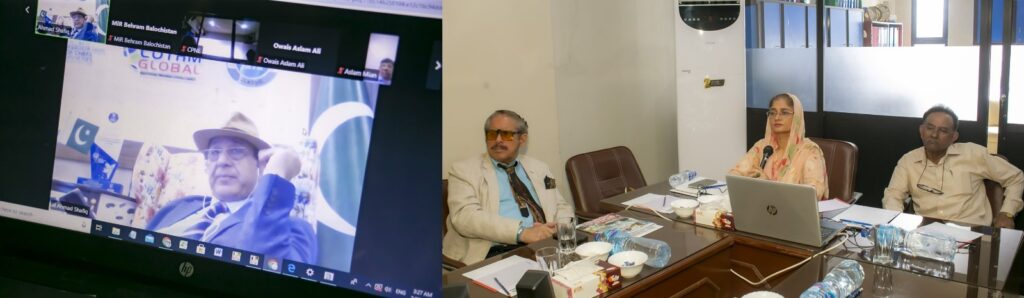
CPNE Periodicals Committee members meet in Karachi to discuss challenges facing Pakistan's magazine industry.
Karachi: The CPNE (Council of Pakistan Newspaper Editors) Periodicals Committee has called for fair distribution of government advertisements, stronger engagement with the private sector, and stricter action against dummy publications to address the growing challenges facing Pakistan’s magazine and journal industry.
The committee held its first meeting under the chairmanship of Munazza Seham, bringing together editors and committee members from across the country to discuss financial, administrative, and advertising-related issues affecting periodicals.
Hong Kong Activist Wu Chi-wai Allowed to Stay in UK After Initial Border Detention
Opening the meeting, Munazza Seham welcomed participants and reaffirmed the committee’s commitment to pursuing organized and continuous efforts to resolve the problems confronting magazines and journals. She said issues relating to the Audit Bureau of Circulations (ABC), registration, and renewal procedures had already been raised with relevant federal and provincial authorities, expressing hope for positive progress in the near future.
CPNE Urges Fair Advertisement Policy
More than 100 words into the meeting, CPNE members stressed that magazines and journals continue to be overlooked in the allocation of government advertisements. Participants said public institutions and state-owned corporations rarely advertise in periodicals despite their important contribution to journalism.
The committee urged authorities to ensure that magazines and journals receive equal consideration in government advertising policies, similar to daily newspapers.
Private Sector Engagement Seen as Essential
Members agreed that relying solely on government advertising is no longer a sustainable model for periodicals. They emphasized the need to strengthen relationships with private companies and corporate organizations by showcasing the quality of their publications, readership, and market reach to attract new advertising opportunities.
The committee noted that expanding partnerships with the private sector would help improve the financial sustainability of periodicals amid rising operational costs.
Action Demanded Against Dummy Publications
Participants also expressed serious concern over the increasing number of dummy publications established primarily to obtain government advertisements. They argued that such publications undermine the rights of genuine magazines and journals that publish regularly and adhere to professional journalistic standards.
The meeting reaffirmed that the CPNE leadership neither supports nor recognizes dummy publications and called for a transparent system to ensure that advertisements and other official facilities are allocated only to legitimate, regularly published periodicals.
Rising Costs Threaten Magazine Industry
Editors from different provinces highlighted the challenges facing periodicals, including rising publication costs, increasing newsprint prices, declining government advertisements, and limited support from the private sector.
Members agreed that the Periodicals Committee should meet regularly to review emerging issues and develop coordinated strategies for protecting the interests of the magazine industry.
The committee also proposed preparing a separate set of recommendations for periodicals to be submitted to the CPNE’s central leadership and relevant government institutions.
Concluding the meeting, Chairperson Munazza Seham assured participants that all proposals would be compiled into formal recommendations for submission to the CPNE leadership. She reaffirmed the committee’s commitment to protecting the rights of periodicals, ensuring fair advertisement distribution, resolving ABC-related issues, eliminating dummy publications, and strengthening cooperation with the private sector.