

Asia Web3 Alliance Japan: AWAJ Brings Governments, Startups and Investors Together in Tokyo
The Tokyo summit brought policymakers, investors and entrepreneurs from Pakistan and Japan together to strengthen cooperation in digital innovation, Web3 and cross-border technology investment.
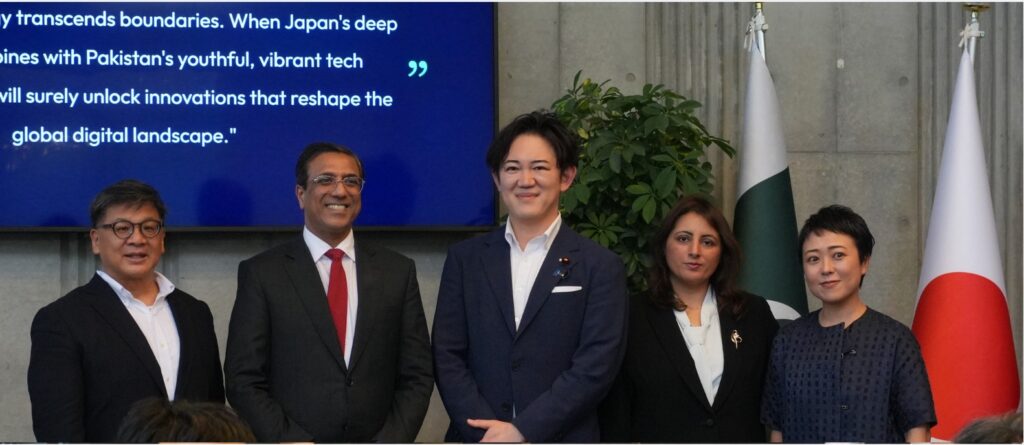
Participants attend the Asia Web3 Alliance Japan summit at the Embassy of Pakistan in Tokyo.
Asia Web3 Alliance took centre stage in Tokyo as the Asia Web3 Alliance Japan (AWAJ) hosted a high-level summit aimed at strengthening cooperation between Pakistan and Japan by connecting governments, startups and investors under one platform.
Held at the Embassy of Pakistan in Tokyo on 15 July 2026, the summit was led by AWAJ President Hinza Asif and brought together senior government officials, diplomats, venture capital experts and technology entrepreneurs from both countries to promote innovation, investment and digital collaboration.
The event featured Japan’s Parliamentary Vice-Minister for Digital Affairs Kawasaki Hideto, Pakistan’s Federal Secretary for IT and Telecommunication Zarrar Hasham Khan, Pakistan’s Ambassador to Japan Abdul Hameed, and Trade and Investment Counsellor Madiha Ali. Venture capital advisor Jonathan T., a mentor at 500 Global, and Tomoko Takasaki of Ibex Japan KK and Antler Ibex also joined discussions alongside startup founders and investors.
Climate Finance: Is Pakistan Ready for the Next Monsoon Season?
Speaking at the summit, Hinza Asif said meaningful cross-border partnerships require governments, entrepreneurs and investors to work together. She described AWAJ as a platform that connects policy, capital and innovation to build a sustainable Pakistan–Japan technology corridor.
She highlighted three key pillars for collaboration. Governments provide supportive regulations and policy frameworks, startups drive innovation through skilled talent and emerging technologies, while investors supply the capital needed to scale businesses across borders.
Asif also pointed to Japan’s Startup Visa programme and the country’s growing demand for technology professionals as major opportunities for Pakistani entrepreneurs, software engineers and artificial intelligence specialists seeking international expansion.
During his keynote address, Parliamentary Vice-Minister Kawasaki Hideto outlined Japan’s latest digital reforms, including updated data protection laws, the rollout of yen-backed stablecoins, changes to token regulations under the Financial Instruments and Exchange Act, and the country’s continued support for AI and Web3 innovation.
He said closer cooperation between Japan’s technological expertise and Pakistan’s growing digital ecosystem could help create what he described as a “new Digital Silk Road.”
Joining via video link, Federal Secretary Zarrar Hasham Khan highlighted Pakistan’s expanding technology sector, saying the country’s IT exports are on track to exceed US$4.5 billion. He added that Pakistan now has more than 26,000 IT companies, produces over 75,000 graduates annually from more than 260 universities, and exports technology services to over 170 countries.
He invited Japanese companies to explore opportunities in offshore software development, remote technology services and skilled workforce partnerships.
Ambassador Abdul Hameed said Pakistan’s young, English-speaking workforce complements Japan’s innovation ambitions, while Madiha Ali moderated the event and highlighted growing trade and investment cooperation between the two countries.
The panel discussion focused on venture investment, startup readiness, corporate innovation and technology talent. Jonathan T. discussed the requirements for attracting international investment, while Tomoko Takasaki explained how Japanese corporations can collaborate with Pakistan’s growing startup ecosystem.
A recurring theme throughout the summit was Japan’s projected shortage of IT engineers over the coming years, with participants identifying Pakistan’s technology workforce as a valuable resource to help address the gap.
According to AWAJ, discussions will continue through initiatives that promote cross-border investment, startup partnerships, talent mobility programmes and government-to-government cooperation as both countries seek to deepen their digital and innovation ties.