British Steel News: UK Government Nationalises Steelmaker to Secure Industry
The UK government brings British Steel into public ownership to protect domestic steel production, safeguard thousands of jobs and strengthen national industrial security.
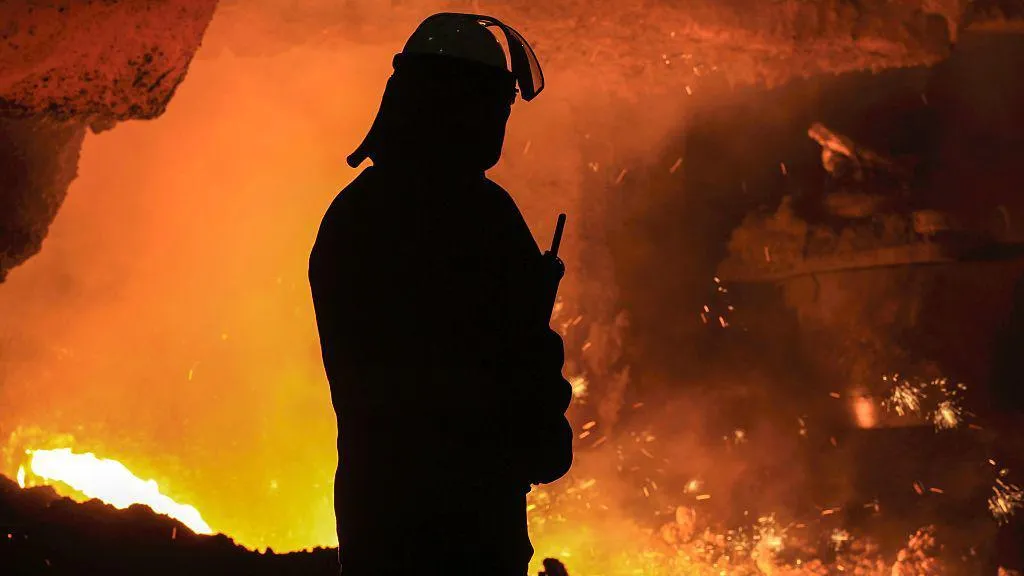
British Steel's Scunthorpe plant enters public ownership under the UK government.
LONDON: British Steel News has entered public ownership after the UK government completed the nationalisation of the steelmaker. The move aims to protect domestic steel production, safeguard thousands of jobs and strengthen Britain’s industrial base.
Prime Minister Sir Keir Starmer said the government acted in the national interest. He described British Steel as a cornerstone of the UK’s industrial strength.
“Today’s decision secures the future of steelmaking in the UK, protects skilled jobs and safeguards a vital national capability,” Starmer said.
Previously, uncertainty surrounded the Scunthorpe steelworks for several years. The site employs about 2,700 workers and supports thousands of additional jobs across North Lincolnshire.
Last year, the government took operational control after Chinese owner Jingye Group warned it could close the site’s remaining blast furnaces. Later, Parliament passed legislation that allows ministers to nationalise steel companies when the public interest requires it.
Climate Finance: Is Pakistan Ready for the Next Monsoon Season?
As a result, the government completed the transfer of British Steel into public ownership.
Business Secretary Peter Kyle said British Steel now belongs to the British people. He added that the government will stabilise the business, support local communities and build a competitive, low-carbon steel industry.
Meanwhile, the Department for Business and Trade said the new law protects industries that are essential for Britain’s economy, infrastructure and national security.
Jingye has started seeking compensation for the nationalisation. However, the government said an independent assessor will first determine the company’s value. Officials also said they could reduce or refuse compensation if circumstances justify that decision.
In the short term, the government will cover the company’s operating costs. At the same time, ministers will prepare a long-term strategy for the business.
Peter Kyle warned that Britain would lose its ability to produce virgin steel if British Steel closed. Consequently, the country would depend entirely on overseas suppliers for a material that supports construction, transport and defence projects.
Industry leaders also welcomed the decision. Simon Boyd, Managing Director of Reid Steel, said the government had no realistic alternative. However, he noted that ministers must invest heavily in the company. He also said rebuilding the business could take between 10 and 20 years.
Jingye bought British Steel in 2020 after Greybull Capital placed the company into compulsory liquidation.
Finally, the government said a strong domestic steel industry remains central to its industrial strategy. It believes the sector will strengthen economic security, support manufacturing and reduce reliance on overseas supply chains.