ICMA Highlights Pakistan’s Energy Crossroads: From LNG Dependence to Solar Surge
Karachi, July 2026 — Pakistan’s energy future is at a turning point. In its latest Sector Insights report,
ICMA International’s Research and Publications Department highlights how the country’s long reliance on
imported fossil fuels — particularly oil and LNG — is colliding with the rapid rise of renewables, reshaping
the nation’s energy landscape.
The report traces Pakistan’s journey from the discovery of the Sui gas field in the 1950s to the
commissioning of LNG terminals at Port Qasim in the 2010s. It notes that while long?term LNG contracts
with Qatar and the UAE have guaranteed supply, they have also locked Pakistan into rigid commitments
at a time when demand is falling. By 2025, LNG consumption had dropped from a peak of 8.2 million
tonnes to 6.1 million tonnes, driven by solar adoption, industrial slowdown, and soaring global prices.
ICMA underscores that nearly 70 percent of LNG is consumed in power generation, yet gas?based
electricity is increasingly uncompetitive compared to solar and other renewables. External shocks — from
disruptions in the Strait of Hormuz to regional conflicts — have further exposed Pakistan’s vulnerability.
By early 2026, excess LNG supply was projected at up to 177 cargoes over the next decade, underscoring a
mismatch between contracted volumes and actual demand.
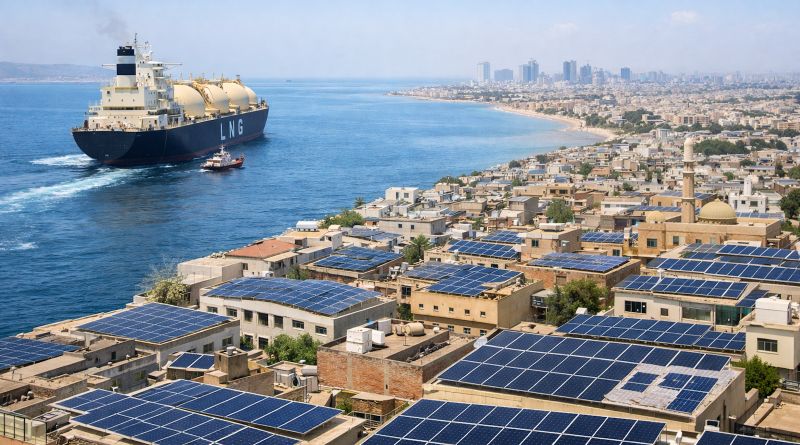
Looking ahead, ICMA highlights a bold shift: Pakistan is targeting 60 percent clean electricity by 2030.
Rooftop solar alone is expected to meet 20 percent of demand by 2026, signaling a decentralized energy
revolution. Fossil fuels will remain part of the mix, but increasingly as a balancing tool rather than the
backbone of the system.
“Energy security is not just about keeping the lights on — it is about economic resilience and national
stability,” the report stresses. “Pakistan must accelerate renewable adoption, modernize infrastructure,
and renegotiate contracts to align supply with reality.”