Donald Trump Vows New Iran Strikes as Nuclear Deal Talks Face Growing Pressure
Officials continue diplomatic efforts following progress in US-Iran negotiations.
The Trump Iran conflict intensified after President Donald Trump announced that the United States would launch additional actions against Iran following overnight military exchanges.
Moreover, Trump’s latest remarks come as diplomatic efforts remain fragile and regional tensions continue to rise. The developments could significantly affect security, energy markets, and ongoing nuclear negotiations.
Trump Iran Strikes Draw New Warnings
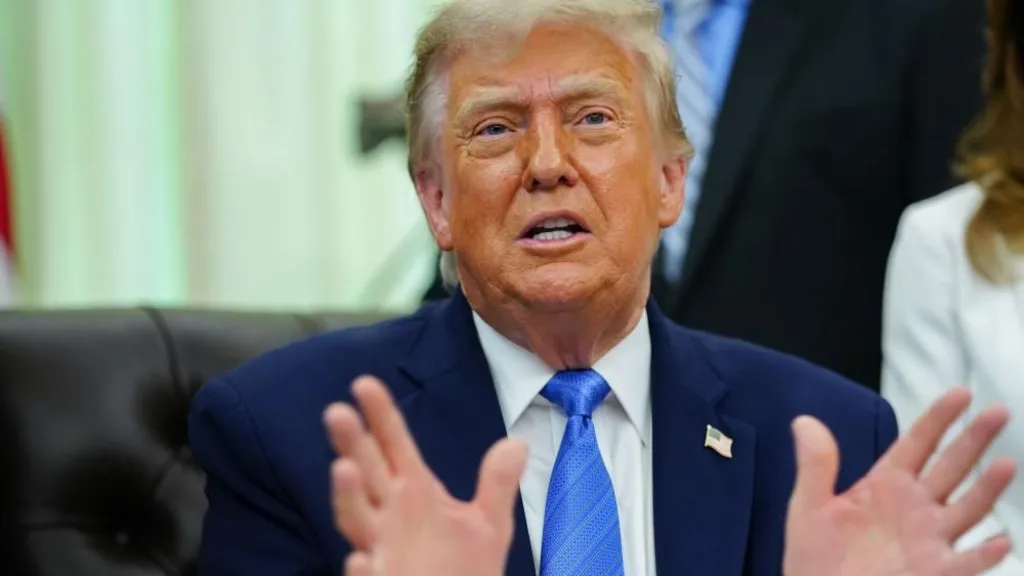
Speaking to reporters in the Oval Office, Trump said the United States had already struck Iranian targets and would respond again.
He also repeated his call for Iran to sign a new agreement. According to his statements, Iran had delayed negotiations for too long and would now face consequences.
Furthermore, Trump claimed Iran had suffered major military setbacks. However, Iranian officials rejected that assessment and pledged to resist external pressure.
Masoud Pezeshkian Responds to Trump Iran Remarks
Iranian President Masoud Pezeshkian responded through a social media post shortly after Trump’s comments.
He stated that Iran would stand firm against threats and pressure. As a result, hopes for a quick diplomatic breakthrough appear increasingly uncertain.
Meanwhile, Iranian Foreign Ministry spokesman Esmaeil Baqai accused Washington of undermining diplomatic efforts through what he described as inconsistent messaging and repeated violations of ceasefire commitments.
US Military Actions Near Strait of Hormuz
The United States confirmed that recent military operations targeted Iranian defense systems, radar facilities, and ground control stations near the Strait of Hormuz.
According to US Central Command, the strikes were a proportional response to an incident involving a US Army helicopter.
Additionally, US forces reportedly struck an oil tanker in the Gulf of Oman that allegedly violated an ongoing blockade related to Iranian oil exports.
These developments have raised concerns about maritime security in one of the world’s most important shipping corridors.
IRGC Launches Retaliatory Attacks
Iran’s Islamic Revolutionary Guard Corps (IRGC) reported launching attacks on multiple American military targets across the region.
The group said strikes targeted US facilities in Bahrain and Jordan. In addition, Kuwait reported intercepting incoming threats during the exchange.
Reuters, citing a US official, reported that nearly all Iranian missiles and drones were intercepted. No casualties were immediately reported.
Consequently, both sides continue to demonstrate military capabilities while avoiding a broader regional war.
IAEA Resolution Increases Nuclear Pressure
The Trump Iran dispute also extends beyond military operations. The International Atomic Energy Agency approved a US-backed resolution requesting further information about Iran’s uranium stockpiles and nuclear production facilities.
Iran’s mission to the United Nations in Vienna criticized the move. Officials argued that calls for diplomacy conflict with what they described as continued military actions against Iranian infrastructure.
As negotiations continue, Iran maintains that its nuclear program serves peaceful purposes. However, the United States and its allies remain concerned about potential nuclear weapons development.
Donald Trump and Iran Negotiations Remain Uncertain
Although a ceasefire was agreed upon earlier this year, intermittent clashes have continued across the region.
Representatives from both countries have participated in several difficult negotiations, including discussions held in Pakistan. Nevertheless, major disagreements remain unresolved.
Trump stated that the proposed agreement would completely prohibit Iran from obtaining nuclear weapons. Meanwhile, Iranian officials insist that any future diplomatic process requires stability and mutual trust.
As tensions persist, the coming days may prove critical for both military and diplomatic developments in the region. The outcome could shape the future of US-Iran relations and broader Middle East security.