Nigel Farage Responds as Southampton Riots Erupt Amid St Denys Road Protests and Online Debate
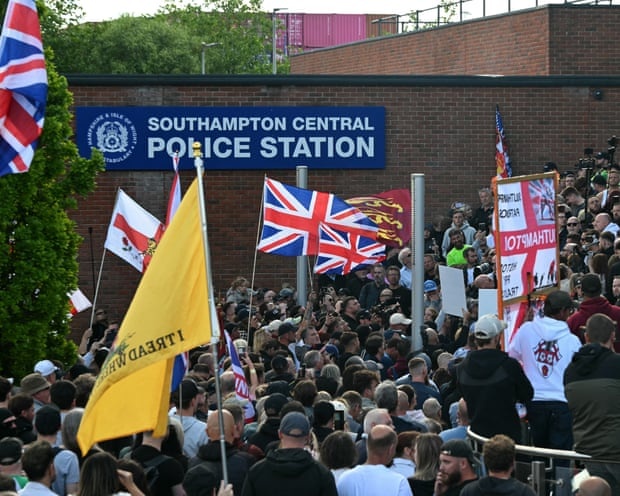
Southampton street protest scene during reported unrest near St Denys Road with police presence and media coverage.
The Southampton riots have triggered intense debate across the UK after footage emerged from St Denys Road showing large crowds, chants, and confrontations. The Southampton riots reportedly followed a local incident that escalated into wider unrest and political commentary.
According to circulating livestreams and citizen recordings, groups gathered near residential and commercial areas in Southampton. As a result, discussions quickly shifted from local concerns to national political narratives. The situation has since drawn reactions from public figures and media platforms.
St Denys Road Southampton riots unrest
The Southampton riots on St Denys Road reportedly included chanting, movement through residential streets, and visible police presence. Witness videos shared online showed crowds moving past shops and public spaces.
Furthermore, observers noted a mix of emotions in the gathering, ranging from anger to celebration-like behavior. However, authorities have not confirmed all viral claims independently.
Nigel Farage Southampton riots response
Nigel Farage has been widely associated with commentary surrounding the Southampton riots, although his exact position varies across media interpretations. Reports suggest he has spoken on broader issues of public unrest and political frustration.
Meanwhile, critics argue that political figures may be indirectly influencing how such events are framed in public discourse. Nevertheless, direct responsibility claims remain unverified.
Keir Starmer political reaction Southampton riots
Keir Starmer has also been referenced in discussions surrounding the Southampton riots, particularly in media debates about law, order, and public trust.
In addition, political commentators have used the incident to highlight divisions in how UK leadership handles unrest. However, official government responses remain focused on policing and public safety measures.
Media coverage Southampton riots livestreams
The Southampton riots gained traction through livestreams, social media clips, and commentary-based broadcasting. These platforms amplified both verified footage and user-generated interpretations.
Moreover, analysts noted that rapid online circulation can blur the line between reporting and narrative building. As a result, public perception often develops faster than official clarification.
Social media reactions Southampton riots
Online discussions around the Southampton riots intensified as AI-generated content and reposted clips began circulating. Some content reportedly depicted symbolic or fictionalized versions of events.
Consequently, concerns have emerged about misinformation and emotional amplification. However, platforms continue to moderate content based on evolving guidelines.
Public debate Southampton riots consequences
The Southampton riots have raised broader questions about political polarization and media responsibility. Commentators suggest the event reflects deeper societal tensions rather than a single isolated incident.
In contrast, others argue that online amplification plays a major role in escalating local unrest into national debate. Therefore, discussions continue across political and media spaces.
Conclusion Southampton riots political impact
The Southampton riots remain under discussion as authorities, media, and political figures respond to unfolding narratives. While details continue to develop, the incident highlights how quickly local unrest can become a national talking point.