Supreme Court upholds death sentence in child rape case
Supreme Court upholds death sentence, rejects intoxication defence in child rape case
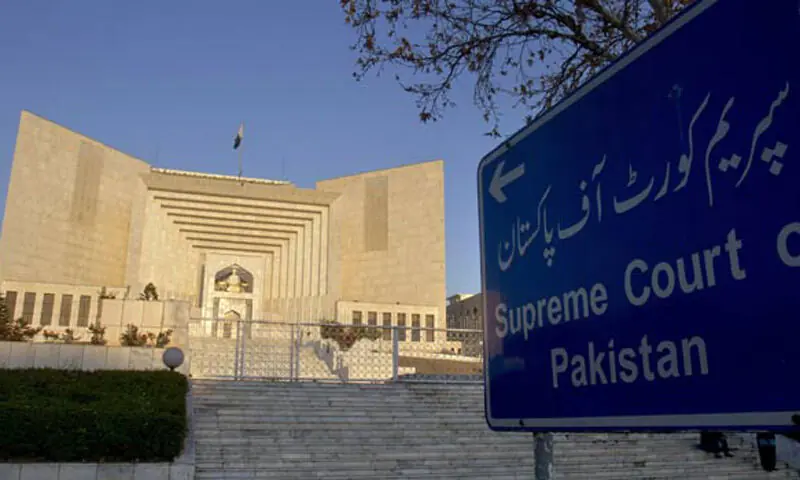
ISLAMABAD: The Supreme Court of Pakistan has upheld the death sentence of Sunni Masih, who raped and murdered a five-year-old girl in Sibi, Balochistan.
The court ruled that voluntary intoxication cannot serve as a defence in criminal cases. It said people remain responsible for crimes they commit after willingly consuming intoxicants.
Justice Muhammad Hashim Khan Kakar authored the three-page judgment. He stated that intoxication caused by personal negligence or recklessness does not excuse a criminal offence.
Appeal against death sentence
A three-member bench heard the appeal. Justice Kakar led the bench, while Justice Salahuddin Panhwar and Justice Ishtiaq Ibrahim joined the proceedings.
Masih challenged a February 28, 2018, ruling of the Balochistan High Court. The high court had upheld the death sentence issued by the trial court.
Police arrested Masih for the rape and murder of five-year-old Angel Kumari in January 2014. The trial court later sentenced him to death under multiple provisions of the Pakistan Penal Code.
Defence relied on intoxication claim
During the trial, Masih claimed he committed the crime while under the influence of intoxicants.
Before the Supreme Court, his lawyer did not challenge the conviction. Instead, he requested that the court reduce the death sentence to life imprisonment.
The defence argued that the case relied mainly on the convict’s judicial confession. In that confession, he stated that intoxication influenced his actions.
Court rejects plea
The Supreme Court rejected the argument. The bench ruled that voluntary intoxication does not remove criminal responsibility.
Justice Kakar said the evidence proved the appellant’s guilt beyond reasonable doubt. He noted that both lower courts had carefully examined the record and reached the same conclusion.
The court also described the crime as brutal. It noted that the victim suffered rape before her murder.
“A man who gets drunk voluntarily has no right to claim exemption from criminal liability,” Justice Kakar observed.
Conviction remains unchanged
The Supreme Court unanimously dismissed the appeal. It found no legal error in the high court’s judgment.
The bench also found no misreading or omission of evidence. As a result, it upheld both the conviction and the death sentence.