Trump Says Iran Talks Continue at ‘Rapid Pace’ Despite Reports of Negotiation Pause
The United States and Iran remain engaged in diplomatic efforts despite reports that Tehran has suspended indirect negotiations with Washington, US President Donald Trump said on Monday.
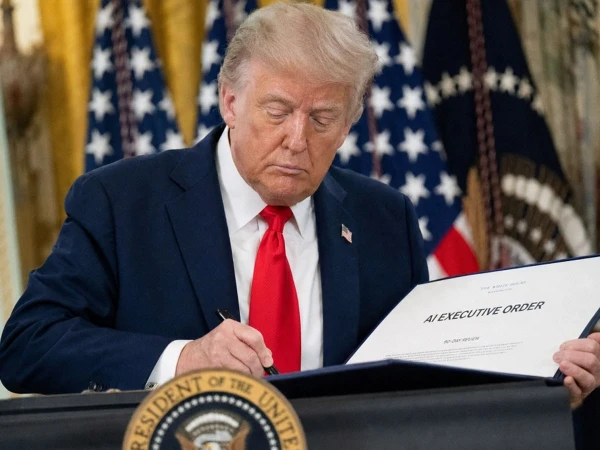
The United States and Iran remain engaged in diplomatic efforts despite reports that Tehran has suspended indirect negotiations with Washington, US President Donald Trump said on Monday.
Saudia Launches Airbus A321XLR, Boosting Long-Haul Travel Options for Pakistani Passengers
Speaking to NBC News, Trump described discussions with Iran as continuing at a “rapid pace” and said he had not received any official notification that Tehran had halted talks. However, he suggested that a temporary period of silence between the two sides would not be a concern.
“I think we’ve been talking too much if you want to know the truth. I think going silent would be very good, and that could be for a long time,” Trump said.
The US president added that a pause in communication would not necessarily lead to military escalation.
“It doesn’t mean we’re going to go and start dropping bombs all over there,” Trump said. “We’ll just go silent. We’ll keep the blockade.”
Trump also stated that he was prepared to wait for Iran to return to negotiations, arguing that Tehran was suffering significant economic losses under current conditions.
Iran Signals Possible Pause in Talks
Earlier, Iran’s state-affiliated Tasnim News Agency reported that Tehran had halted indirect negotiations with Washington. According to the report, the decision was linked to Israel’s military operations in Lebanon, which Iranian officials say have complicated efforts to reach a broader diplomatic settlement.
Tasnim reported that Iran’s negotiating team had stopped exchanging messages with US officials through mediators following renewed Israeli military actions in Lebanon.
The reported suspension represents another setback for efforts to ease regional tensions after months of conflict involving Iran, Israel, the United States and allied groups across the Middle East.
Lebanon Tensions Add to Diplomatic Challenges
The latest developments come as fighting in Lebanon continues to threaten fragile ceasefire arrangements.
Israeli Prime Minister Benjamin Netanyahu ordered attacks on Hezbollah-controlled southern suburbs of Beirut on Monday, triggering further displacement among civilians already affected by months of conflict.
Israel has accused Hezbollah of repeatedly violating a ceasefire agreement reached in late April.
Iranian Foreign Minister Abbas Araghchi criticised the military actions and warned that ceasefire violations in Lebanon could undermine broader regional stability.
“Violation on one front is a violation of the ceasefire on all fronts. The US and Israel are responsible for the consequences of any violation,” Araghchi said in a post on X.
Oil Prices Rise Amid Regional Uncertainty
Concerns over the future of US-Iran diplomacy and escalating regional tensions pushed global oil prices higher, with crude prices reportedly rising by more than $6 per barrel following the Tasnim report.
The conflict has continued to affect international energy markets, particularly after disruptions linked to shipping routes in the Gulf region.
Iran has previously threatened to maintain pressure on key maritime corridors, including the Strait of Hormuz, one of the world’s most important energy transit routes. Iranian-aligned groups have also signalled the possibility of expanding pressure on other strategic waterways, including the Bab el-Mandeb Strait near Yemen.
Military Exchanges Continue
Despite ceasefire efforts, military exchanges between the United States and Iran have continued intermittently.
The US military said it conducted strikes over the weekend targeting Iranian air defence systems, a ground control station and drones that were allegedly threatening maritime traffic.
Iran’s Islamic Revolutionary Guard Corps (IRGC) later announced that it had targeted a military air base used by US forces in response to attacks on Iranian territory.
Meanwhile, Kuwait activated its air defence systems after reporting missile and drone activity in the region. US officials said American forces intercepted two Iranian ballistic missiles aimed at US personnel stationed in Kuwait, with no casualties reported.
Diplomatic Efforts Continue
US Secretary of State Marco Rubio has held discussions with both Lebanese President Joseph Aoun and Israeli Prime Minister Benjamin Netanyahu regarding proposals aimed at reducing tensions.
According to US officials, Washington has proposed a framework for a “gradual de-escalation” between Israel and Lebanon as part of broader diplomatic efforts to stabilise the region.
Trump continues to face pressure domestically to reduce energy prices and restore stability to global oil markets while maintaining a firm stance on Iran’s nuclear programme.
The US president has repeatedly stated that his primary objective remains preventing Iran from developing a nuclear weapon. Tehran, however, continues to insist that its nuclear programme is intended solely for peaceful purposes.
Significant disagreements remain between the two countries over sanctions relief, access to frozen Iranian assets abroad and restrictions affecting Iranian ports and energy exports.
While both sides have signalled interest in avoiding a wider conflict, the future of negotiations remains uncertain as regional tensions continue to challenge diplomatic progress.