Iran Demands Lebanon Ceasefire Guarantee in US Deal as Regional Strikes Escalate
Iran has said any agreement with the United States to end the war must include guarantees for a ceasefire in Lebanon.
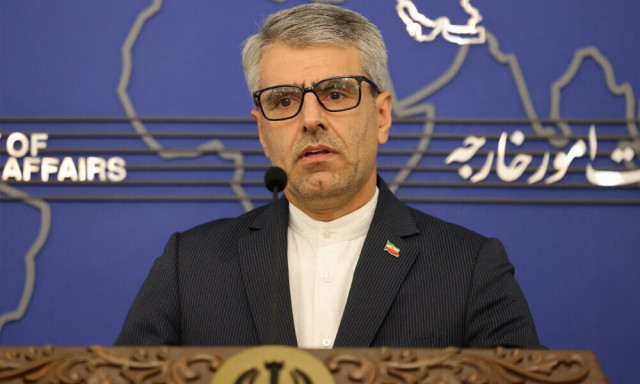
Iran has said any agreement with the United States to end the war must include guarantees for a ceasefire in Lebanon.
Sindh CM Briefed on Record 25,217 Complaints as Ombudsman Reports Sharp Rise in Public Grievances
Foreign Ministry spokesman Esmaeil Baghaei made the statement on Thursday. He said Israel’s expanded military operations in Lebanon cannot be ignored in any broader deal.
“We insist that a ceasefire in Lebanon is an essential condition for any deal aimed at ending the war,” he said.
He added that regional stability remains a key part of Iran’s negotiating position.
US and Iran Exchange Fresh Strikes
Meanwhile, the United States and Iran have continued exchanging strikes despite ongoing ceasefire efforts.
The US Central Command said it struck Iranian military targets over the weekend. It said the action followed Iranian attacks, including the downing of a US MQ-1 drone.
According to CENTCOM, US fighter jets destroyed Iranian air defences, a ground control station and two attack drones. It said the assets threatened regional shipping routes.
In response, Iran’s Islamic Revolutionary Guard Corps (IRGC) said it targeted a US air base used for attacks on Iran. However, it did not name the facility.
Kuwait Reports Missile and Drone Alerts
At the same time, air defence systems in Kuwait intercepted missile and drone activity.
The state news agency KUNA reported sirens across the country. However, officials did not provide further details.
Kuwait hosts major US military installations and remains a key regional ally of Washington.
Ceasefire Remains Fragile
Although a ceasefire took effect in early April, both sides have continued sporadic strikes.
A similar exchange occurred last week. At that time, both Washington and Tehran offered conflicting accounts of events.
As a result, concerns are growing that the truce could collapse if talks fail.
Lebanon Fighting Complicates Diplomacy
Meanwhile, fighting in Lebanon continues to escalate.
Israel has expanded military operations against Hezbollah, including strikes in Beirut’s southern suburbs.
Israeli Prime Minister Benjamin Netanyahu ordered attacks on what he called militant targets in the Dahiyeh district.
In addition, Israeli and Hezbollah forces have continued to exchange fire despite a declared ceasefire in mid-April.
The conflict has displaced more than 1.2 million people in Lebanon, according to government figures.
It has also killed more than 3,370 people in Lebanon, while Israeli losses include soldiers and civilians.
US Pushes De-escalation Plan
At the same time, the United States is attempting to reduce tensions between Israel and Lebanon.
US Secretary of State Marco Rubio has held talks with Lebanese President Joseph Aoun and Israeli Prime Minister Netanyahu.
According to a US official, Washington has proposed a gradual de-escalation plan.
Under the proposal, Hezbollah would stop attacks on Israel. In return, Israel would avoid further escalation in Beirut.
However, details of any agreement remain unclear.
Nuclear Dispute and Sanctions Still Unresolved
In parallel, the wider US-Iran negotiations remain stalled.
Washington wants to prevent Iran from developing nuclear weapons. Iran denies any such intention.
In addition, Tehran is demanding the lifting of sanctions and access to frozen oil revenues.
Both sides remain far apart on core issues, despite ongoing diplomatic contacts.
Trump Calls for Calm Amid Pressure
US President Donald Trump has urged critics to remain patient over the negotiations.
In a social media post, he said Iran “really wants to make a deal”. However, he offered no new details.
At the same time, he faces pressure to lower energy prices ahead of upcoming elections.
Oil prices have already risen as traders react to uncertainty in the region.
Regional War Continues to Drive Instability
The conflict has widened across multiple fronts, including Iran, Iraq, Lebanon and Israel-linked territories.
As a result, global energy markets remain volatile.
For now, diplomatic efforts continue. However, repeated strikes suggest the ceasefire remains highly unstable.