
Trump Says Fresh Iran Talks to Begin Monday After Halting Planned Military Strikes
US president says diplomacy has been given another chance as Tehran denies plans for direct negotiations and regional tensions continue to weigh on global markets.
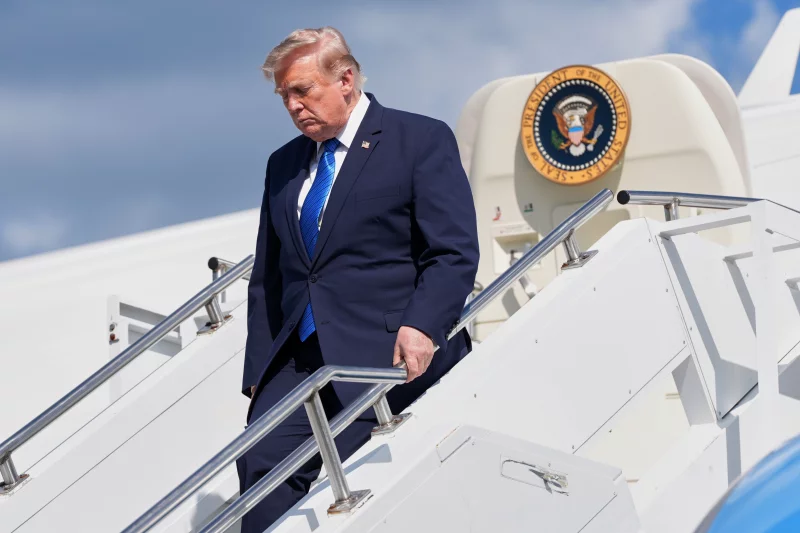
President Donald Trump speaks aboard Air Force One as he announces renewed diplomatic talks with Iran.
WASHINGTON — Trump Iran diplomacy is set to enter a new phase after US President Donald Trump announced that fresh negotiations with Tehran would begin on Monday, following his decision to suspend what he described as “massive” military strikes against the country.
Speaking to reporters aboard Air Force One, Trump said the United States was moving forward with negotiations instead of military action after regional allies urged restraint. He claimed Iran and several US partners in the Middle East believed the framework for an agreement had begun to take shape, making diplomacy the preferred option.
More than 100 words into the latest developments, Trump Iran discussions faced uncertainty after Iran’s Foreign Ministry rejected reports of direct negotiations with Washington. Officials said there were no plans to receive a US delegation or send Iranian representatives to the United States, indicating that any future dialogue would continue through mediators, as in previous rounds of negotiations.
Trump declined to set a deadline for reaching an agreement but said the United States remained prepared to act militarily if diplomacy failed. He added that Saudi Crown Prince Mohammed bin Salman, along with leaders from the United Arab Emirates and Qatar, had encouraged Washington to avoid military action over the weekend in favour of negotiations.
According to Trump, discussions are expected to focus on both the Strait of Hormuz and Iran’s nuclear programme. He suggested that progress on maritime security could pave the way for a broader agreement on the nuclear issue.
Vice Consul of the State of Kuwait Visits Medicam Group of Companies
Financial markets responded positively to the announcement. Global oil prices fell in early Asian trading, with Brent crude dropping about 4.5% and US West Texas Intermediate (WTI) declining around 4.6%, reflecting investor optimism that diplomatic efforts could reduce the risk of disruption to energy supplies through the Strait of Hormuz.
Iran, however, continued to reject Trump’s claim that it had requested a delay in military action. The country’s semi-official Mehr News Agency described the assertion as false, while Acting Defence Minister Majid Ibn al-Reza reiterated that Tehran considers every military threat “real and credible” and remains prepared for any escalation.
Iranian Foreign Minister Abbas Araghchi said negotiations with Oman regarding arrangements linked to the Strait of Hormuz were progressing, although no official confirmation was given regarding direct US-Iran talks.
Trump also revealed that the suspended military operation would have been “the biggest attack since World War II,” but argued that cancelling it created an opportunity to achieve a peaceful settlement after months of conflict.
The renewed diplomatic effort comes as the Trump administration faces increasing domestic pressure over the war. Public opinion surveys indicate growing concern among Americans about the conflict’s economic impact, while higher energy costs and geopolitical uncertainty remain key issues ahead of the upcoming US midterm elections.