

Supreme Court Rules Full Forensic Protocols in Narcotics Reports Not Mandatory
Supreme Court Rules Full Forensic Protocols in Narcotics Reports Not Mandatory
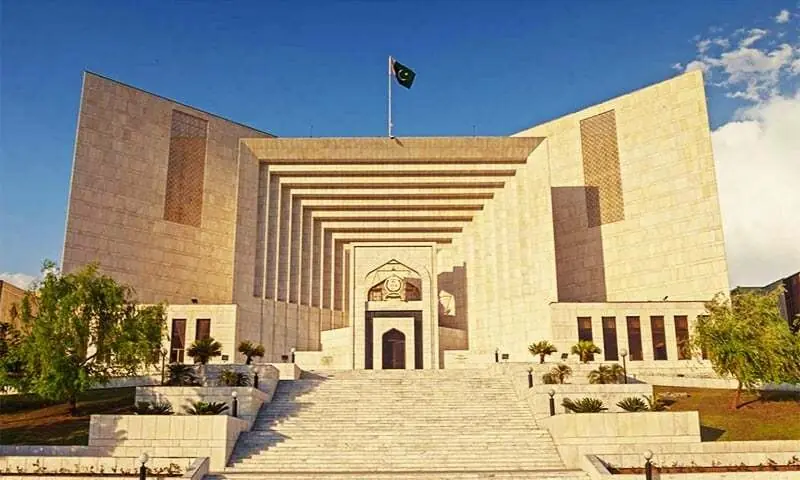
ISLAMABAD: The Supreme Court of Pakistan on Wednesday resolved a longstanding legal controversy regarding forensic analysis in narcotics cases, ruling that mentioning “full protocols” in government analysts’ reports under the Control of Narcotic Substances (Government Analysts) Rules, 2001, is directory rather than mandatory.
PRCS Reaffirms Commitment to Expanding Humanitarian
In a majority verdict of four to one, a five-member larger bench headed by Justice Jamal Khan Mandokhail held that failure to include complete forensic protocols in laboratory reports would not automatically invalidate the evidentiary value of such reports.
Justice Malik Shahzad Ahmad Khan dissented from the majority opinion. The bench also included Justice Muhammad Hashim Khan Kakar, Justice Salahuddin Panhwar, and Justice Ishtiaq Ibrahim.
The ruling addressed conflicting interpretations from earlier Supreme Court decisions regarding the admissibility of forensic experts’ reports under Section 36 of the Control of Narcotic Substances Act 1997 and Rule 6 of the 2001 Rules.
The larger bench was constituted to settle inconsistencies between previous verdicts. In the 2015 Ikram Ullah case and related matters, the court had ruled that mentioning full forensic protocols was mandatory and failure to do so rendered the report legally defective. However, an earlier 2011 ruling in the Gul Alam case had taken a contrary view.
The 14-page judgment, authored by Justice Jamal Khan Mandokhail, clarified that the requirement to mention complete protocols under the unamended Rule 6 was merely directory and not a substantive legal condition.
The court held that non-compliance with the requirement does not invalidate the forensic report nor deprive it of evidentiary value under Section 36(2) of the Act.
According to the judgment, identifying internationally recognized forensic tests listed in the amended Rule 6 would amount to “full and sufficient compliance” with the law.
The court further clarified that the decision applies to all narcotics cases and FIRs registered before the amendment to Rule 6 and would not have retrospective effect on previously decided cases.
The judgment emphasized the distinction between actually following forensic protocols during testing and merely mentioning them in the written report.
It stated that the purpose of Rule 6 was to provide courts with sufficient procedural information to reach fair conclusions, while existing legal safeguards already allowed courts to summon and examine government analysts whenever necessary.
The bench noted that under Section 36 of the Act and provisions of the Code of Criminal Procedure, courts retain the authority to summon forensic analysts and examine testing records in the interest of justice.
The Supreme Court observed that although government analysts remain responsible for providing necessary details in reports, omission to mention complete protocols constitutes a procedural defect rather than an illegality.
The judgment described such omission as a “curable irregularity” that does not defeat the objectives of the narcotics law or invalidate the prosecution’s evidence.
Legal experts believe the ruling is likely to significantly impact pending narcotics cases across the country by removing procedural ambiguities surrounding forensic evidence and laboratory reports.