PRCS Reaffirms Commitment to Expanding Humanitarian
PRCS Reaffirms Commitment to Expanding Humanitarian Services Across Pakistan

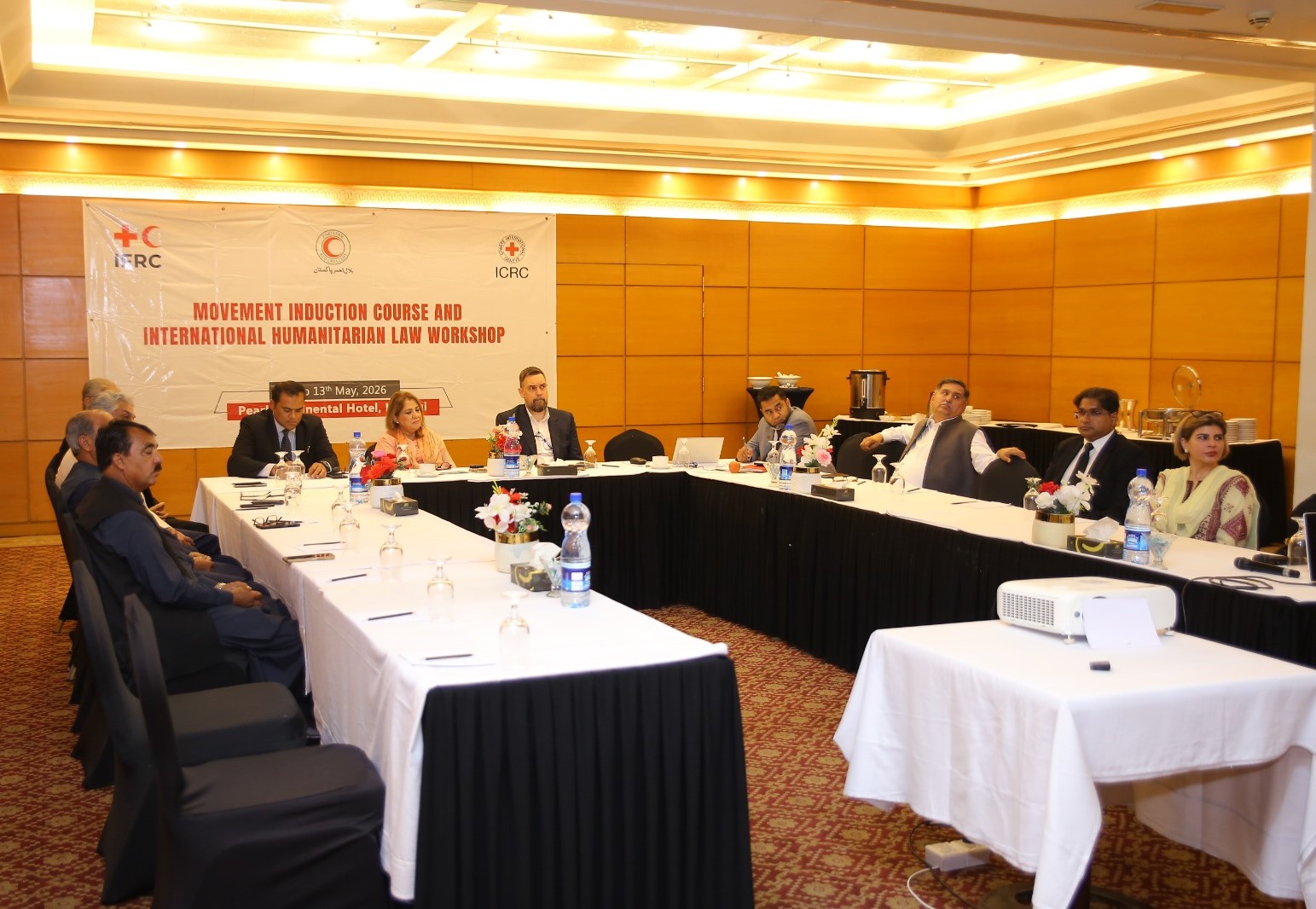
KARACHI: The Pakistan Red Crescent Society (PRCS), in collaboration with the International Committee of the Red Cross (ICRC), organized a three-day “Movement Induction Course & International Humanitarian Law Workshop” in Karachi from May 11 to 13, 2026, aimed at strengthening humanitarian coordination and institutional governance across Pakistan.
Five Soldiers Martyred, Seven Terrorists Killed in Barkhan Operation: ISPR
The workshop brought together chairpersons and representatives from PRCS provincial branches nationwide to enhance their understanding of the global Red Cross and Red Crescent Movement, governance systems, humanitarian principles, and International Humanitarian Law (IHL).
Sessions during the workshop focused on the Movement’s organizational structure, roles and responsibilities, coordination mechanisms, and legal protection frameworks under International Humanitarian Law.
Opening remarks were delivered by Farzhana Naek, Rehan Hashmi, Andreas Weissenberg, and Christoph Sutter.
The speakers emphasized the importance of principled humanitarian action, institutional strengthening, effective governance, and collaborative approaches to addressing humanitarian challenges across the country.
A dedicated governance session highlighted key areas including organizational commitment, accountability mechanisms, information sharing, leadership development, and governance culture aimed at improving the effectiveness and operational capacity of the National Society.
Participants also discussed ways to enhance coordination between provincial branches to ensure humanitarian assistance reaches vulnerable communities in all regions of Pakistan.
The workshop concluded with renewed commitments from participants to strengthen humanitarian cooperation, promote humanitarian values, and improve operational preparedness and response capacity throughout the Red Cross and Red Crescent Movement in Pakistan.
Officials noted that the initiative reflects PRCS’s continued dedication to extending humanitarian services to every corner of the country through stronger governance, professional training, and strategic partnerships.