US Backs $2.4 Billion Securiport Proposal to Upgrade Pakistan Airport Security Systems Amid Procurement Controversy
US Backs $2.4 Billion Securiport Proposal to Upgrade Pakistan Airport Security Systems Amid Procurement Controversy
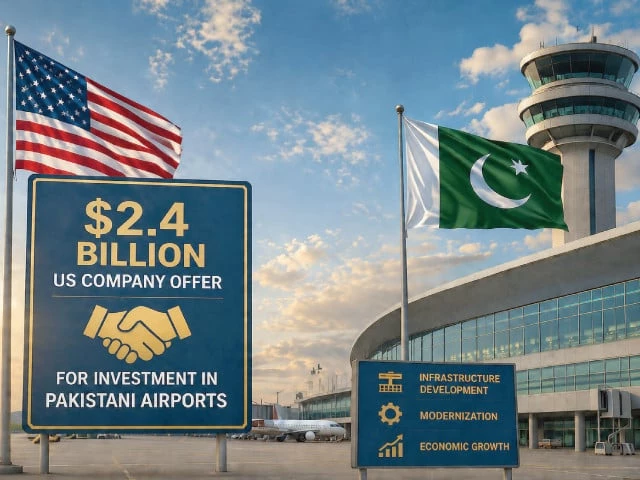
ISLAMABAD: The Trump administration has expressed support for a $2.4 billion investment proposal by US-based security technology firm Securiport to install advanced passenger screening and border management systems at major airports in Pakistan, aiming to strengthen detection of criminal and transnational threats.
According to official documents, Natalie A. Baker, the US Chargé d’Affaires in Pakistan, recently communicated support for the proposal and urged Pakistani authorities to consider the project, which includes deployment of Advanced Passenger Information (API) and Passenger Name Record (PNR) systems.
The proposed system is designed to ensure secure data transmission between airlines and government authorities while maintaining Pakistan’s full ownership of passenger data. It also includes 24/7 operational support and technical training components.
Investment model and scope
Securiport has offered to finance the entire upfront investment for the project and recover costs over a proposed 25-year contract period through a government-regulated passenger security surcharge. The company has also proposed establishing a local subsidiary in Pakistan and training more than 1,000 Pakistani professionals in modern border security technologies.
According to the proposal, the system would be operated by Pakistan’s Federal Investigation Agency (FIA) and integrated with biometric verification tools to support a modernized border management framework.
Baker, in her correspondence, noted that Securiport has over two decades of global experience and operates under a strict compliance framework. She added that the system would enable real-time detection and interception of high-risk travellers.
Airport security modernization efforts
The proposal aligns with Pakistan’s broader plan to introduce automated border control systems, including e-gates equipped with biometric passport scanners and facial recognition technology. Authorities have said the system could reduce immigration processing times from several minutes to under one minute per passenger.
These systems are also intended to integrate with FIA databases, exit control lists, passenger records, and Interpol systems for enhanced security screening.
Procurement concerns and controversy
However, the initiative comes amid growing scrutiny over procurement practices at the Pakistan Airports Authority (PAA). The Senate Standing Committee on Defence has raised concerns regarding transparency in the bidding process for the e-gates project, particularly the use of direct contracting under Public Procurement Regulatory Authority (PPRA) rules.
The International Monetary Fund (IMF) has also reportedly urged Pakistan to revise procurement frameworks that allow direct contracting with state-owned enterprises, as part of broader governance reforms.
Previously, global competitive bidding processes were initiated in 2020 and 2024 for similar airport security upgrades, but both efforts were later not pursued further.
The Senate committee has directed the Ministry of Defence to submit complete procurement records for review, amid concerns over possible procedural irregularities.
Transparency International Pakistan has also reportedly raised objections with the Prime Minister’s Office, alleging violations of PPRA rules in the awarding process, according to local media reports.
Ongoing review
While the US-backed proposal is being positioned as a major investment in aviation security and counter-terrorism capability, Pakistani authorities have not yet confirmed whether the offer will be formally accepted.
The matter remains under review amid competing concerns over security modernization, financial structuring, and procurement transparency.