Wall Street Rebounds as Ceasefire Revives ‘TINA’ Trade, Boosting U.S. Equities
Global investors are once again turning to U.S. markets as the revival of the “TINA” (“There Is No Alternative”) trade gains momentum following the early April ceasefire between the United States and Iran. Renewed optimism around geopolitical stability, strong corporate earnings, and the relative resilience of the U.S. economy have driven a sharp rally in equities.
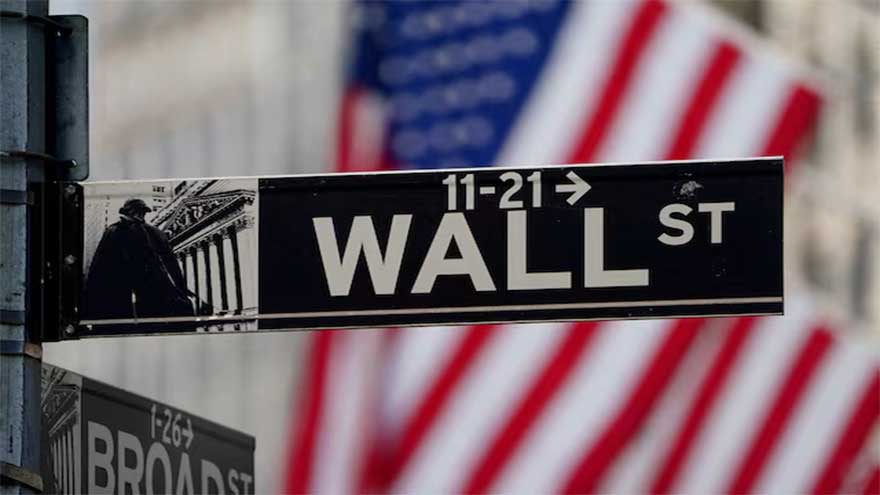
Global investors are once again turning to U.S. markets as the revival of the “TINA” (“There Is No Alternative”) trade gains momentum following the early April ceasefire between the United States and Iran. Renewed optimism around geopolitical stability, strong corporate earnings, and the relative resilience of the U.S. economy have driven a sharp rally in equities.
Supply Strain Hits US Forces in Middle East
Investor sentiment, which had shifted earlier this year toward alternative markets under the “TIARA” (“There Is A Real Alternative”) strategy, appears to be reversing. The ceasefire announcement by Donald Trump on April 7 helped restore confidence, pushing Wall Street indices back to record highs.
Data from LSEG/Lipper shows that global investors have poured approximately $28 billion into U.S. equities since the ceasefire, with domestic investors accounting for nearly $23 billion of that total. This marks a significant turnaround from earlier in the year, when U.S. stocks saw net outflows of around $56 billion.
The benchmark S&P 500 has risen above pre-war levels, reflecting the strength of corporate earnings and investor confidence. Analysts note that the U.S. economy’s status as a net energy exporter has cushioned it from the energy shocks that have impacted Europe and parts of Asia more severely.
Market strategists say the shift back to U.S. equities is also supported by robust earnings growth. First-quarter projections indicate earnings growth of nearly 14% for S&P 500 companies, significantly outpacing Europe’s expected 4.2% growth.
Meanwhile, major investment firms are adjusting their portfolios in response to the changing outlook. Some have begun reducing exposure to European and Asian markets in favor of increasing allocations to U.S. stocks, citing stronger economic fundamentals and better resilience to global shocks.
The ceasefire has also influenced broader market trends. While most global markets have recovered losses incurred during the conflict, U.S. equities have outperformed, reinforcing the perception that the American market remains the most attractive destination for investors during periods of uncertainty.
Despite the recent inflows, U.S. equities still show a cumulative net outflow of around $30 billion for 2026. However, analysts point out that this figure has improved significantly compared to mid-March levels, indicating a steady return of investor confidence.
Financial experts caution that while the current rally is strong, future market direction will depend on the durability of the ceasefire, developments in U.S.-Iran negotiations, and the broader global economic outlook.