China’s important milestone in the space field, successful satellite refueling in orbit experiment.
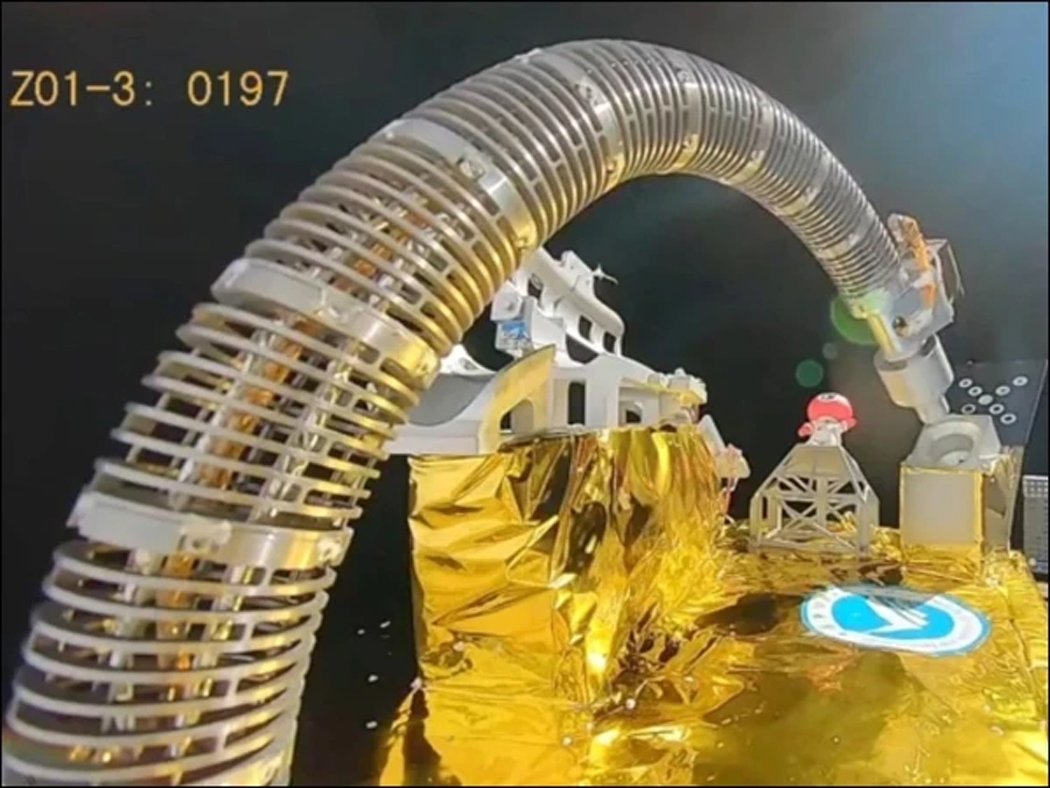
CHINA : China has made another breakthrough in space technology by successfully testing a satellite in low-Earth orbit. The test used a commercial satellite, Yusheng 306, which was recently launched from Gansu Province. According to Chinese media, the satellite performed the refueling using a special type of flexible robotic arm. The octopus-like arm is designed to easily twist and turn in tight spaces. The end of the arm is connected to a special port to transfer fuel. This advanced robotic system consists of multiple spring-like tubes and motors, which give it the ability to move at different angles and connect to any surface. Although it is not clear whether Yusheng 306 fully docked with another satellite during this experiment, experts say that to provide fuel to a satellite in orbit, it is necessary to connect to a specific port with extreme precision. During this process, satellites are orbiting the Earth at a speed of about 27,000 kilometers per hour, which makes the task very complex and sensitive. Experts have described this experiment as a difficult step like threading a needle in space, because even a minor mistake could have failed the entire mission. That is why the research team prepared the satellite’s design and control system with great care. This satellite is orbiting at an altitude of about 530 to 540 kilometers above the Earth’s surface and circles from pole to pole. The technology for refueling satellites in space is developing rapidly, with the aim of increasing the lifespan of expensive space systems. It should be remembered that earlier, China had conducted another successful refueling experiment by combining Shijian 25 with Shijian 21, which was carried out at an altitude of about 36 thousand kilometers. This development shows China’s growing expertise in the space sector.