
US Threatens Wider Iran Sanctions as China Calls for Diplomatic Solution
Washington warns countries dealing with Tehran of tougher financial measures, while Beijing urges restraint and a political path to end the regional crisis.
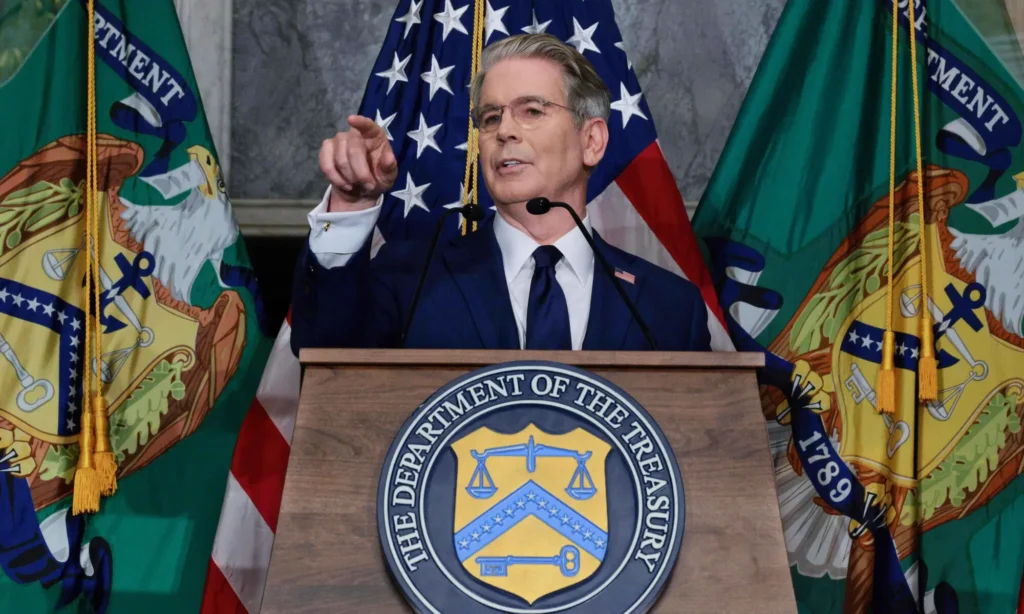
The US threatens wider sanctions on Iran as China calls for diplomacy to resolve the regional crisis.
WASHINGTON: The United States has warned that it could expand sanctions against countries and businesses dealing with Iran, escalating financial pressure on Tehran as the conflict approaches its six-month mark.
US Treasury Secretary Scott Bessent described the move as an “economic onslaught” targeting Iran’s financial links around the world. However, he did not identify the countries that could face penalties or specify when Washington would impose them.
Bessent said the administration wanted to give affected parties a short period to adjust before taking further action. He also indicated that the Treasury could announce sanctions against a financial institution by the end of the week.
Washington Targets Iran’s Economic Network
The Treasury announced sanctions against nearly 60 entities, individuals and vessels. It also identified five sectors that Iran relies on to support its economy: digital assets, gold, technology, aviation and shipping.
The United States has imposed sanctions on Iran for decades. Previous measures have focused heavily on oil revenues, aviation, cryptocurrency, weapons procurement and businesses linked to Iran’s Islamic Revolutionary Guard Corps.
US sanctions restrict designated entities from accessing the dollar-based financial system. Tehran has nevertheless continued to create new companies, entities and vessel registrations to bypass the restrictions.
Bessent also warned countries that continue to support Iran that they could face international consequences.
President Donald Trump separately claimed that Iran was “collapsing” as Washington prepared to intensify its financial campaign.
PML-N Faces National Assembly Setback as PPP Boycott Breaks Quorum
Tehran Dismisses US Claims
Iran rejected the US statements and mocked Washington’s claims about the impact of its economic pressure.
Iranian Deputy Foreign Minister Kazem Gharibabadi questioned why the United States would need what Washington describes as a major financial campaign if its existing strategy had already achieved its objectives.
He argued that the planned escalation demonstrated that the US had not achieved its stated goals.
Tehran has repeatedly sought to withstand sanctions by developing alternative financial channels and maintaining trade with major economic partners.
China Warns Against More Pressure
China has emerged as Iran’s largest buyer of oil in recent years, making Beijing a key focus of Washington’s efforts to restrict Iranian energy revenues.
The US has increased pressure on Chinese purchases of Iranian oil but has so far avoided imposing sanctions on major Chinese banks.
A Chinese Foreign Ministry spokesperson said Beijing would closely monitor developments and take necessary measures to protect its legitimate interests.
The spokesperson also urged all parties to remain rational and exercise restraint, arguing that sanctions and pressure tactics cannot resolve complex international disputes.
China has previously opposed unilateral sanctions and has called for diplomatic engagement to address the conflict.
Xi Calls for Diplomatic Path
Chinese President Xi Jinping separately called for a diplomatic solution to the wider Middle East crisis during talks with Jordan’s King Abdullah II in Beijing.
Xi said China supports a comprehensive ceasefire and the resolution of disputes through political and diplomatic channels.
He stressed that the sovereignty and security of countries across the region should receive respect.
Xi also highlighted Jordan’s regional role and said China supports efforts to reach a comprehensive, fair and lasting solution to the Palestinian issue.
According to China’s Foreign Ministry, Xi backed a return to Israeli-Palestinian peace talks based on a two-state solution.
The contrasting positions underline the widening diplomatic divide over the Iran conflict, with Washington preparing further economic pressure while Beijing continues to call for negotiations and restraint.