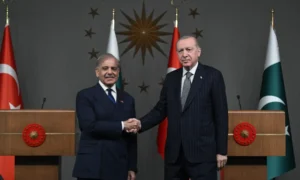
From King Mahendra to Field Marshal Asim Munir: Lessons in Sovereignty and Strategic Alignment
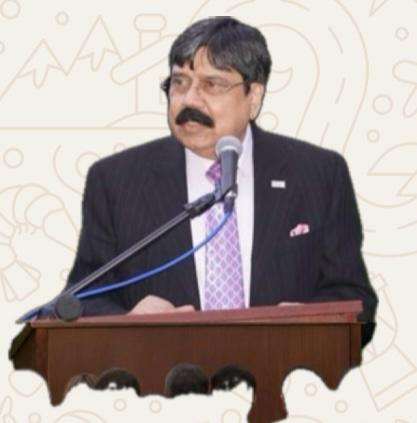
From King Mahendra to Field Marshal Asim Munir: Lessons in Sovereignty and Strategic Alignment
How Nepal’s defiance of India and the Soviet Union parallels Pakistan’s renewed role as the U.S.’s most strategic nation under Trump’s global peace vision.
By Dr. Gholam Mujtaba, Ed.D, MD, FRSPH
Introduction
The mid-20th century was a defining era for Nepal’s sovereignty. At the center of this struggle stood King Mahendra, a monarch whose vision and political acumen reshaped Nepal’s place on the global stage. When India attempted to undermine Nepal’s independence by influencing Russia to deny Nepal’s membership in the United Nations, King Mahendra waged a four-year battle—armed with evidence, diplomacy, and vision—that ultimately changed Nepal’s destiny. However, this story cannot be told without examining the role of the United States and its parallel relationship with Pakistan, both of which underscore the importance of South Asia during the Cold War.
Today, these lessons carry renewed relevance as Pakistan’s Senate delegation prepares to engage the United States, Bangladesh, and Nepal—and extend outreach to Sri Lanka—under a new framework for regional peace envisioned by President Donald J. Trump.
India’s Challenge to Nepal’s Independence
During King Mahendra’s reign, India pursued a policy of asserting dominance over its smaller neighbors. In its communications with Moscow, India insisted that Nepal was not truly independent and therefore did not deserve a place at the United Nations. This narrative was repeated four times by Russian representatives, reflecting India’s lobbying power at the height of the Cold War.
The implication was clear: without international recognition, Nepal would remain geopolitically sidelined, perpetually dependent on Indian routes, infrastructure, and diplomacy.
King Mahendra’s Fight for Recognition
King Mahendra responded with resilience. He undertook a four-year diplomatic effort, gathering historical and legal evidence to demonstrate that Nepal had never been militarily defeated or colonized. His argument was simple yet powerful: Nepal had always preserved its sovereignty despite external pressures.
To break the Indian narrative, King Mahendra launched a bold diplomatic initiative—a 29-day visit to the Soviet Union. The visit had two strategic aims:
1. To collapse India’s dominance over Nepal’s narrative in Moscow.
2. To secure Russian support for development projects that would reduce Nepal’s dependence on Indian transit routes.
The East–West Highway and Strategic Industries
The East–West Highway, a project central to King Mahendra’s vision, was at the heart of the dispute. Without the highway, Nepal’s internal connectivity would remain stunted, forcing the country to rely on India for the movement of goods across its own land.
India, fearing a more self-reliant Nepal, supported elements within Nepalese political circles who opposed the highway. Yet, King Mahendra successfully convinced Russia to back the project. The result was transformative:
• Dhalkewar–Simra Road: Paved with Russian support, securing Nepal’s internal mobility.
• Industrial Development: Janakpur Cigarette Factory, Birgunj Sugar Factory, and an Agricultural Tools Center were established, laying the foundation of Nepal’s modern industrial base.
• Health and Education: Russia assisted Nepal in producing nearly one thousand doctors, marking an unprecedented leap for the country’s healthcare system.
These achievements were not mere development milestones—they were instruments of sovereignty, reducing Nepal’s reliance on India and proving King Mahendra’s foresight.
The United States and South Asian Geopolitics
While Russia’s support for King Mahendra was critical, the United States was also quietly shaping South Asia’s balance of power during the same era. Washington had recognized early on that India sought regional hegemony, often at the expense of smaller states.
• With Nepal, the U.S. maintained friendly ties, providing limited aid and technical support, but its broader Cold War strategy placed more emphasis on Pakistan. Nepal’s role was seen as a buffer against Chinese and Indian influence, and Washington supported Kathmandu’s independent identity at the UN.
• With Pakistan, the U.S.–Pakistan relationship was far deeper and strategic. From the 1950s onwards, Pakistan became Washington’s key ally in South Asia, a member of SEATO and CENTO, and a frontline state in the Cold War.
• ?
The reason for this strong alliance lay in Pakistan’s geopolitical position: it bordered China, India, Afghanistan, and the Soviet Union’s southern frontier. Pakistan’s willingness to stand against communist expansion made it indispensable to Washington. In contrast, India’s policy of non-alignment and close ties with Moscow pushed the U.S. further toward Islamabad.
A Renewed U.S. Vision for Regional Peace and Balance
The lessons of King Mahendra’s era resonate today. As Pakistan’s Senate delegation prepares for a historic visit to the United States, it is equally important to extend this engagement to Bangladesh, Nepal, and Sri Lanka. On my suggestion, the delegation will travel onward to Dhaka and Kathmandu after its engagements in Washington, D.C., ensuring a collective regional outreach.
This effort aligns with President Donald J. Trump’s vision of promoting peace, maintaining a balance of power, and fostering economic connectivity in South Asia. I propose that the United States deepen partnerships with Pakistan, Bangladesh, Sri Lanka, and Nepal—not only to counterbalance Indian hegemony but to withstand expansionist attempts by communist authoritarian regimes in South and Central Asia.
The 21st century is undeniably the U.S. century. Regardless of the pressures exerted by communist systems, their economic models remain heavily dependent on America’s vast consumer market. China, for instance, gains over $478 billion annually from access to U.S. consumers despite tariff regimes. India, too, benefits heavily from exports to the U.S.. Yet, photo opportunities at forums such as the Shanghai Cooperation Organization (SCO) cannot undo U.S. tariff policies or Washington’s determination to safeguard its market.
Pakistan as the “Most Strategic Nation” of the United States
In this emerging power play, Pakistan must seize the opportunity to become the Most Strategic Nation (MSN) for the United States in South Asia. A regional leadership vacuum exists: India’s credibility is under strain due to its double games between Moscow and Washington. At the same time, smaller South Asian nations often lack the political weight to set the agenda.
Pakistan is uniquely positioned to fill this void. Its geography—bridging South Asia, Central Asia, and the Middle East—gives it leverage that few nations possess. Yet geography alone is not enough. What Pakistan needs is a well-crafted foreign policy, one that is pragmatic, visionary, and aligned with long-term U.S. interests.
Pillars of a Well-Crafted Foreign Policy for Pakistan
1. Economic Diplomacy
Pakistan must prioritize trade and investment agreements with the United States, leveraging its strengths in the textile, agricultural, and technology sectors. By tapping into U.S. supply chains disrupted by tariffs on China, Pakistan can present itself as a reliable alternative hub for manufacturing and exports.
2. Regional Security Leadership
By aligning with Washington on counterterrorism, maritime security, and stability in Afghanistan, Pakistan can establish itself as the pivot state for peace in South and Central Asia. Its military strength, coupled with U.S. technological partnerships, can anchor regional defense frameworks.
3. Diaspora Leverage
With a vibrant Pakistani American community, Pakistan can use its diaspora as a bridge of influence. Mobilizing intellectual, financial, and political capital from this community can strengthen U.S.–Pakistan relations and counter hostile narratives.
4. Strategic Communication
Pakistan must craft a clear and consistent narrative: that its partnership with the U.S. is based on mutual benefit, stability, and economic growth—not dependency. This requires a professional foreign policy corps that can engage international media, think tanks, and policy circles.
5. Multilateral Engagement
Pakistan should lead a South Asian coalition with Bangladesh, Nepal, and Sri Lanka under a U.S.-backed framework, ensuring that smaller nations are not drawn into authoritarian spheres of influence. This will enhance Pakistan’s credibility as a regional leader.
The Role of Field Marshal Asim Munir and Trump’s Global Vision
A critical development in recalibrating these dynamics has been Field Marshal Asim Munir’s vision, which aligns with President Donald J. Trump’s doctrine of pragmatic peace and balance of power. Their joint understanding, facilitated during the follow-up to a historic luncheon meeting at the White House, opened avenues that extend beyond South Asia.
• Iran: Backchannel diplomacy encouraged by Pakistan helped ease tensions, paving the way for dialogue and de-escalation in the Gulf.
• Gaza Strip: The Trump–Munir convergence has created momentum for initiatives that could halt wars and secure humanitarian peace in one of the world’s most volatile regions.
• Ukraine: Pakistan’s strategic signaling, in harmony with U.S. goals, has shown potential in pushing for negotiated pathways to end hostilities in Europe.
It was in this context that Pakistan initially proposed a Nobel Peace Prize for President Trump—an idea that resonates even more strongly today as concrete steps toward peace in Iran, Gaza, and Ukraine emerge.
Global Peace Outlook: Pakistan’s Expanding Role
Pakistan’s evolving role is no longer confined to South Asia. As a trusted partner of the United States under President Trump’s vision and with Field Marshal Asim Munir’s strategic leadership, Pakistan has emerged as a bridge of peace across regions:
• In the Middle East, reducing tensions between Saudi Arabia and Iran while pushing for ceasefire efforts in Gaza.
• In Europe, providing diplomatic channels that highlight the necessity of negotiated settlements in Ukraine.
• In South and Central Asia, it is crucial to prevent communist authoritarian expansionism from destabilizing fragile states like Nepal, Bangladesh, and Sri Lanka.
This comprehensive role demonstrates why Pakistan is a strategically important nation for the United States. By filling the leadership vacuum, Islamabad positions itself not only as a regional anchor but also as a facilitator of global peace.
Lessons for Today
King Mahendra’s story is not just a historical anecdote—it is a template for how smaller nations can assert sovereignty through strategic alliances. Just as Pakistan’s U.S. alliance gave it leverage against India, and Nepal’s engagement with Moscow gave it recognition, today’s South Asian nations must engage the United States to preserve sovereignty, independence, and progress.
For Pakistan, this is a moment to craft a foreign policy of vision and merit, one that elevates it as the U.S.’s most strategic partner in the region while serving as a peace broker in global crises.
Keynote
King Mahendra’s persistence secured Nepal’s recognition as a sovereign UN member, strengthened its internal infrastructure, and laid the groundwork for the development of modern healthcare and industry. His legacy demonstrates that alliances with superpowers are not optional luxuries but necessities for survival and prosperity.
Today, under President Trump’s renewed framework of peace and balance of power, U.S. partnerships with Pakistan, Bangladesh, Sri Lanka, and Nepal can both counter communist expansion and usher in a new era of stability and economic uplift in South Asia. Pakistan, with the visionary leadership of Field Marshal Asim Munir and its positioning as the Most Strategic Nation of the United States, has the opportunity to fill the regional leadership vacuum and extend its influence toward securing peace in Iran, Gaza, and Ukraine—validating Pakistan’s earlier proposal for a Nobel Prize for President Trump.
About the Author
Dr. Gholam Mujtaba is a Pakistani American political leader, scholar, and senior Republican figure in the United States. He serves as Chairman of the Pakistan Policy Institute USA. With dual doctorates in medicine and leadership studies, his writings explore geopolitics, U.S.–Pakistan relations, and the history of South Asia.