
Zafarullah Poshni’s Autobiography ‘Zindagi Zindan Dili Ka Naam Hai’ Launched in Karachi
Speakers at the Arts Council ceremony highlighted the book’s literary value and its account of Pakistan’s political, social and prison history.
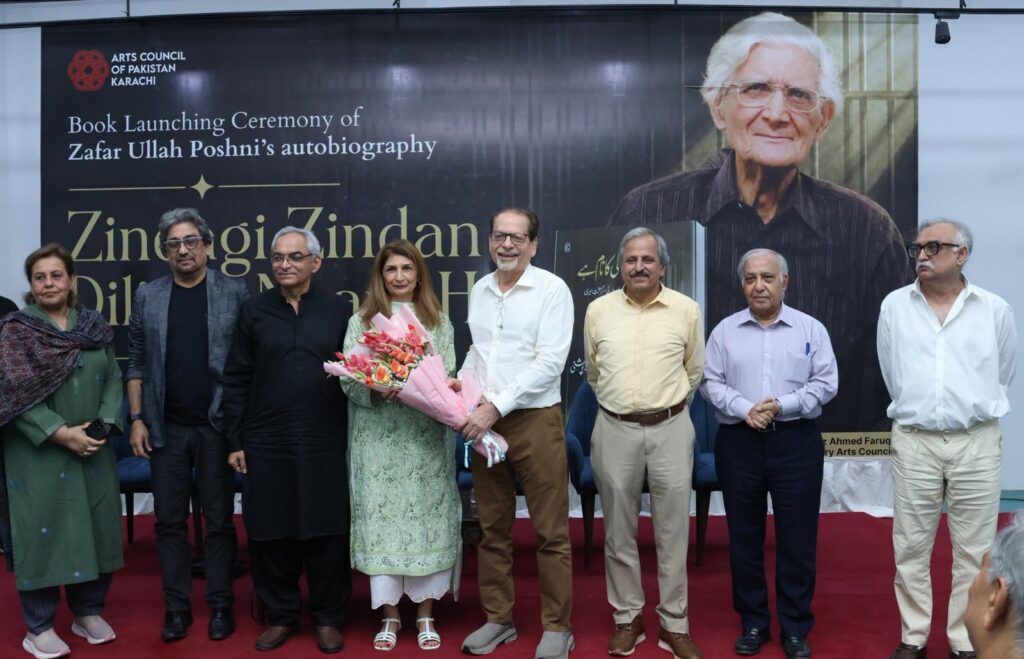
Arts Council Karachi hosts the launch of Zafarullah Poshni’s autobiography
KARACHI: The Arts Council of Pakistan Karachi hosted a book launch ceremony for renowned writer Zafarullah Poshni’s autobiography, Zindagi Zindan Dili Ka Naam Hai, bringing together prominent writers, journalists, academics and social figures.
Arts Council President Mohammad Ahmed Shah, senior analyst Mazhar Abbas, educationist Dr Jaffar Ahmed, economist and former FBR chairman Shabbar Zaidi, Anita Shah and writer Noor-ul-Huda Shah shared their views about Poshni and his literary work.
A large number of literary and social personalities, along with journalists, attended the ceremony. Owais Tauheed moderated the event.
Book Offers a Window Into Pakistan’s Past
Speakers discussed Poshni’s personality, literary contribution and the historical importance of his autobiography.
Mazhar Abbas said readers should examine the events described in the book within the political, social and historical context of the period.
He said books and memoirs from that era can help readers understand the political environment and ideological differences among leading political figures.
Dr Jaffar Ahmed recalled his connection with the book’s first edition. He said he wrote an extensive review of the work almost five decades ago.
Sindh eSports Championship 2026 Opens in Karachi With Over 1,000 Teams
He described the autobiography as an important record for understanding both Poshni’s life and the circumstances of his time.
Detailed Account of Prison Life
Dr Jaffar Ahmed particularly praised Poshni’s description of prison life. He said the writer went beyond his personal experiences and documented the social environment inside prison.
The autobiography also describes prison procedures and the system that operated during that period. This detail, he said, adds historical value to the work.
Shabbar Zaidi said readers should study Poshni’s autobiography against the backdrop of Pakistan’s political history.
He highlighted the book’s accounts of historical events and Poshni’s observations about life inside prison.
A Distinctive Literary Voice
Noor-ul-Huda Shah said she first read the book during her teenage years. She recalled that the title and cover remained in her memory for decades.
She said the book covers events and circumstances between 1951 and 1955. In her view, it goes beyond the story of a single incident and provides insight into the political, social and historical conditions of the period.
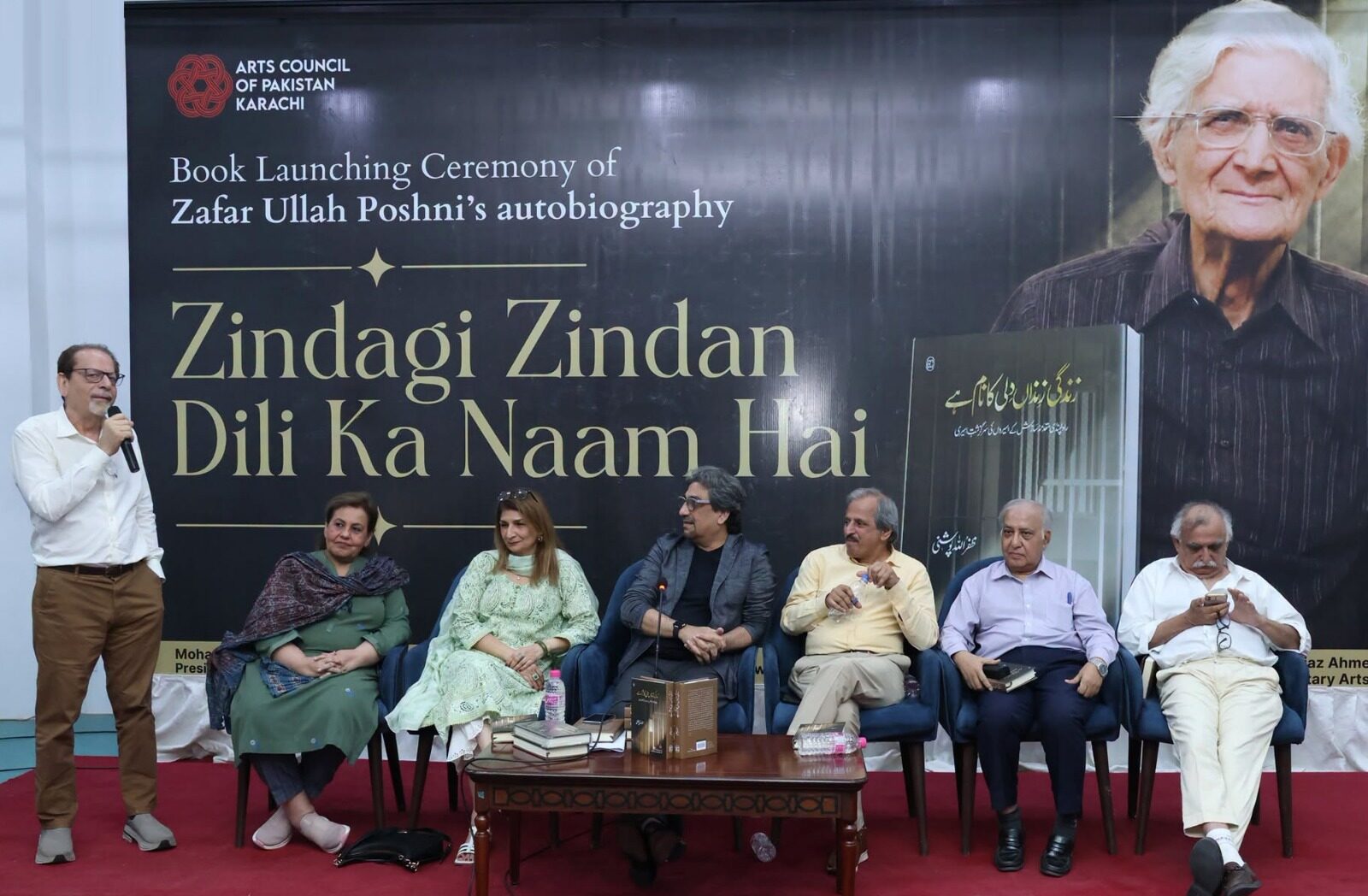
Anita Shah described Poshni as a liberal, open-minded and progressive thinker. She said his ideas were ahead of his time.
She added that Poshni had a distinctive personality. People who met him, she said, were often influenced by his attitude and approach to life.
Arts Council Pays Tribute
Mohammad Ahmed Shah recalled Poshni’s association with the Arts Council. He said the writer regularly visited the institution and participated in several conferences.
Shah described Poshni as an exceptional personality and praised the speakers for examining Pakistan’s past from critical and analytical perspectives.
He said the discussion offered an encouraging opportunity to revisit history through literature and personal memoirs.
The ceremony highlighted the continuing relevance of Zindagi Zindan Dili Ka Naam Hai as a literary and historical work, particularly for readers seeking a deeper understanding of Pakistan’s political and social past.