Uzbek President Unveils Ambitious Reform and Investment Agenda at ADB Annual Meeting
Web Desk May 4, 2026President Shavkat Mirziyoyev addressed the 59th Annual Meeting of the Board of Governors of the Asian Development Bank, outlining Uzbekistan’s economic transformation and proposing a forward-looking agenda focused on digital innovation, green energy, and regional connectivity.
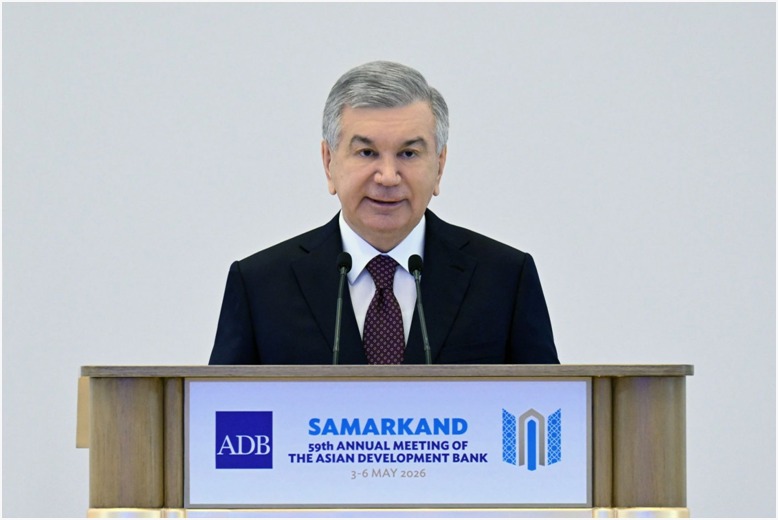
President Shavkat Mirziyoyev addressed the 59th Annual Meeting of the Board of Governors of the Asian Development Bank, outlining Uzbekistan’s economic transformation and proposing a forward-looking agenda focused on digital innovation, green energy, and regional connectivity.
Eight Die in Karachi as Extreme Heat Claims Lives Across Multiple Areas
Speaking in Tashkent, Mirziyoyev welcomed global delegates and highlighted the country’s historic role as a crossroads of civilizations along the Silk Road. He described “New Uzbekistan” as an emerging hub for global dialogue and investment.
The president emphasized that since 2016, Uzbekistan has undertaken sweeping reforms to liberalize its economy, attract foreign investment, and improve living standards. Over this period, the country has attracted $150 billion in investment, tripled exports, and expanded its economy from $50 billion to $147 billion.
He noted that poverty levels have significantly declined—from nearly 35% to 5.8%—while millions have seen improved incomes. Uzbekistan has also made notable progress in achieving global development targets, including the United Nations Sustainable Development Goals.
Mirziyoyev outlined a bold vision to grow the economy to over $240 billion by 2030 and join the ranks of upper-middle-income countries. He also announced plans to list 30% of shares from the National Investment Fund—comprising major state enterprises—on international capital markets.
Highlighting the role of the ADB as a strategic partner, he said joint projects worth nearly $16 billion are currently underway, with a new $12 billion cooperation program recently signed.
The president placed strong emphasis on digital transformation, announcing the development of an Artificial Intelligence hub and more than 200 AI-related projects across sectors. He proposed launching a special ADB-backed initiative to scale AI adoption in developing countries and confirmed Uzbekistan’s participation in the “Digital Highway for Asia” initiative.
Energy transition was another key focus, with Mirziyoyev noting that renewable energy now accounts for 30% of Uzbekistan’s power generation, with plans to increase this to 54% by 2030. He also highlighted regional efforts to establish a Central Asia–Europe green energy corridor.
On infrastructure, he pointed to the strategic importance of the China–Kyrgyzstan–Uzbekistan railway project, which is expected to significantly enhance regional trade by reducing delivery times and increasing cargo capacity.
The president also called for the creation of a “Digital Customs and Logistics Alliance” under the Central Asia Regional Economic Cooperation (CAREC) framework to streamline cross-border trade.
Addressing global demand for critical minerals, Mirziyoyev noted Uzbekistan’s vast reserves and ongoing projects worth $1.6 billion in collaboration with international partners. He proposed joining ADB initiatives to move up the value chain through advanced processing and manufacturing.
Climate change and environmental sustainability were also highlighted, with initiatives such as planting 200 million trees annually and creating green zones on the dried Aral Sea bed. He proposed a regional “Central Asia Green Belt” project to combat desertification.
In the tourism sector, Mirziyoyev underscored Uzbekistan’s growing appeal, with international arrivals reaching 12 million. He proposed establishing a “Central Asia Tourism Ring” to promote regional travel and collaboration.
Concluding his address, the Uzbek leader reaffirmed his country’s commitment to working closely with international partners through innovative financing mechanisms, including public-private partnerships and blended finance, to achieve sustainable development goals.
The high-level gathering brought together more than 4,000 participants from over 100 countries, reinforcing the ADB’s role in promoting economic stability and regional cooperation.