US Says Door Open for Iran Talks as Regional Conflict Escalates
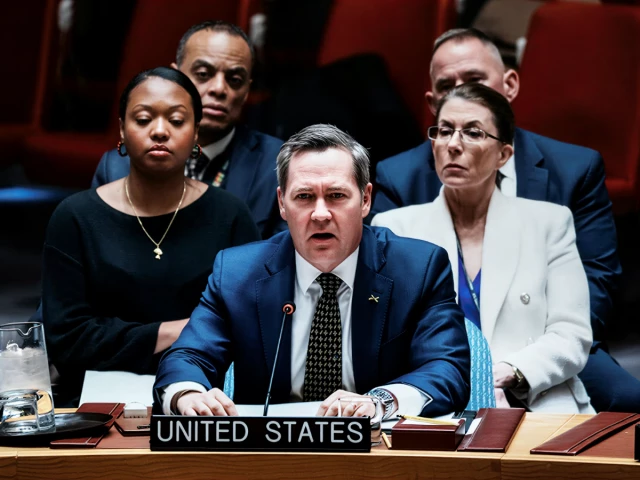
US Ambassador to the UN Mike Waltz says Washington remains open to renewed talks with Iran.
US Ambassador to the United Nations Mike Waltz said Sunday that the “door is open” for Iran to return to negotiations aimed at ending the conflict in the Middle East.
Speaking at an Al-Monitor Live event in New York on the sidelines of the UN General Assembly, Waltz said the Trump administration believes time remains on Washington’s side in its confrontation with Iran, which began on February 28.
“I do believe that to be the case,” Waltz said when asked whether Washington believed time was on its side.
He added that the United States remained open to renewed talks with Tehran. Waltz also rejected reports that Iran had demanded an end to US sanctions and reparations as conditions for returning to negotiations. He described those reports as “fantastical.”
The US ambassador also said Iran must not use a nuclear weapon to threaten the international community.
Waltz Says Iran Faces Economic Pressure
Waltz said the Iranian government faced significant economic pressure and claimed that its currency had weakened sharply.
“The Iranian regime is at its weakest point since 1979, and it’s getting weaker,” he said.
Hangu Operation Leaves 6 Security Personnel Martyred, 8 Militants Killed
According to Waltz, Washington hopes Iran will eventually return to negotiations through diplomatic channels.
His remarks came as Washington and Tehran continued to issue warnings about possible military action.
Iran Warns of Possible US Strikes
Iranian military command said Monday that it had received information indicating that the United States planned to resume strikes against Iran.
Earlier, Iranian Parliament Speaker Mohammad Bagher Ghalibaf said Tehran had conveyed its messages and conditions to Washington through intermediaries.
He said Iran would require Washington to address those conditions before negotiations could resume.
The statements highlight the continuing gap between Washington and Tehran as diplomatic efforts face uncertainty.
Iran Reports US Drone Interception
Iran’s Islamic Revolutionary Guard Corps said Monday that it intercepted and destroyed a US MQ-1 drone over the Strait of Hormuz, according to Iranian media.
The IRGC said its advanced aerospace air-defence system destroyed the drone as part of Iran’s integrated air-defence network.
Mehr News Agency reported the claim, which independent sources have not verified.
The IRGC also claimed that Washington had returned the MQ-1 to service after losing several MQ-9 drones. The US military previously used the MQ-1 extensively and later replaced it with newer systems.
Qatar Seeks to Revive US-Iran Talks
Qatar said Sunday that its mediation team had worked for nearly two weeks on proposals to restart negotiations between Washington and Tehran.
Foreign Ministry spokesman Majed al-Ansari said Qatar had exchanged ideas with both sides in an effort to reopen the diplomatic channel.
“We are working through our mediation team with Tehran and Washington to see whether talks can resume,” he said, according to Qatari media.
Qatar and Pakistan have also taken part in mediation efforts between the United States and Iran.
Al-Ansari said Qatar had received assurances from US officials that Washington wanted to reach an agreement.
He also called for a regional solution that could improve stability and protect major waterways, including the Strait of Hormuz.
Regional Fighting Adds to Tensions
The wider conflict has also affected other parts of the region.
Yemen’s government-affiliated Giants Brigades said Sunday that its forces destroyed five Houthi military vehicles near the Kahbub front overlooking the Bab al-Mandab Strait.
The group said its forces killed everyone inside the vehicles. Independent sources have not verified the claim, while the Houthis did not immediately comment.
The Bab al-Mandab Strait links the Red Sea with the Gulf of Aden and serves as a major international shipping route.
Meanwhile, Houthi forces have carried out missile and drone attacks targeting Saudi Arabia amid renewed fighting in Yemen.
The escalation has raised concerns over regional infrastructure and international shipping routes.
Strait of Hormuz Remains a Key Flashpoint
The Strait of Hormuz remains central to the confrontation because it carries a significant share of global energy shipments.
Iran has said it will not reopen the waterway until the sides meet the terms of an earlier June agreement according to Tehran’s interpretation.
The United States has also increased pressure on Iran’s oil exports, adding to the economic strain facing Tehran.
Despite the pressure, negotiations remain uncertain. Washington and Tehran continue to issue warnings while Qatar and other intermediaries seek a path back to talks.
The latest developments have also increased concerns about further escalation across the wider Middle East.