US-Iran Ceasefire: Washington and Tehran Agree to Resume Talks
The United States and Iran have agreed to halt hostilities temporarily and resume negotiations on the Strait of Hormuz after days of military exchanges threatened a fragile ceasefire
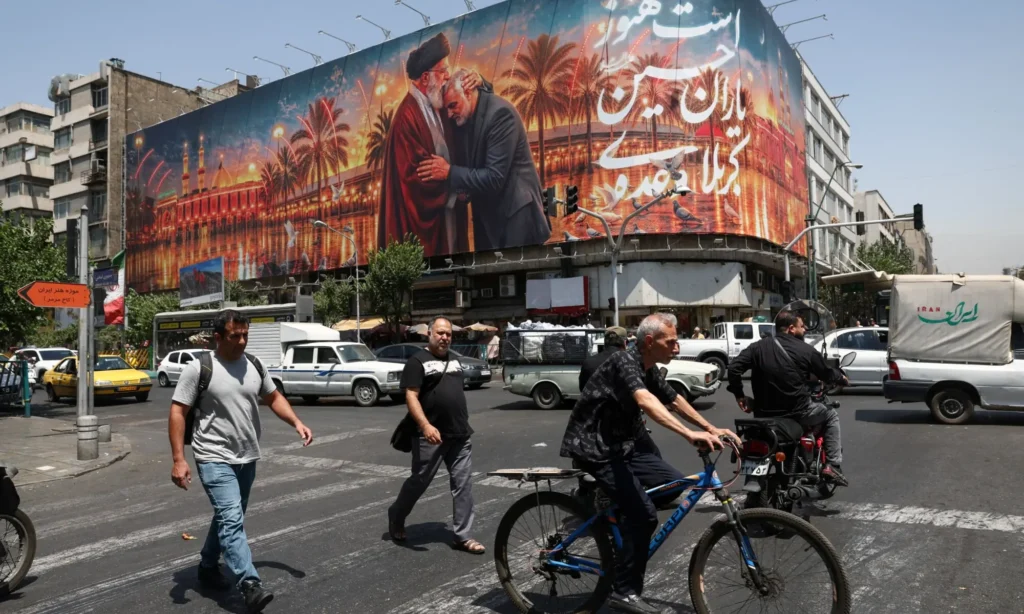
The United States and Iran prepare to resume diplomatic talks following a temporary ceasefire in the Gulf.
US-Iran Ceasefire: The United States and Iran have agreed to suspend recent hostilities in the Gulf and resume diplomatic talks over the Strait of Hormuz, raising hopes of preserving a fragile ceasefire after several days of military escalation.
A US official said both sides had agreed to “stand down for now” under a 14-point Memorandum of Understanding (MoU) reached on 17 June, which aims to restore commercial shipping through the Strait of Hormuz while negotiations continue.
“Technical talks are slated to continue on all areas of the memorandum of understanding. Both sides will stand down for now and vessels can move freely,” the official said.
Iran had not immediately commented on the US statement.
According to reports, the next round of negotiations is expected to take place in Doha, Qatar, on Tuesday.
Australia-Vanuatu Agreement: New Security Deal Blocks Foreign Military Bases
The renewed diplomatic efforts follow several days of missile and drone exchanges after an Iranian projectile struck a cargo vessel in the Strait of Hormuz on Thursday. Both Washington and Tehran accused each other of violating the interim ceasefire.
Earlier on Sunday, Iran launched missiles and drones towards US military facilities in Kuwait and Bahrain, shortly after US President Donald Trump warned that Iran would face severe consequences if it failed to comply with the ceasefire agreement.
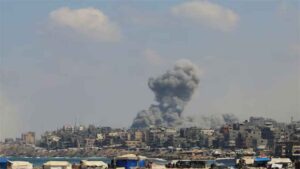
Meanwhile, Israel said its military had carried out fresh strikes against Hezbollah positions in southern Lebanon, targeting underground infrastructure used by the Iran-backed group. The operation followed another Israeli strike on Saturday despite a recent ceasefire agreement with Lebanon.
The US military also confirmed carrying out strikes on Iranian targets after an attack on a commercial tanker in the Strait of Hormuz, one of the world’s most important oil shipping routes.
In a social media post, President Trump warned that if diplomacy failed, the United States could intensify its military campaign against Iran.
“There may come a point when we are no longer able to be reasonable and will be forced to militarily complete the job that we very successfully started,” Trump said.
The interim peace agreement was designed to halt fighting, reopen the Strait of Hormuz to international shipping and allow negotiations on broader issues, including Iran’s nuclear programme.
Diplomatic talks mediated in Switzerland last week involved US Vice President JD Vance and Iranian Parliament Speaker Mohammad Baqer Qalibaf. Although the United States eased some sanctions on Iran following those discussions, military exchanges resumed shortly afterwards.
Following Sunday’s escalation, Kuwait said its air defence systems intercepted ballistic missiles and drones without reports of casualties or damage.
Bahrain reported that an Iranian strike damaged a residential building in Muharraq Province, although authorities confirmed no casualties. The country has called on the United Nations Security Council to hold an emergency session.
Qatar also reported that one of its citizens died after suffering injuries caused by shrapnel linked to military activity in the region. Another person was injured in the same incident.
Despite the latest agreement to resume talks, the situation across the Gulf remains volatile, with regional security continuing to depend on the success of upcoming diplomatic negotiations.