Trump Pushes Iran Deal as Pezeshkian Signals Deep Mistrust
Web Desk April 20, 2026Tensions surrounding potential peace talks between Donald Trump and Masoud Pezeshkian intensified on Monday, as both sides delivered sharply contrasting messages ahead of a possible second round of negotiations expected in Islamabad.
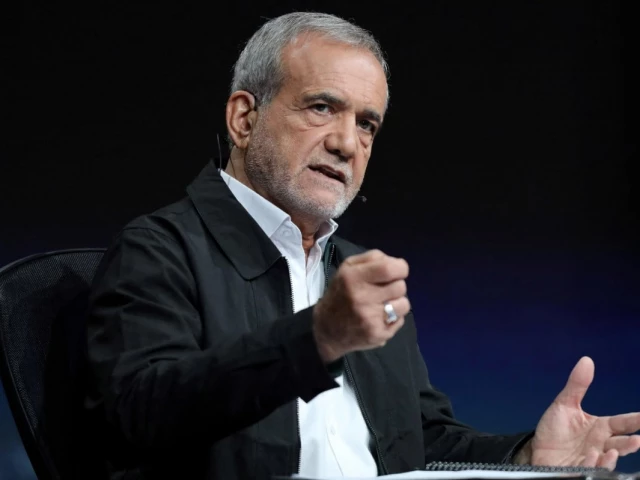
Tensions surrounding potential peace talks between Donald Trump and Masoud Pezeshkian intensified on Monday, as both sides delivered sharply contrasting messages ahead of a possible second round of negotiations expected in Islamabad.
Sindh Governor Appreciates PRCS Sindh Efforts in Disaster Response and Community Welfare
President Trump ?????? that a high-level US delegation, including JD Vance, Steve Witkoff, and Jared Kushner, was en route to Pakistan for talks with Iran, expressing confidence that a deal could be signed “today.” He also signalled readiness to personally meet Iranian leadership if meaningful progress was achieved, while reiterating Washington’s core demand that Iran abandon any pursuit of nuclear weapons.
However, uncertainty persists over the composition and arrival of the US delegation, with conflicting reports suggesting that some officials, including Vance, may not yet have departed for Islamabad.
On the other side, President Pezeshkian struck a cautious tone, underscoring the importance of diplomacy while openly expressing deep mistrust toward Washington. In a statement posted on social media, he stressed that “honouring commitments is the basis of meaningful dialogue,” warning that contradictory signals from the United States reinforce long-standing skepticism in Iran.
The Iranian leader also emphasised that Tehran seeks to end the conflict while preserving national dignity. Speaking during a visit to a fire station, he highlighted the need for prudent management of post-war challenges, including economic recovery, financial stability, and market control. He noted that overcoming these challenges would require national unity and public participation.
The diplomatic backdrop remains fragile as a two-week ceasefire between the United States and Iran approaches its expiration. Both sides have accused each other of violations, particularly amid escalating tensions in the strategically vital Strait of Hormuz, where maritime activity has been severely disrupted.
Iranian officials, including Foreign Ministry spokesperson Esmail Baghaei, have indicated there is currently no plan for a second round of talks, citing what they describe as “unrealistic” US demands and inconsistent policy positions. Tehran has also made clear that its nuclear programme and defensive capabilities are not open to negotiation beyond the framework of international law.
Meanwhile, Pakistan has intensified its diplomatic efforts to mediate between the two adversaries. Sources suggest that a recent contact between Field Marshal Asim Munir and President Trump could pave the way for “positive developments” regarding tensions in the Strait of Hormuz.
Global stakeholders, including Xi Jinping, have also called for restraint and the continuation of diplomatic engagement, warning that the situation in the Gulf remains highly sensitive and could have far-reaching consequences for global energy markets.
As the ceasefire deadline looms, the prospect of renewed negotiations remains uncertain, with both sides entrenched in their positions. While Washington projects optimism about a potential breakthrough, Tehran’s stance reflects deep-rooted distrust, raising doubts over whether diplomacy can bridge the widening gap.