Shehbaz Sharif Pledges Development in KP as Governor’s Rule Takes Effect
The prime minister vows federal support for security, policing and development as governor’s rule reshapes provincial administration
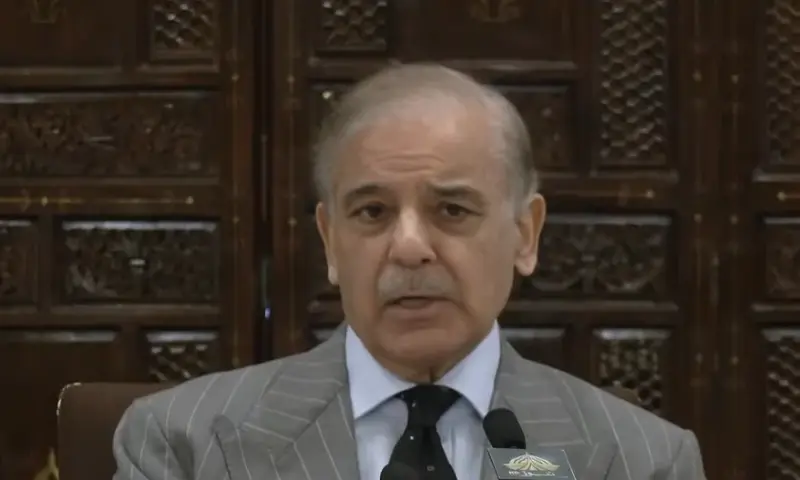
Shehbaz Sharif chairs an apex committee meeting in Peshawar to discuss KP security and development
PESHAWAR: Prime Minister Shehbaz Sharif has pledged federal support for restoring peace, stability and development in Khyber Pakhtunkhwa (KP), saying the government will mobilise available resources to improve security and public services following the imposition of governor’s rule.
The prime minister made the remarks on Thursday while chairing a meeting of the provincial apex committee in Peshawar. It was his first visit to the province since the federal government imposed governor’s rule and declared an emergency on October 11.
Chief of Defence Forces and Chief of Army Staff Field Marshal Asim Munir, KP Governor Faisal Karim Kundi, federal ministers and newly appointed provincial advisers attended the meeting. Participants reviewed the province’s security situation and discussed measures to address terrorism.
Shehbaz said the federal government had taken the decision to impose governor’s rule under what he described as “extreme compulsion”. He pledged that the Centre would work to restore public confidence and accelerate development across the province.
“I promise that we will leave no stone unturned in bringing back the happiness and era of progress to this province,” the prime minister said, adding that the federal government would provide all possible resources.
PM Raises Concerns Over Counterterrorism Measures
Shehbaz criticised the previous provincial administration’s handling of security and counterterrorism, arguing that gaps in policing and law enforcement had weakened efforts to maintain peace.
He said the province had around 5,000 vacant police positions, while Safe City projects remained incomplete. He also pointed to shortcomings in the capacity of the Counter-Terrorism Department (CTD) and police training.
The prime minister called for a comprehensive review of the circumstances that had allowed militancy to resurface after earlier security operations. He paid tribute to soldiers and law enforcement personnel who had sacrificed their lives in the fight against terrorism.
Shehbaz also criticised the return of militants to the region, arguing that it had undermined previous sacrifices and damaged public security.
The federal government has accused the Pakistan Tehreek-e-Insaf (PTI)-led provincial administration of failing to adequately support counterterrorism efforts. PTI, in turn, has argued that it has been excluded from important security decisions. These competing positions remain central to the political dispute surrounding the federal intervention.
Federal Funds and Development Concerns
The prime minister highlighted federal financial support for KP, noting that the province had received substantial resources because of its frontline role in combating terrorism.
He referred to arrangements associated with the 2010 National Finance Commission Award and said more than Rs800 billion had either been provided or allocated to support the province’s counterterrorism needs since 2010.
Despite that support, he questioned whether the province had developed the required equipment, trained personnel and institutional capacity to address the continuing security threat.
Shehbaz also cited alleged financial irregularities in public projects, including claims involving Rs100 billion in the Cities Improvement Project’s clean drinking water component and Rs37 billion in the Kohistan District Accounts Office case.
These figures were presented by the prime minister during his address. The allegations require assessment through the relevant investigations and official records.
He further referred to the human and economic costs of terrorism, stressing that education, healthcare and the protection of life and property must remain government priorities.
The prime minister said political and military cooperation had contributed to Pakistan’s recent economic stabilisation and argued that security improvements were essential to sustaining development.
EA Reportedly Plans 400 Job Cuts as BioWare Faces Closure and Mass Effect Game Cancellation
Governor Calls Peace and Stability a Collective Priority
Governor Faisal Karim Kundi described peace and stability in KP as a shared national responsibility. He said the province’s residents had endured significant hardship during years of conflict and deserved better access to education, healthcare and economic opportunities.
Kundi paid tribute to personnel from the police, army, Frontier Corps and Federal Constabulary who had lost their lives fighting terrorism.
He said the provincial Advisory Council would prioritise restoring peace, countering militant networks and integrating the merged districts into national development programmes.
“The people of KP would not have to choose between peace and development,” Kundi said, emphasising that the government had a responsibility to deliver both.
The governor also called for continued federal support and stronger coordination between civilian authorities and security institutions. He said public trust would remain an important measure of progress in the fight against terrorism.
Merged Districts Receive Special Attention
Kundi identified development in the merged districts as a special priority, noting that residents had paid a heavy price during years of conflict.
He called for improved public services, stronger economic opportunities and closer integration of these areas into wider national development initiatives.
The federal government has pledged to direct resources towards security and development, although the pace and effectiveness of implementation will depend on funding, administrative capacity and coordination between the relevant institutions.
Governor’s Rule Follows Political Deadlock
The federal government imposed emergency measures and governor’s rule in KP on October 11, citing security concerns and what it described as the provincial government’s disengagement from counterterrorism efforts. Parliament subsequently endorsed the measures amid opposition protests.
The decision followed unsuccessful negotiations between the federal government and opposition representatives. Counterterrorism policy was among the issues that contributed to the breakdown of talks, alongside disagreements over the opposition’s demands concerning its jailed founder, Imran Khan.
The PTI has objected to being excluded from decisions affecting the province’s security. Federal officials have rejected that criticism and accused the former provincial administration of inadequate action against militant groups.
The federal government has also authorised the deployment of Pakistan Army personnel and assets in KP in aid of civil power.
As the new administrative arrangement takes shape, restoring security, strengthening law enforcement and improving essential services remain key challenges. The government’s ability to deliver measurable progress will be closely watched by residents across the province.