
Sharjeel Memon Says Sindh’s Future Must Be Decided by Sindh Assembly
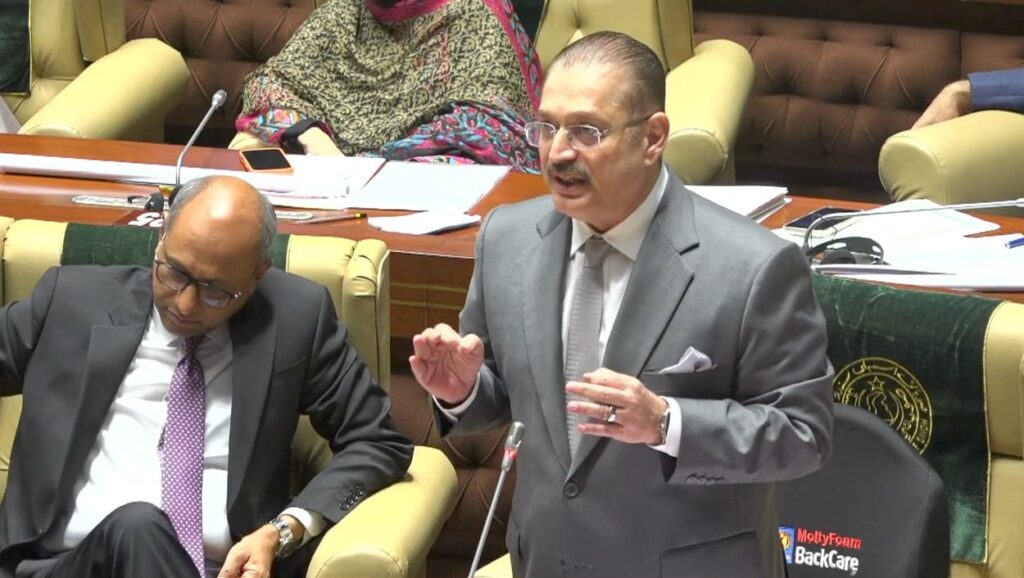
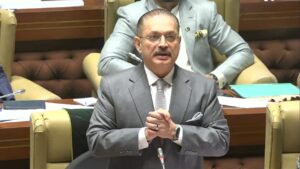
Sharjeel Inam Memon addresses the Sindh Assembly during a debate on Sindh’s unity.
Sindh Senior Minister and Provincial Minister for Information, Transport and Mass Transit Sharjeel Inam Memon has said the future of Sindh must be decided by the elected Sindh Assembly through constitutional procedures.
Speaking in the Sindh Assembly on Thursday, Memon described the day’s debate on an adjournment motion moved by Nisar Ahmed Khuhro as historically significant. He said the complete debate would be published in book form to preserve the views of both government and opposition members.
Sindh Assembly debate to become historical record
Memon said every speech and important point made during the debate would form part of the historical record.
The proposed book will document the positions of members on the issue of Sindh’s unity. He said the record would help future generations understand the arguments presented in the House.
According to Memon, much of Sindh’s political history had already been discussed during the debate. Therefore, members should focus on issues that had received less attention.
Memon stresses constitutional process for new provinces
The senior minister said the Pakistan Peoples Party (PPP) and the Sindh government have a clear position on the question of new provinces.
He referred to PPP Chairman Bilawal Bhutto Zardari’s position that decisions on new provinces should come from the relevant provincial assemblies.
Memon said the Sindh Assembly should decide any matter concerning Sindh. Similarly, the Punjab Assembly should decide matters concerning Punjab, while the relevant assemblies should decide issues involving other provinces.
He also referred to Article 239(4) of the Constitution regarding changes to provincial boundaries. According to him, such major decisions should not emerge from television talk shows, surveys or street politics.
“If the future of Sindh is to be decided, it should be on the floor of the Sindh Assembly,” he said.
Memon warns against linguistic politics
Memon urged political parties to handle the issue of new provinces with patience and responsibility.
He said sensitive political questions should not become tools for emotional or vote-bank politics. Some political forces, he added, may be trying to revive linguistic politics for electoral gains.
ISPR 15 Militants Killed in 36-Hour Operation Along Pakistan-Afghanistan Border
The minister stressed that the demand for a new province should not become a dispute between Sindhi-speaking and Urdu-speaking citizens.
He said Sindh belongs to all its communities. Political differences, he added, should not damage relations between people who share the province.
‘Sindh unity is not a linguistic issue’
Memon said the division of Sindh is not an issue between Sindhi and Muhajir communities.
He stressed that Urdu is Pakistan’s national language and remains widely used across the country. He also noted that he himself speaks Urdu and addressed the Assembly in the language.
Sindh, he said, has always brought together people from different linguistic and cultural backgrounds. Urdu-speaking, Sindhi-speaking, Punjabi-speaking, Pashto-speaking and Balochi-speaking communities all form part of the province.
Memon said the love and brotherhood between these communities remains stronger than political disagreements.
Memon refers to previous MQM positions
During his speech, Memon referred to previous statements by MQM leadership on the division of Sindh.
He mentioned statements made at different times between 2014 and 2018 concerning separate provinces, the division of Sindh and distinctions between urban and rural areas.
Memon said he raised these examples in the context of past political positions rather than for political point-scoring.
He also said some members may be speaking under current political circumstances rather than expressing their personal views.
Government, opposition urged to focus on public issues
Memon called on the Sindh Assembly to shift greater attention towards employment and public welfare.
He said the government and opposition should discuss practical ways to create jobs and address basic problems facing citizens.
Governance shortcomings, he added, should certainly be debated. However, creating new provinces or administrative units cannot automatically solve governance failures.
Memon also rejected the idea of linking individual governance incidents with demands for new administrative units. He called instead for reforms and stronger administrative measures within the existing system.
Memon questions silence over Punjab resolutions
The minister also referred to resolutions passed by the Punjab Assembly concerning South Punjab and Bahawalpur.
He argued that the same constitutional principle should apply across all provinces. If new provinces are considered a constitutional matter, the discussion should also address provinces where assemblies have previously passed relevant resolutions.
Memon questioned why political forces campaigning for new provinces in Sindh had not raised the issue with the federal government in relation to previous Punjab Assembly resolutions.
He said the same standard should apply to every federal unit.
Sindh Assembly expected to pass unity resolution
Memon said the Sindh Assembly has passed several resolutions supporting the unity of Sindh.
He indicated that another resolution on the issue could come before the House following the adjournment motion.
The minister maintained that the future of Sindh should remain a matter for elected representatives and constitutional institutions.
Diversity is Sindh’s strength, says Memon
Memon said Pakistan’s strength lies in its diversity of provinces, languages and cultures.
He described Sindh as a strong example of this diversity, particularly Karachi, where people from different ethnic, linguistic and religious backgrounds live together.
The minister said representatives from Sindhi, Urdu, Punjabi, Pashto and Balochi-speaking communities serve in the Sindh Assembly. Members from different religious communities also form part of the House.
He described Karachi as more than a metropolitan city. In his view, it represents the combination of different cultures and nationalities.
‘People of Sindh reject linguistic hatred’
Memon cited examples of political representation that cross linguistic boundaries.
He said Sukkur’s mayor is an Urdu-speaking Sindhi, while Sindh Assembly member Javed Arain represents Nawabshah despite his Punjabi-speaking background.
According to Memon, Arain received around 70,000 votes, including about 20,000 from Punjabi-speaking voters and around 50,000 from other voters.
The example, he said, showed that people in Sindh can support representatives beyond linguistic identities.
Memon concluded that the people of Sindh are peace-loving and reject politics based on linguistic hatred.
He said Sindh’s identity rests on love, brotherhood, tolerance and coexistence. The province’s diversity, he added, should remain a source of strength rather than division.