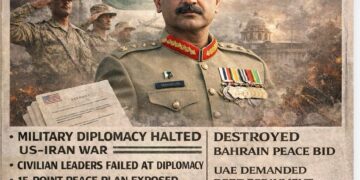


Islamabad/Washington – Pakistan’s contribution to the recent US-Iran two-week ceasefire highlights a complex interplay between military strategy and civilian diplomacy, raising questions about who truly enabled the pause in hostilities.
Pakistan’s Military Credited for Pivotal Role in US-Iran Ceasefire
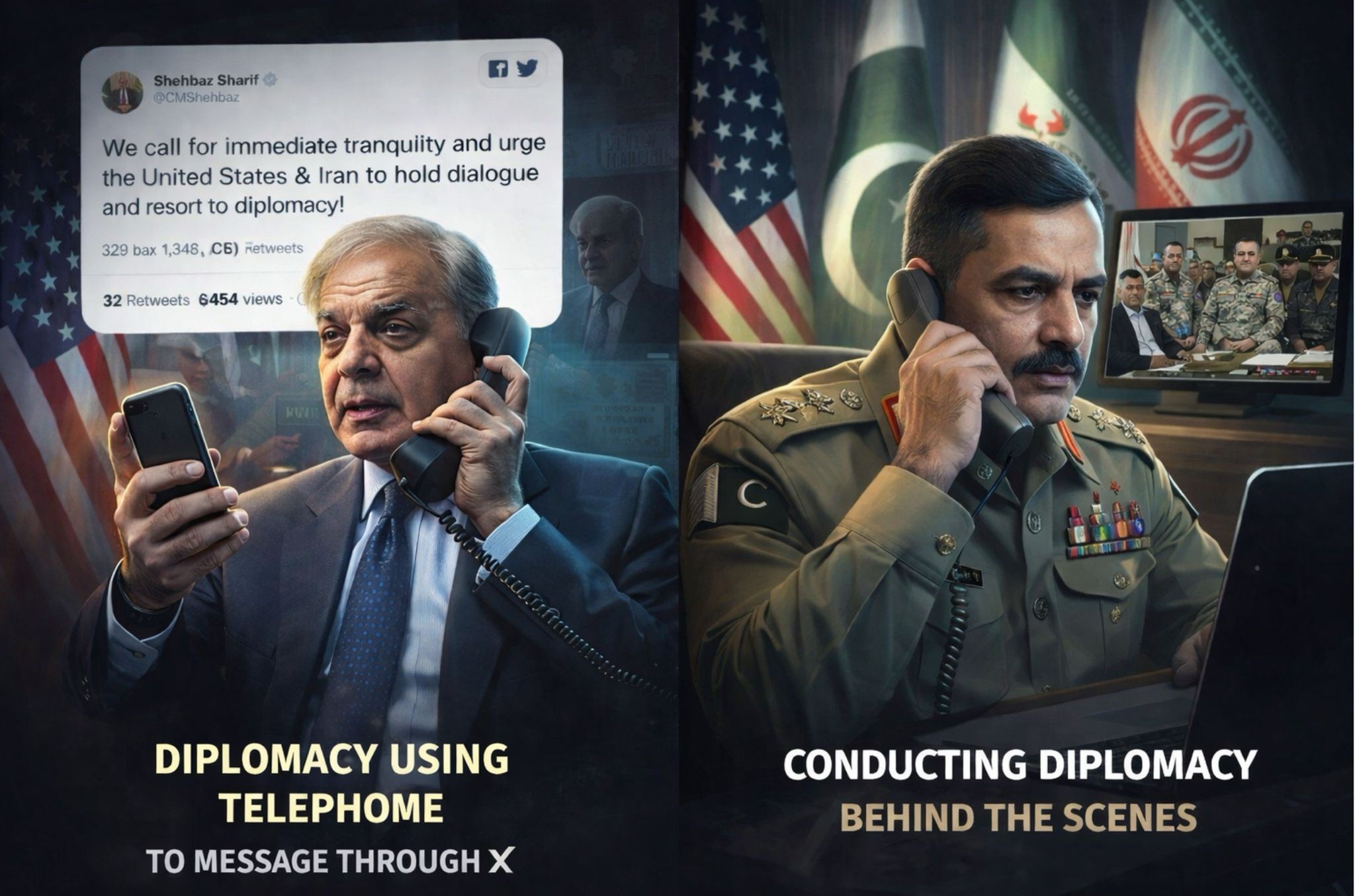
While Prime Minister Shehbaz Sharif publicly announced the ceasefire and floated Islamabad as a venue for negotiations, analysts emphasize that operational groundwork was largely maintained by Pakistan’s Army Chief, Field Marshal Asim Munir. Strategic backchannels facilitated through military-to-military links aligned with U.S. and regional security frameworks ensured credibility and trust, according to experts.
“The ceasefire is real, but it is a temporary pause rather than a final settlement,” said Prof. Dr. Gholam Mujtaba of the Pakistan Policy Institute USA. “Civilian leadership projected diplomatic visibility, but the military enabled the conditions for engagement.”
Key elements of the 15-point framework drafted by the United States include immediate de-escalation, nuclear program limitations, missile restrictions, regional conduct assurances, strategic guarantees, and phased economic incentives. President Donald Trump confirmed that Washington had no direct communications with Tehran, underscoring Pakistan’s role as a conduit rather than a formal mediator.
Observers note that civilian missteps—such as abstention from Bahrain-backed initiatives and ambiguous signaling to Gulf allies—have risked Pakistan’s regional alignment and could have long-term economic implications. Meanwhile, military engagement has earned international recognition for operational effectiveness, highlighting Pakistan’s potential as a stabilizing actor in global crises.
As US and Iranian delegations prepare to meet in Islamabad, strategic questions remain: Who will lead the negotiations? What guarantees will be in place? And how will Pakistan balance civilian messaging with military-enabled credibility?
Experts conclude that while public optics emphasize civilian diplomacy, the true leverage in the ceasefire process stems from Pakistan’s military channels, underscoring a rare instance of a sitting general shaping the trajectory of international peace efforts.