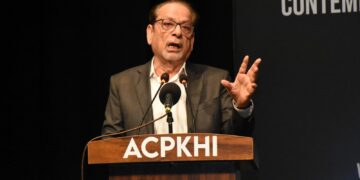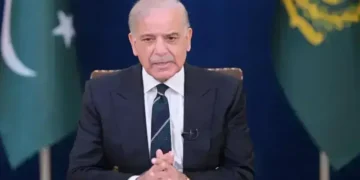



KARACHI – March 04, 2026: Mian Zahid Hussain, President Pakistan Businessmen and Intellectuals Forum & All Karachi Industrial Alliance, Chairman National Business Group Pakistan, Chairman Policy Advisory Board FPCCI, and the former Provincial Minister for Information Technology has commended the Prime Minister’s swift decision to create a high-level contingency committee dedicated to strategizing and ensuring Pakistan’s economic and energy security amid the unprecedented military escalation between the United States, Israel, and Iran. Expressing deep concern over the massive joint air strikes launched since February 28, which have targeted over 2,000 locations including the Iranian supreme leader, military leadership, civilian and nuclear facilities, and Iran’s severe attacks by targeting US air bases in Gulf countries. Mian Zahid Hussain warned that the resulting regional instability threatens to derail Pakistan’s fragile path toward economic recovery.
The veteran business leader noted that the geopolitical fallout has already manifested in severe market volatility, with Brent crude oil prices surging by 15% to approximately $83 per barrel within days. He cautioned that a prolonged conflict could easily push prices beyond the $100 mark, a scenario that would be devastating for Pakistan’s industrial sector and consumer inflation. With nearly 20% of the world’s liquefied natural gas (LNG) and oil passing through the Strait of Hormuz, the effective closure of this maritime chokepoint by Iran and the suspension of insurance coverage for vessels, including manifold fare hikes, are creating a supply chain crisis that endangers the nation’s energy imports.
Mian Zahid Hussain highlighted the particular vulnerability of Pakistan’s foreign exchange reserves, which the State Bank of Pakistan had targeted to reach $18 billion by June. He pointed out that retaliatory strikes on U.S. bases in the UAE and Qatar—where millions of Pakistani expatriates reside—pose a direct threat to the safety of our diaspora and the vital flow of remittances. Furthermore, the domestic unrest following these events, which has tragically resulted in the loss of over 25 lives during protests in Karachi, underscores the urgent need for a balanced and proactive diplomatic stance that prioritizes internal stability and regional peace.
To mitigate these systemic risks, Mian Zahid Hussain proposed that Pakistan lead a diplomatic de-escalation effort through the United Nations and the OIC to prevent a total regional conflagration. He urged the Ministry of Energy to immediately assess and expand strategic fuel reserves while accelerating the implementation of the Green Pakistan Energy Policy 2026 to reduce reliance on imported fuels. Additionally, he emphasized that the government must work closely with Gulf partners to ensure the security of Pakistani workers and maintain the continuity of trade and financial channels. He concluded that in an era where global energy security is being used as a weapon, Pakistan must prioritize self-reliance and strategic foresight to protect its businesses and citizens from external shocks.