Nuclear Satellite: SpaceX Launches World’s First Commercial Nuclear-Powered Payload
The successful launch of the BOHR satellite marks a major step toward using compact nuclear power systems for future deep-space and lunar missions.
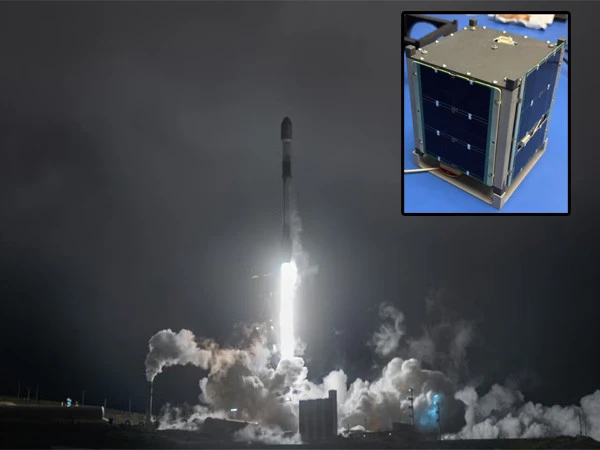
A SpaceX Falcon 9 rocket launches the BOHR nuclear-powered commercial satellite into orbit.
Nuclear Satellite technology reached a significant milestone after SpaceX successfully launched the world’s first commercial satellite carrying a nuclear-powered payload into orbit.
According to international media reports, the satellite was launched aboard a Falcon 9 rocket from Vandenberg Space Force Base as part of the Transporter-17 rideshare mission.
The satellite, named BOHR (Belta Orbital High-Reliability), was developed by City Labs. The mission aims to demonstrate that compact nuclear power systems can safely and efficiently support commercial space missions, particularly where solar energy and conventional batteries are not practical.
Heatwave Diet: Three Expert Tips to Stay Healthy During Hot Weather
The company said the technology could play a vital role in powering future deep-space missions and scientific instruments operating in permanently shadowed regions of the Moon, where sunlight is unavailable for extended periods.
Peter Cabauy, Chief Executive Officer of City Labs, described the mission as a landmark achievement for the commercial space industry.
He said the BOHR mission proves that compact, safe and regulatory-approved nuclear energy systems are now ready for commercial space applications.
Cabauy added that the technology will enable spacecraft and scientific equipment to operate continuously without relying on sunlight or the limited lifespan of batteries, opening new possibilities for long-duration missions to the Moon and deep space.
The successful launch represents an important advance in commercial space technology and could accelerate the development of future missions requiring reliable, long-term power generation beyond Earth’s orbit.