Middle East Conflict Expands as US-Saudi Strikes Hit Iraq, Egypt Port Blast Raises Tensions
Explosions at Egypt’s Damietta LNG port, reported drone attack on a US-linked tanker, and joint US-Saudi strikes in Iraq mark a sharp escalation as regional leaders urge restraint.
Smoke rises from Egypt's Damietta port as regional tensions intensify across the Middle East.
The Middle East conflict intensified on Wednesday as violence spread across multiple countries, with explosions reported at Egypt’s Damietta natural gas loading port, a drone strike targeting a US-owned floating storage tanker, and joint US-Saudi air strikes on Iran-backed paramilitary groups in Iraq.
The escalating crisis has expanded beyond Iran and Israel, threatening critical energy infrastructure, regional security, and global oil markets.
Explosions Reported at Egypt’s Damietta Port
A drone struck a vessel at Egypt’s Damietta port, sparking a fire that spread to another ship, according to three trading sources familiar with the incident.
British maritime security company Ambrey said authorities safely evacuated the crew and quickly brought the fire under control. No group immediately claimed responsibility for the attack.
The incident adds another strategic shipping hub to the growing list of locations affected by the regional conflict.
Gaza Mosque Strike Sparks Outrage as Israel Says Hamas Used Site for Weapons Storage
US and Saudi Arabia Launch Joint Strikes in Iraq
Earlier on Wednesday, the United States and Saudi Arabia carried out coordinated air strikes against Iran-backed paramilitary groups in Iraq.
Washington and Riyadh said the operation responded to recent drone attacks targeting Saudi oil facilities and US military personnel stationed in the region.
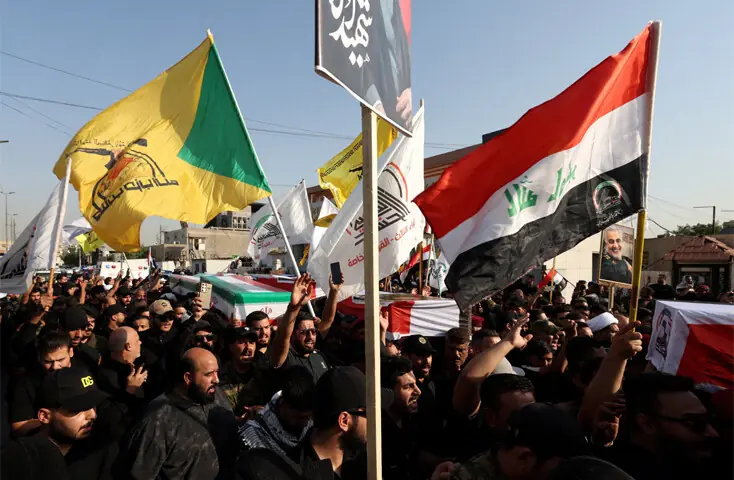
Iraq’s Popular Mobilisation Forces (PMF) reported that at least 20 fighters were killed and 32 others injured during the strikes.
The operation marked the first publicly acknowledged joint military action between the US and Saudi Arabia against Iran-backed groups in Iraq.
Trump Warns Iran of Strong Military Response
US President Donald Trump warned Iran of severe military consequences after Tehran launched attacks on US military positions.
“We’ll be hitting them hard,” Trump told Fox News.
Iran confirmed that it had fired missiles at US bases in Jordan and targeted ships transiting the Strait of Hormuz. Tehran also rejected an Omani proposal aimed at jointly managing the strategic waterway.
Iranian President Masoud Pezeshkian urged citizens to remain united and resist external pressure, describing Iran as a “unique model of resistance.”
Houthis Consider Shipping Fees in Red Sea
Regional sources told Reuters that Yemen’s Houthi movement is considering imposing transit fees on commercial vessels passing through the southern Red Sea.
The proposal follows the group’s declaration of a naval blockade on Saudi Arabia last week and could further disrupt one of the world’s busiest maritime trade routes.
No timeline has been announced for implementing the proposed fees.
Oil Prices Surge Above $90 a Barrel
Growing concerns over energy supplies pushed global oil prices sharply higher.
Brent crude futures climbed more than seven percent, rising above $90 per barrel as investors reacted to the widening conflict and increased risks to shipping lanes in the Strait of Hormuz and the Red Sea.
Pakistan and Egypt Call for Diplomacy
Deputy Prime Minister and Foreign Minister Ishaq Dar discussed the deteriorating regional situation with Egyptian Foreign Minister Badr Abdelatty.
According to Pakistan’s Foreign Office, both leaders stressed the importance of restraint, dialogue, and diplomacy to prevent further escalation.
The ministers also condemned continued Israeli military operations in Gaza and the occupied West Bank, called for an immediate ceasefire, and urged unrestricted humanitarian assistance while emphasizing respect for international law.
Iraq Faces Growing Political Pressure
The strikes have intensified political tensions inside Iraq, where the government maintains relations with both Washington and Tehran.
Prime Minister Ali al-Zaidi urged all parties to avoid further escalation and reaffirmed his government’s commitment to keeping Iraq out of broader regional conflicts.
Meanwhile, Iraq’s presidency condemned the strikes as a violation of the country’s sovereignty, while Kataib Hezbollah demanded stronger government action to protect Iraqi territory.
Regional Crisis Deepens
The latest developments highlight the rapid expansion of the Middle East conflict beyond its original fronts.
With attacks affecting shipping lanes, energy infrastructure, and multiple countries across the region, international concerns continue to grow over the possibility of a wider regional war.