
Makkah Pact How Pakistan’s Defence Diplomacy Is Reshaping Regional Security
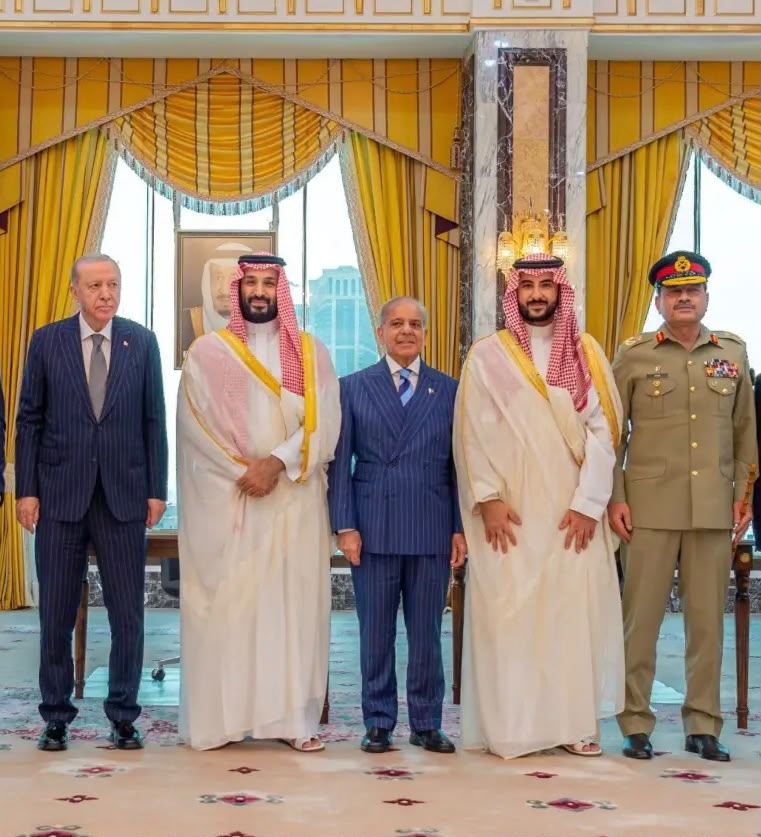
Pakistan, Saudi Arabia and Türkiye strengthen defence cooperation through the Makkah Pact.
The signing of the Makkah Pact by Pakistan, Saudi Arabia and Türkiye on August 7, 2026, marks a significant development in regional security. The three countries bring different strengths to the partnership. Pakistan offers extensive military experience and strategic capabilities. Türkiye contributes a powerful defence industry and advanced military technology. Saudi Arabia brings economic strength, strategic geography and considerable diplomatic influence.
The agreement reportedly establishes a collective-defence principle under which an armed attack on one member would be treated as an attack on all three. That provision gives the pact considerable strategic weight. It also reflects a broader effort by the three countries to deepen defence coordination at a time of heightened regional uncertainty.
For Pakistan, the agreement builds on years of defence cooperation with both Riyadh and Ankara. The country has maintained close military ties with Saudi Arabia for decades. It has also developed an increasingly strong strategic and defence relationship with Türkiye. Bringing those relationships into a trilateral framework could give Islamabad a larger role in the evolving security architecture of the region.
Field Marshal Syed Asim Munir has played a prominent role in Pakistan’s recent defence diplomacy. His engagement with Saudi leadership has coincided with a period of closer security cooperation between Islamabad and Riyadh. The latest development therefore offers another opportunity to assess how Pakistan is using defence relationships to expand its strategic influence.
The Pakistan-Saudi relationship already received a major boost in September 2025, when the two countries signed the Strategic Mutual Defence Agreement. The agreement stated that aggression against one country would be considered aggression against both. Pakistan’s Foreign Office described the pact as defensive and said it was aimed at strengthening regional peace, security and stability.
The Makkah Pact takes that bilateral relationship into a wider trilateral setting. It also adds Türkiye’s military and technological capabilities to the equation. The result is a partnership in which each country brings a distinct strategic advantage.
Pakistan’s contribution extends beyond conventional military strength. Its armed forces have accumulated extensive experience in conventional warfare, counterterrorism and complex security operations. That experience gives Islamabad an important role in any serious discussion about regional defence cooperation.
Türkiye, meanwhile, has developed a major domestic defence industry. Its growing capabilities in drones, electronic warfare, naval systems and other military technologies have increased its importance as a defence partner. Saudi Arabia can complement these capabilities with its financial resources, strategic location and growing ambition to develop an advanced domestic defence sector.
This combination could create opportunities well beyond traditional military cooperation. The three countries could explore joint exercises, intelligence cooperation, counterterrorism coordination, maritime security, cyber defence and defence-industry partnerships.
The economic dimension could prove equally important. Joint ventures and technology partnerships could encourage investment and support the development of indigenous defence capabilities. For Pakistan and Türkiye, closer cooperation with Saudi Arabia could also create new commercial opportunities in advanced technology and defence production.
The choice of Makkah as the venue gives the agreement additional symbolic importance. The city holds profound significance for Muslims worldwide. Bringing three influential Muslim-majority states together there for a major security initiative gives the agreement a powerful diplomatic message.
Yet the pact should not automatically be interpreted as the creation of an anti-country or sectarian military bloc. Pakistan and Saudi Arabia have already described their bilateral defence cooperation as defensive in nature. The practical direction of the trilateral agreement will ultimately depend on its implementation and the details of future cooperation.
For Pakistan, the central challenge will now be to convert political commitments into practical outcomes. Defence agreements gain significance when countries establish mechanisms for regular consultation, training, intelligence sharing, technology cooperation and coordinated responses to security challenges.
This is where Pakistan’s defence diplomacy becomes particularly important. Islamabad has long maintained military relationships with Gulf and other regional states. The latest pact provides an opportunity to transform those relationships into a more structured form of strategic cooperation.
The agreement also has implications for India. New Delhi will closely watch any development that expands Pakistan’s defence partnerships with influential Middle Eastern and Eurasian powers. However, describing India as completely isolated would oversimplify a much more complex diplomatic landscape. India maintains extensive relationships with major powers and Gulf states, while Saudi Arabia itself has longstanding economic and diplomatic ties with New Delhi.
The more important question is therefore not whether one country has become “isolated”. It is whether Pakistan can use the new framework to strengthen its own strategic position without becoming unnecessarily drawn into conflicts beyond its immediate interests.
That balance will matter. A successful partnership must provide security benefits while preserving each member’s freedom to pursue its wider foreign-policy objectives.
The agreement could also strengthen cooperation between Pakistan and Türkiye. Both countries already maintain close political and defence relations. Türkiye’s expanding defence industry could complement Pakistan’s military expertise and create opportunities for technology development and joint production.
Saudi Arabia adds another dimension. Its economic resources and strategic position can help finance ambitious defence and technology projects. Riyadh has also been pursuing greater domestic industrial and technological capacity as part of its broader economic transformation.
Together, the three countries possess a combination of military experience, technology, capital and strategic geography that could make the partnership consequential.
Field Marshal Asim Munir’s role should therefore be assessed within the broader institutional framework of Pakistan’s foreign and defence policy. Strategic agreements rarely result from one individual’s efforts alone. Governments, diplomats, military institutions and political leadership all contribute to building such relationships.
Still, senior military leadership can influence the pace and direction of defence diplomacy. In Pakistan’s case, Asim Munir has remained an important figure in discussions surrounding the country’s security partnerships. His engagement with Saudi Arabia and Türkiye has coincided with a period of deeper strategic interaction.
The real test will come after the signing ceremony.
If Pakistan, Saudi Arabia and Türkiye establish effective mechanisms for cooperation, the Makkah Pact could become a durable component of regional security. If implementation remains limited to political symbolism, its long-term impact will be more modest.
The agreement also arrives during a period when countries across the region are reassessing their security arrangements. Ongoing conflicts, uncertainty over external security guarantees and rapid advances in military technology have encouraged regional powers to diversify their partnerships.
Against that backdrop, the Makkah Pact represents more than another defence agreement. It reflects a wider trend toward greater regional responsibility for security.
For Pakistan, the opportunity is substantial. Islamabad can use the partnership to strengthen defence diplomacy, expand technology cooperation and reinforce its role as a contributor to regional security.
For Saudi Arabia, the agreement can diversify its defence partnerships and deepen cooperation with two countries that possess significant military and technological capabilities.
For Türkiye, the pact offers another platform for expanding its strategic role across the Muslim world while strengthening relationships with Pakistan and Saudi Arabia.
The agreement will ultimately be judged by its results rather than its symbolism. The three countries must now translate political commitments into practical cooperation, credible deterrence and long-term strategic coordination.
The Makkah Pact therefore opens a new chapter in Pakistan’s defence diplomacy. It does not, by itself, create a new regional order. But it gives Pakistan, Saudi Arabia and Türkiye a framework through which they can attempt to shape one.
For Islamabad, the challenge is clear: turn strategic relationships into measurable outcomes while maintaining a responsible and balanced foreign policy. The success of that effort will determine whether the Makkah Pact becomes a historic turning point or simply another entry in the long history of regional defence agreements.
By Dr. Hussain Thebo
Strategic Affairs Analyst