Ishaq Dar Orders Strict Action Against Hoarding and Overpricing of Essential Goods
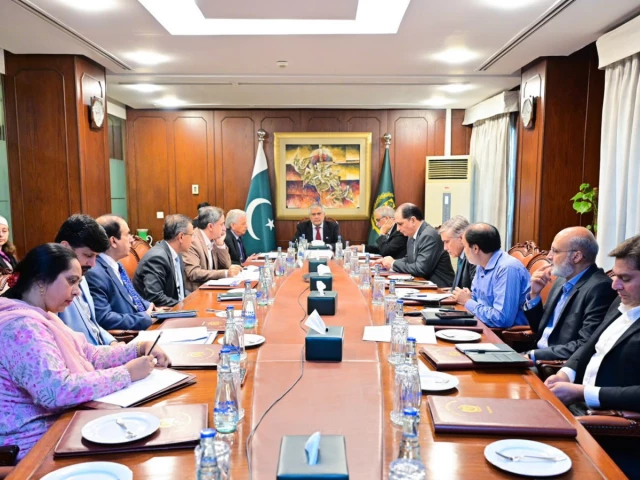
Ishaq Dar directs authorities to act against hoarding and overpricing of essential commodities.
Deputy Prime Minister and Foreign Minister Ishaq Dar has directed authorities to take strict action against hoarding, artificial shortages and overpricing of essential commodities.
According to the Ministry of Foreign Affairs (MoFA), Dar issued the directives while chairing a meeting of the Cabinet Committee on essential commodity stocks, supply arrangements and prices on Friday.
Officials informed the committee that available stocks could meet domestic demand. They also reported no anticipated shortages and signs of price stabilisation, the ministry said.
Dar directed the relevant authorities to monitor supply chains and commodity prices to protect domestic consumers. He stressed that officials must act against anyone creating artificial shortages or charging excessive prices, in line with the prime minister’s directives.
The meeting included the ministers for National Food Security and Research and Climate Change, Special Assistant to the Prime Minister Tariq Bajwa, the commerce secretary, and senior representatives of relevant federal and provincial ministries and departments.
Inflation and Food Prices Remain a Concern
The government’s review comes amid continued pressure on household budgets from rising food and energy costs.
Governor’s Rule Parliament Approves Emergency in KP Amid Opposition Protest
Pakistan’s year-on-year consumer price inflation eased to 10.3 per cent in September from 11.1 per cent in August. However, monthly inflation rose 1.3 per cent during September, while average inflation for the first quarter of the current fiscal year reached 10.2 per cent.
The Sensitive Price Indicator (SPI) also recorded an 11.97 per cent year-on-year increase in the week ending October 8. During that week, the price of a 20-kilogramme bag of wheat flour rose 5.69 per cent to Rs2,851, compared with Rs2,150 a year earlier.
Onion prices more than doubled over the same period, while petrol prices increased 47.52 per cent year-on-year.
Wheat Supply Disruptions Add to Price Pressures
Pakistan’s wheat and flour markets have faced supply disruptions and rising prices despite a substantial harvest. Concerns include hoarding, weak procurement and restrictions on interprovincial trade.
In July, Punjab sought one million tonnes of wheat from federal reserves after purchasing only 480,000 tonnes against its planned procurement target of three million tonnes. Officials also raised concerns about the whereabouts of around four million tonnes of wheat believed to have been hoarded.
Restrictions on wheat and flour supplies from Punjab have also affected Khyber Pakhtunkhwa. The province requires approximately 5.2 million tonnes of wheat annually but produces only 1.2 million tonnes locally.
Flour millers have reported disruptions to deliveries, mill closures and rising prices. In early October, a 20kg bag of coarse flour in Peshawar reached Rs3,300, while fine flour sold for Rs3,120.
Higher flour prices have also affected consumers buying bread. Tandoors raised the price of a 50-gramme roti to Rs30, an increase of Rs10. Some markets also stopped selling single rotis and offered larger sizes instead.
The provincial Food Department said it had distributed more than 417,000 bags of flour at official rates during the preceding week. It was also releasing 3,000 metric tonnes of government wheat from strategic reserves to flour mills daily.
IMF Raises Inflation Forecast
Inflation remains a concern for policymakers. The International Monetary Fund has raised its inflation forecast for Pakistan to 9.9 per cent for the current fiscal year, up from its earlier projection of 8.4 per cent. The IMF maintained its economic growth forecast at 3.5 per cent.
The government’s latest directive aims to strengthen price monitoring and prevent market manipulation. Its impact will depend on enforcement, supply-chain monitoring and the availability of essential goods at affordable prices.