Historic Visit: Bangladeshi Civil Servants Engage with Pakistani Institutions at NIPA Karachi
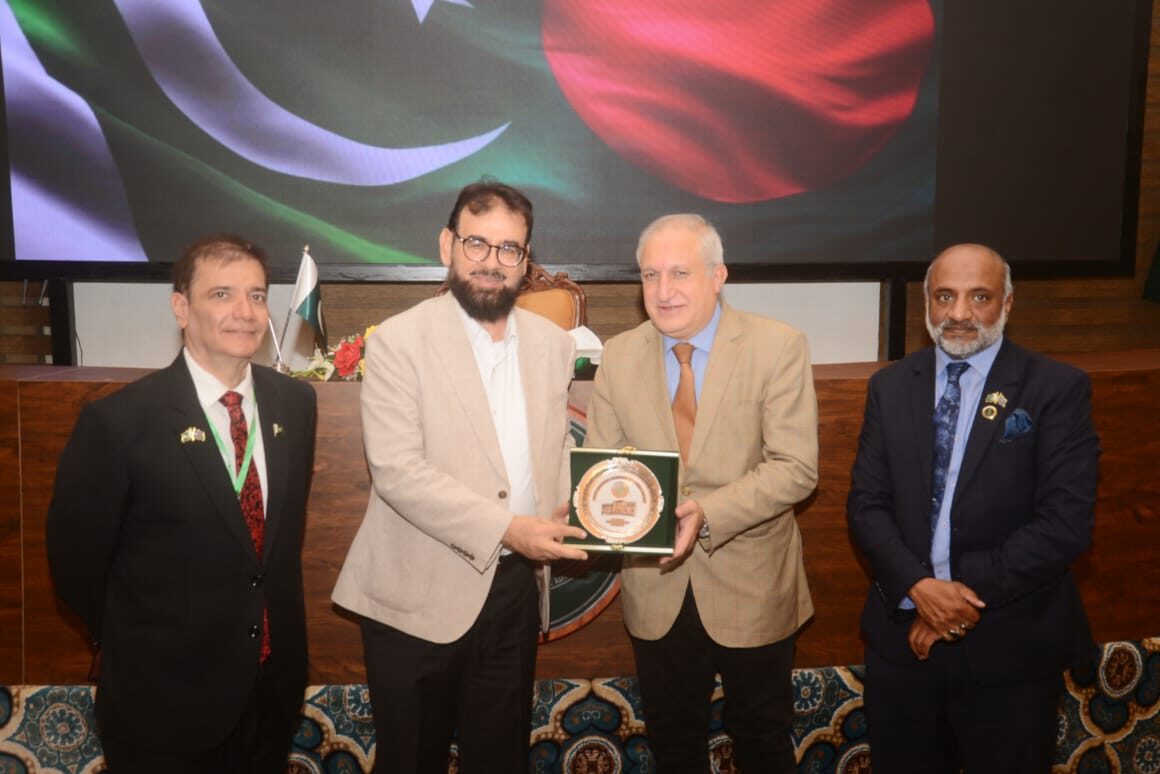
Web Desk May 5, 2026In a landmark development for bilateral relations, the National Institute of Public Administration hosted the second day of engagements for a visiting delegation of senior civil service officers from Bangladesh—marking the first such visit in over 55 years.
In a landmark development for bilateral relations, the National Institute of Public Administration hosted the second day of engagements for a visiting delegation of senior civil service officers from Bangladesh—marking the first such visit in over 55 years.
KATI President Warns of Rising Trade Deficit, Urges Boost in Exports and Curbs on Imports
The 12-member delegation was warmly received by Rector of the National School of Public Policy, Farhan Aziz Khawaja, along with Director General NIPA Karachi, Syed Saif ur Rehman. Both officials reaffirmed Pakistan’s commitment to strengthening institutional collaboration and professional ties with Bangladesh.
During the visit, the delegation attended a series of presentations by prominent Pakistani institutions across education, healthcare, and community development sectors. These included The Citizens Foundation, Sindh Institute of Urology and Transplantation, Indus Hospital, Ziauddin Hospital, and the Orangi Pilot Project. The sessions highlighted innovative service delivery models and citizen-focused initiatives that are contributing to Pakistan’s development landscape.
Addressing the gathering, Farhan Aziz Khawaja emphasized that institutions like NSPP aim not only to train civil servants but to develop principled leaders capable of shaping public discourse and driving societal progress. He underscored the importance of professionalism, integrity, and adherence to constitutional values in public service, regardless of changing political environments.
Reflecting on the presentations, he noted that the participating organizations embodied the spirit of public service and community welfare, demonstrating how visionary leadership and innovation can transform lives. He also paid tribute to Akhtar Hameed Khan, acknowledging his lasting legacy through the Orangi Pilot Project as a model of grassroots empowerment.
The visit is being widely seen as a significant step toward renewed engagement between Pakistan and Bangladesh, signaling a shared commitment to dialogue, mutual learning, and stronger people-to-people connections. Observers believe the initiative could pave the way for enhanced cooperation and a more forward-looking relationship grounded in mutual respect and shared aspirations for regional peace and prosperity.