Finance Minister Reviews SME Financing Initiatives and Progress on SME Connect Portal
Muhammad Aurangzeb calls for wider access to credit, improved digital financing services and stronger support for SME exporters
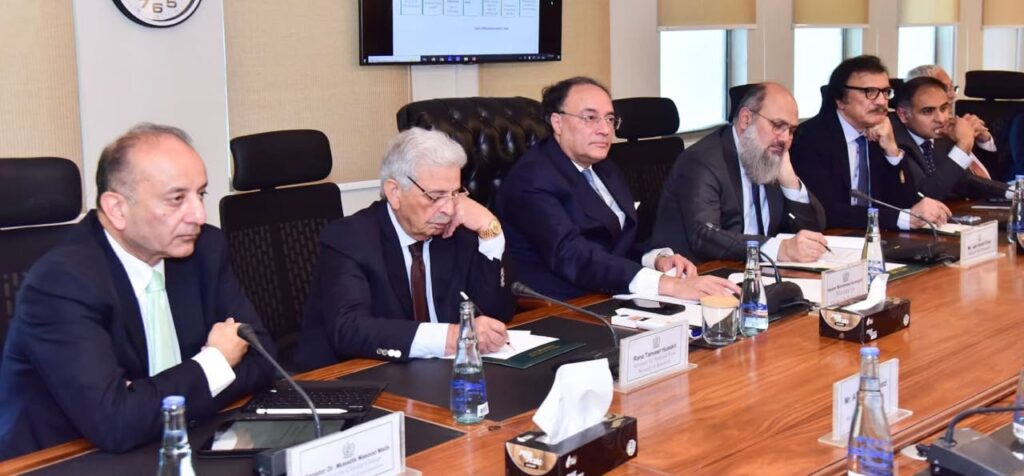
Finance Minister Muhammad Aurangzeb chairs a meeting on SME financing and export support.
Federal Minister for Finance and Revenue Senator Muhammad Aurangzeb chaired a meeting to review measures aimed at expanding financing opportunities for small and medium enterprises (SMEs). Discussions focused on the SME Connect Portal and initiatives to improve access to finance for SME exporters.
The Finance Minister highlighted the importance of SMEs in supporting economic activity, investment and employment. He called for financing to reach more businesses, particularly smaller and export-oriented enterprises.
He said the government’s efforts aligned with the Prime Minister’s vision to strengthen the SME sector and promote export-led growth.
SME Connect Portal Aims to Improve Financing Access
The State Bank of Pakistan (SBP) briefed the meeting on the progress of the SME Connect Portal, launched on November 1, 2026.
The portal provides a central platform where SMEs can register their business profiles, submit financing requirements and track their applications. It also allows monitoring of banks’ responses and application processing timelines.
Aurangzeb said the platform would improve transparency and provide greater visibility into the financing process. He stressed the need for comprehensive reporting on application progress and banks’ responses to support effective monitoring.
Saylani Establishes Mining and Minerals Training Division to Expand Skills Development
Participants described the portal as an important first step towards greater transparency and accountability in SME financing. However, banks will continue to process applications through their existing systems and lending policies.
The Finance Minister also called for better access for businesses with limited digital and financial literacy. He emphasised the role of bank branches in helping such enterprises use the platform.
He further stressed the need to develop a more integrated, end-to-end digital financing experience.
Rs300 Billion Allocated for SME Export Financing
The Export-Import Bank of Pakistan (EXIM Bank) briefed participants on initiatives to support export financing.
The meeting was informed that Rs300 billion had been earmarked exclusively for SMEs under the short-term Export Finance Scheme. The allocation aims to meet working capital requirements and facilitate export activities.
Participants also discussed ways to improve access to long-term financing. They highlighted the importance of supporting investment in export-oriented projects and helping businesses expand their operations.
The meeting emphasised the need to monitor implementation, financing uptake and progress in improving access to credit.
Coordination to Strengthen SME Growth
Aurangzeb called for sustained coordination among relevant institutions to improve monitoring, facilitate timely credit decisions and address practical challenges faced by smaller businesses.
He stressed that the initiatives must translate into better financing access, greater SME participation in exports and increased private-sector activity.
The meeting was attended by Federal Minister for National Food Security and Research Rana Tanveer Hussain; Federal Minister for Commerce Jam Kamal Khan; Federal Minister for Climate Change and Environmental Coordination Dr Musadik Masood Malik; and Adviser to the Prime Minister on Industries and Production Haroon Akhtar Khan.
Minister of State for Finance Bilal Azhar Kiyani, the Governor of the State Bank of Pakistan, the Chairman of the Securities and Exchange Commission of Pakistan, the Chairman of the Pakistan Banks Association and the Chief Executive Officer of SMEDA also attended.
Federal secretaries from relevant divisions and senior representatives of the Finance Division, SBP, SECP and EXIM Bank were present.
The meeting reviewed ongoing institutional efforts to widen SME financing and strengthen the sector’s contribution to investment, employment and export-led economic growth.