Brent Oil Tops $100 as Middle East Conflict Raises Supply Fears
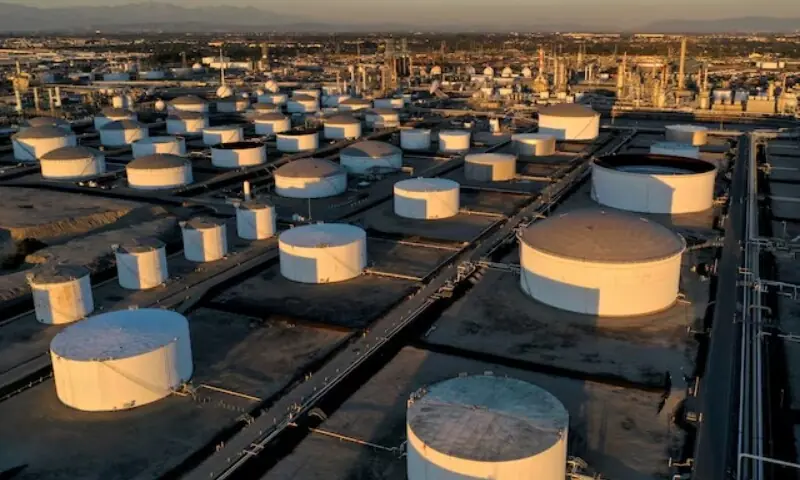
Brent crude prices rise above $100 as Middle East conflict fuels concerns over global oil supplies.
Brent crude oil prices briefly rose above $100 a barrel on Wednesday.
The benchmark reached $100.19 during early trading. It was the first time Brent had crossed the symbolic level since July 24.
By 1:02pm PKT, Brent futures were up $2.01, or 2.05 per cent, at $99.93 a barrel.
Meanwhile, US West Texas Intermediate crude gained $1.49, or 1.60pc, to reach $94.52 a barrel.
Middle East Conflict Drives Oil Prices
Brent prices have climbed about 25 per cent since early last month.
The rise comes as hopes for a lasting settlement to the six-month-old US-Iran conflict continue to fade.
Since the conflict began on February 28, Brent has reached as high as $126.41 a barrel. That peak was recorded on April 30.
Exchange Companies’ Dollar Sales to Banks Rise 30pc in August
The latest escalation has added fresh pressure to oil markets.
Houthi Attacks Raise Supply Risks
Houthi attacks on Saudi energy facilities this week have intensified concerns over regional oil supplies.
Several oil installations were set ablaze during the attacks.
The violence also threatens crude shipments through the Red Sea. The route has become an important alternative for vessels avoiding the Strait of Hormuz.
Oil flows through Hormuz have already been severely reduced since the start of the conflict.
Oil Markets Face Growing Risks
Hamad Hussain, senior climate and commodities economist at Capital Economics, said traders appear to be preparing for a longer conflict.
He said the latest military escalation could disrupt oil flows from the Middle East.
A major concern is the impact on oil tanker movements. Ship-to-ship transfers in the Gulf of Oman have helped keep crude supplies moving.
Any reduction in those transfers could place additional pressure on global oil markets.
Banks Raise Crude Price Forecasts
Several major banks have raised their oil price forecasts in recent days.
Goldman Sachs, Bank of America and HSBC are among the institutions that have increased their projections.
Oil flows through the Strait of Hormuz have also fallen sharply.
Rystad Energy Chief Economist Claudio Galimberti said around 8 million to 9 million barrels per day passed through the strait before fighting resumed on August 30.
That volume was roughly double the previous week’s level.
More recently, however, flows have fallen below 2 million barrels per day.
Energy Market Faces Structural Pressure
Jeffrey Currie, co-chairman at Abaxx Markets, said the latest price increase should not be viewed as temporary.
He argued that the market is dealing with a broader security premium.
According to Currie, the premium could increase further if regional risks continue.
At the same time, some non-Opec producers have increased output.
The United States, Canada and Guyana are among those raising production.
However, the International Energy Agency expects global oil supply to fall this year.
The agency forecast a decline of about 4.3 million barrels per day, equal to roughly 4 per cent.
Global Economy Watches Oil Prices
The renewed rise in crude prices could create wider economic risks.
Higher oil costs can increase transportation and production expenses. They can also add pressure to inflation.
For oil-importing economies, prolonged price increases could further widen import bills.
Therefore, markets will closely monitor developments around the Strait of Hormuz and other key shipping routes.
For now, the $100 Brent threshold has returned as a major focus for investors as Middle East supply risks continue to grow.