
Siemens Opens First University-Based Power Academy at NED University in Karachi
New facility brings industry training, professional certification and practical engineering education together for the first time in Siemens’ global network
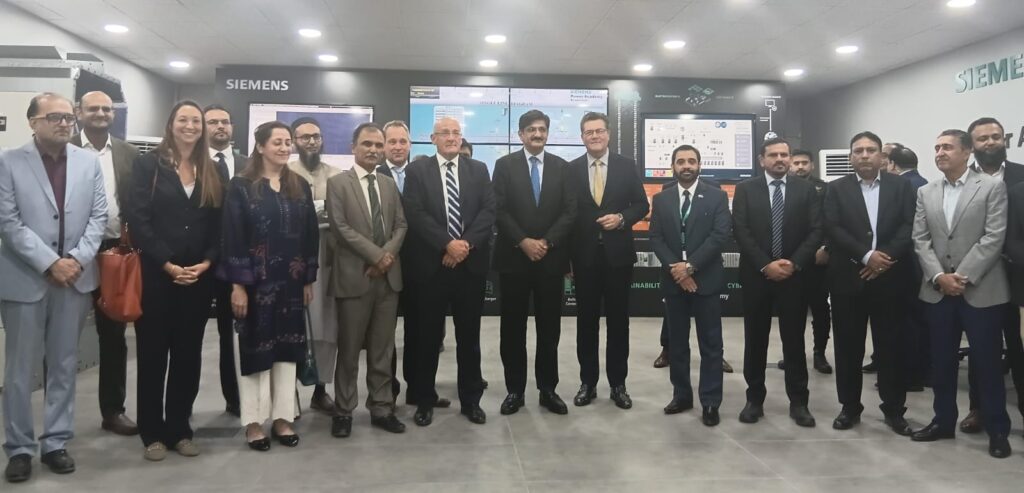
Siemens and NED University inaugurate the first university-based Siemens Power Academy in Karachi.
Siemens has inaugurated its Power Academy at NED University of Engineering and Technology in Karachi, establishing the first Siemens Power Academy globally to operate within an engineering university.
The academy will provide specialised technical training and certification for customers and industry professionals. It will also give university students access to Siemens technology, practical experience and industry-relevant learning during their studies.
Sindh Chief Minister Syed Murad Ali Shah and German Consul General in Karachi Thomas E. Schultze attended the inauguration. Siemens and NED University management, along with industry leaders, also joined the ceremony.
Addressing the event, Murad Ali Shah said the Sindh government prioritised equipping young people with the skills and opportunities needed for the future.
“Partnerships like this can help prepare young engineers to play an active role in Pakistan’s future development,” he said.
Siemens brings global training model to Pakistan
The Siemens Power Academy programme traces its origins to specialist power technology training in Germany in 1998–99. Frankfurt became an early dedicated training location in 2000, followed by Berlin in 2003.
PPDA Calls on FBR to Review Digital Invoicing Rules for Lubricants
Austria helped expand the model internationally around 2005. Today, Siemens delivers Power Academy training in more than 60 countries through a network of academies in over 20 countries.
The network provides certified trainers and programmes tailored to customer requirements. In recent years, Siemens has also expanded the model in the Middle East through academies in the UAE and Egypt.
The Karachi facility introduces a new approach by bringing professional technical training into an engineering university.
Paul Fairweather, Managing Director of Siemens’ Electrification and Automation Business Unit in the Middle East, said the partnership marked a significant development in the company’s global training model.
“What makes Pakistan unique is that we are taking a global Siemens training model into a university for the first time,” he said.
He added that the academy would help develop skills among professionals working on existing infrastructure and future generations of engineers.
Training in power systems and digital technologies
The academy will offer specialised training and certification across several technical areas, including:
- Medium-voltage systems and electrical protection
- Power quality and substation automation
- Digital substations and grid planning
- Power system operations and cybersecurity
Its programmes will also cover AI-enabled technologies, digital twins and connected systems.
Siemens plans to offer standard and customised courses through classroom, virtual, digital and blended learning formats. These programmes will support continuous professional development as energy and infrastructure technologies evolve.
NED students to gain practical industry exposure
The partnership will also integrate Siemens technology and expertise into engineering education at NED University.
Students and faculty will gain access to Siemens equipment, software and technical knowledge. This will allow students to connect classroom learning with practical industry applications.
Prof. Dr. Muhammad Tufail, Vice Chancellor of NED University, said the collaboration would strengthen engineering education and improve graduate employability.
He said access to practical, industry-relevant knowledge would help students apply theoretical concepts to real-world challenges.
Under the partnership, Siemens will provide equipment, software and training support. NED University will contribute the facilities and academic environment.
The collaboration aims to develop technical skills for Pakistan’s changing energy and infrastructure sectors. The inauguration included the formal opening of the academy and a tour of its facilities.