Four NASA Volunteers Complete 378-Day Simulated Mars Mission
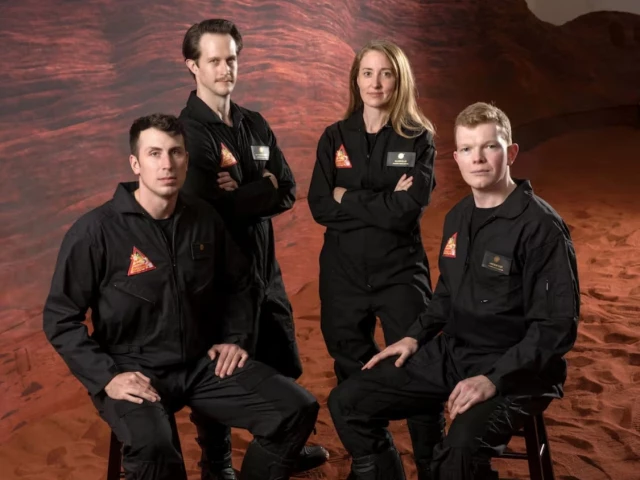
NASA Crew Completes 378-Day Simulated Mars Mission
Four crew members have completed a 378-day simulated mission to Mars, emerging from isolation at NASA’s Johnson Space Center in Houston on Saturday.
The experiment aimed to help NASA understand the physical, psychological and operational challenges astronauts may face during a future journey to the Red Planet.
The crew lived inside a 1,700-square-foot (158-square-metre) 3D-printed habitat as part of NASA’s Crew Health and Performance Exploration Analog (CHAPEA) programme.
“It’s been a hell of a year — analog astronauts living in captivity of our own free will,” said medical officer Ellen Ellis after leaving the habitat with her three crewmates.
Crew Simulates Life on Mars
The four volunteers entered the habitat on October 19, 2025. During their isolation, they performed activities designed to recreate the demands of living on Mars.
Their tasks included growing crops in simulated Martian soil, maintaining the habitat and carrying out mission operations.
Arsenal Beat Liverpool 1-0 at Anfield to Move Three Points Clear
They also communicated with NASA officials through simulated delays. These delays recreated the time required for messages to travel between Earth and Mars.
The crew consisted of mission commander Ross Elder, medical officer Ellen Ellis, science officer Matthew Montgomery and flight engineer James Spicer.
NASA designed the experiment to study how astronauts adapt to limited resources, isolation and demanding routines during long-duration space missions.
NASA Targets Future Human Missions to Mars
NASA has explored Mars through robotic rovers and orbiting spacecraft. The agency also aims to send astronauts to the planet as early as the 2030s.
Before attempting a human mission to Mars, NASA plans to return astronauts to the Moon. The last human lunar landing took place in 1972.
Ellis highlighted the importance of maintaining US leadership in space exploration.
“We have a narrowing window of opportunity to maintain US preeminence in space,” she said.
She also referred to the Trump administration’s plans for a space-related service academy and a lunar base.
“Let’s seize the initiative, lead with science that will benefit our economy and ensure our legacy in space for our children’s children,” Ellis added.
Commander Calls Human Mission to Mars Achievable
Mission commander Ross Elder said a human journey to Mars would involve significant risks. However, he expressed confidence in the long-term goal.
“For Mars, the risks are great,” Elder said.
He added that scientific understanding, strong leadership, creativity and determination could make human exploration of Mars achievable.
The crew’s experience will help NASA identify the resources and support astronauts need during extended missions far from Earth.
NASA Begins Post-Mission Evaluations
The four crew members will now participate in two weeks of post-mission evaluations and debriefings with NASA scientists.
Researchers will examine how the volunteers handled isolation, limited resources, habitat maintenance and communication delays.
Johnson Space Center Director Vanessa Wyche greeted the crew when they emerged from the habitat.
Wyche said the volunteers successfully managed daily operations while maintaining their simulated Martian environment.
She also highlighted their experience with delayed communications, which required patience, careful planning and greater independence.
“These delays require patience, careful planning and greater independence — qualities that will be essential for future astronauts traveling millions of miles from home,” Wyche said.
Second CHAPEA Mission Completed
The latest experiment marked NASA’s second CHAPEA mission. Another four-person crew previously completed a 378-day isolation period between 2023 and 2024.
NASA will use findings from both missions to improve preparations for future lunar and Mars exploration.
The agency hopes the research will help astronauts remain healthy, productive and connected during missions lasting many months or years.
The lessons from CHAPEA will support NASA’s plans for future journeys to the Moon and, eventually, human exploration of Mars.