Ateeq Ur Rehman Calls for Greater Investment in Pakistan’s Maritime Economy
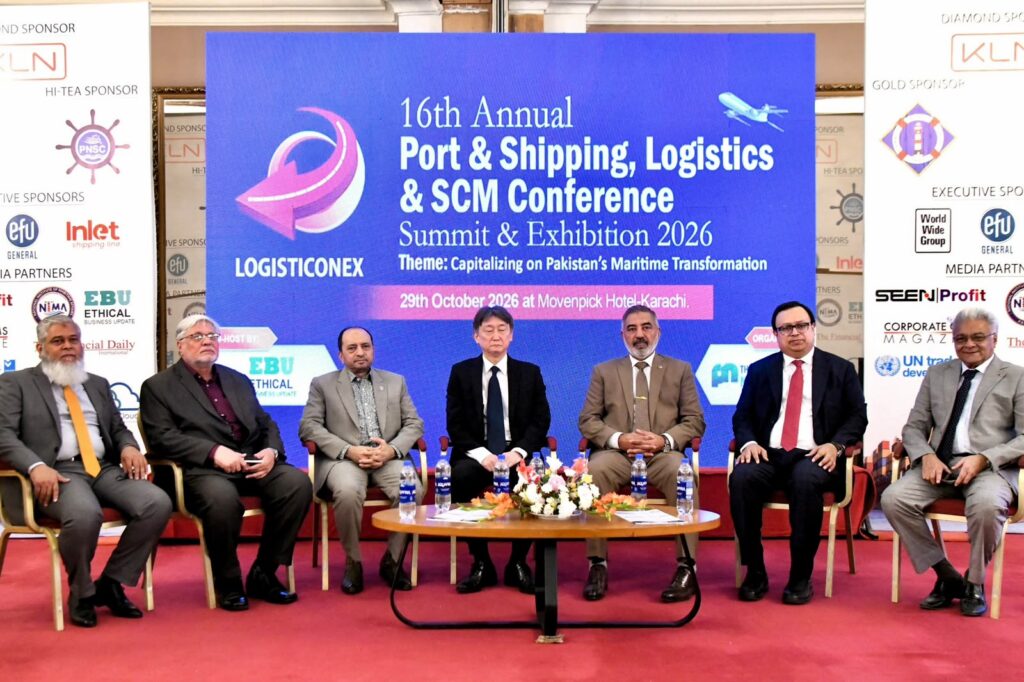
Ateeq Ur Rehman calls for investment and modernisation to strengthen Pakistan’s maritime economy.
Economic and financial analyst Ateeq Ur Rehman has called for greater investment in Pakistan’s maritime sector, saying the maritime economy could help address national economic challenges and strengthen trade competitiveness.
Speaking at the Maritime, Ports, Shipping, Logistics and Supply Chain Management Conference, he stressed the importance of integrating the maritime economy into national economic planning.
Ur Rehman estimated Pakistan’s maritime economy at approximately US$150 billion. He said the private sector should play a more active role through investment in ports, shipping, logistics and supply chain infrastructure.
Private Investment Needed to Modernise Ports
Ur Rehman said Pakistan had made progress in improving port infrastructure and handling capacity. He cited work on dredging, berths, storage facilities, equipment and workforce skills.
However, he stressed that further development would require stronger cooperation with multilateral and bilateral investors.
KATI Renames Community Park After Former President Danish Khan
He called for both local investment and foreign direct investment to support the sector. He also suggested developing mini deep-sea ports if congestion at existing facilities creates a need for additional capacity.
The analyst emphasised the need to connect policymaking with industry requirements. He said Pakistan must create a business-friendly maritime ecosystem to attract investment and improve operational efficiency.
Pakistan Urged to Expand Transshipment Capacity
Ur Rehman said Pakistan should aim to become a transshipment-friendly country and make better use of its strategic maritime position.
He recalled that ports had previously handled container volumes that they now process within a month. He urged stakeholders to set a target of handling half a million containers annually, followed by progressively higher targets.
He also proposed dedicated transshipment facilities or ports. These, he said, should initially prepare to handle between 100,000 and 200,000 twenty-foot equivalent units (TEUs) annually.
Shipping Costs Highlight Need for National Carrier Investment
Ur Rehman warned that rising shipping costs were placing an additional burden on exporters and importers. Businesses, he said, were being forced to absorb a substantial share of these expenses.
He called on Pakistan’s national flag carrier to acquire container and feeder vessels. Such a move could initially support transshipment operations, strengthen connectivity and improve competition in the shipping market.
He said investment in maritime infrastructure, shipping capacity and logistics services could create new business opportunities. It could also help reduce trade costs and improve Pakistan’s position in regional and international supply chains.