Afghanistan Opium Cultivation More Than Quadruples in 2026, UN Says
UNODC reports a sharp rise in poppy-growing areas as poverty pushes farmers back to the crop despite the Taliban’s ban, highlighting the need for sustainable livelihoods.
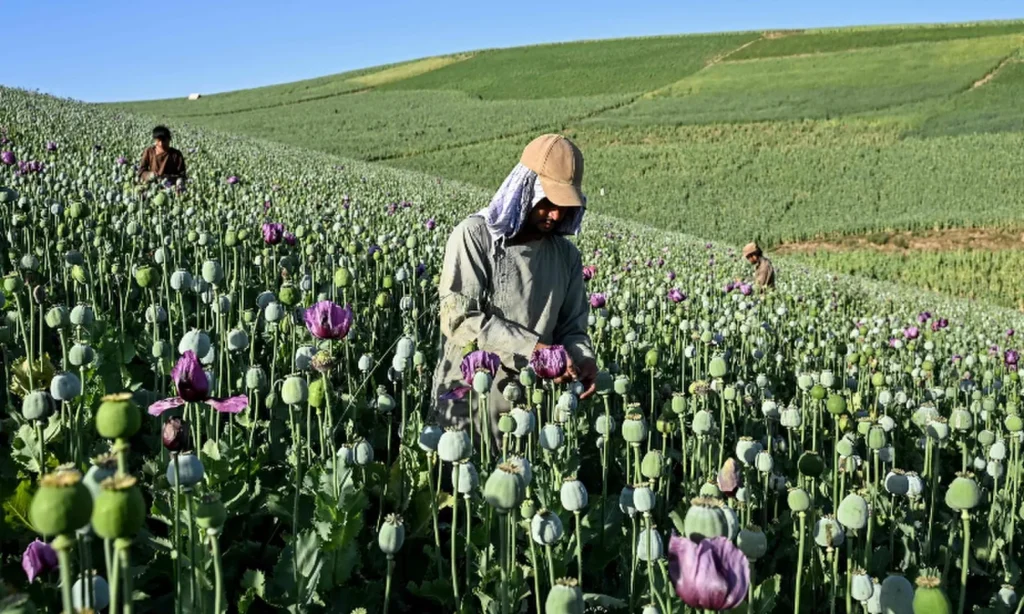
Afghanistan Opium cultivation rises in 2026 as farmers in Badakhshan struggle with poverty and limited alternatives
KABUL: Afghanistan opium cultivation more than quadrupled in 2026 despite a ban imposed by the Taliban authorities, according to the United Nations Office on Drugs and Crime (UNODC). The agency has urged greater support for impoverished farmers who lack viable alternatives to the lucrative crop.
The area under opium poppy cultivation rose to 43,000 hectares in 2026, up from 10,000 hectares in 2025. Estimated opium production also increased fivefold, from 300 tonnes to 1,500 tonnes, UNODC said in a report.
Afghanistan was once the world’s leading opium producer. Following the Taliban’s 2022 ban, cultivation fell sharply, and Myanmar overtook Afghanistan as the largest producer. However, severe poverty and limited income opportunities have encouraged some Afghan farmers to return to poppy cultivation.
“Without opium, we cannot even afford basic food,” Mohammad, a 22-year-old farmer in the northeastern province of Badakhshan, told AFP.
Poverty Drives Farmers Back to Poppy Cultivation
Badakhshan has emerged as Afghanistan’s main opium poppy-growing province, despite the authorities’ restrictions. Farmers say they face threats and the destruction of their crops but struggle to support their families through other agricultural activities.
“The Taliban threaten us and do not allow us to grow opium. We cultivate it with a great deal of fear,” Mohammad told AFP, requesting identification by his first name.
He said opium income represented a path towards financial security, including buying a car, building a house and getting married.
Another farmer, also named Mohammad, said wheat farming did not generate enough income to sustain his family.
“If we grow wheat, it is not enough to sustain our lives. We are forced to grow poppies to earn a good income,” he said.
He added that he would continue growing poppies despite the risk of authorities destroying his crops, describing it as the only way to cover living expenses.
UNODC figures illustrate the economic gap between the two crops. In 2023, one hectare of wheat generated just over $770, compared with around $10,000 from a hectare of poppy, according to the agency.
Cultivation Rises Despite Taliban Crackdown
The Taliban’s 2022 crackdown reduced the cultivated area from more than 200,000 hectares to 10,000 hectares in 2025. Myanmar cultivated 53,000 hectares in 2025, although comparable figures for 2026 were not available in the report.
The Taliban authorities have said they destroyed more than 22,000 hectares of poppy fields. However, UNODC noted that farmers often conceal their plots among cereal crops or behind walls, making detection difficult.
Clashes also illustrate the tensions surrounding enforcement. In May, two people were killed when violence broke out as Afghan security forces moved to destroy poppy fields in Badakhshan.
Opium prices remain well above pre-ban levels, despite a recent decline. UNODC said prices fell from $570 per kilogram in 2025 to $500 in 2026, compared with less than $100 per kilogram before the ban.
“The fourfold increase in opium poppy cultivation shows the difficulty in sustaining decreases in illicit opium cultivation when poor farmers have no alternatives to feed their families,” said UNODC Executive Director Monica Juma.
The Taliban authorities have also acknowledged that a ban alone is not a sustainable long-term solution without alternative livelihoods and economic support for farmers.
Alternative Livelihoods Need Long-Term Investment
Afghanistan faces additional economic and humanitarian pressures, including the return of 6.6 million Afghans since 2023, climate-related disasters, declining aid and banking isolation following the Taliban’s return to power in 2021.
Pakistani Song ‘Alfaaz’ Reaches Spotify’s Global Top 50
With support from Japan and the European Union, UNODC has funded programmes designed to help farmers develop alternative sources of income.
Through the non-governmental organisation Afghan Aid, Zikrullah, a 35-year-old farmer supporting an extended family of 12 in Badakhshan, received improved wheat seeds and fertiliser.
“We’re satisfied, it takes less effort than opium and we’re more at ease,” he told AFP.
Another farmer, Mohammad, 30, said he had converted 80 per cent of his land to wheat. However, he warned that water shortages in recent years had affected crops other than poppy.
UNODC Country Representative for Afghanistan Polleak Ok Serei said sustainable alternatives require more than simply encouraging farmers to switch crops. They also need access to markets, roads, irrigation systems, storage facilities and international trade opportunities.
The agency estimated in 2025 that a comprehensive alternative-livelihood strategy would require approximately $500 million. However, Ok Serei said donors and the Taliban authorities had funded only 10 per cent of that amount.
He pointed to Thailand’s experience, where investment in alternative livelihoods continued for 15 years before eradication efforts began.
UN Calls for International Cooperation
UNODC says the challenge extends beyond Afghanistan because Afghan opium supplies illicit drug markets across several continents.
Afghan opium has been a major source of heroin in the European Union. The European Union Drugs Agency estimated that approximately 850,000 people used opioids in the bloc in 2024.
Ok Serei called for international cooperation and stronger efforts to reduce demand for illicit drugs, both inside and outside Afghanistan.
The latest figures underline the difficulty of sustaining reductions in poppy cultivation when farmers lack reliable income alternatives. UNODC says long-term progress will depend on economic support, agricultural infrastructure, market access and coordinated action against drug demand.