Obama Accuses Trump of Starting Unnecessary War with Iran, Says Tehran Is Strategically Stronger
Iran War Barack Obama criticises Donald Trump’s military campaign and questions its strategic results.
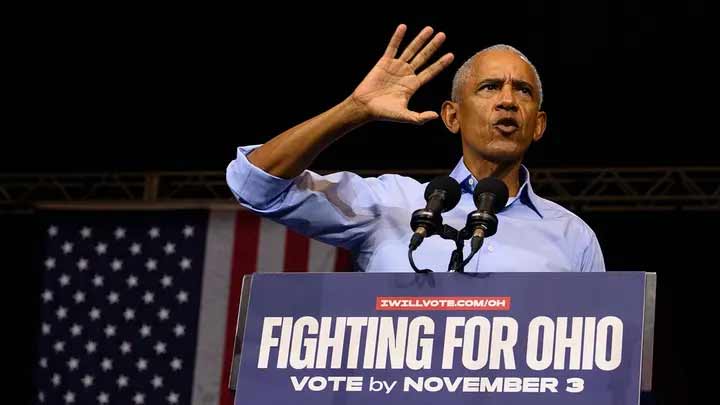
Former US President Barack Obama has criticised President Donald Trump’s military campaign against Iran, arguing that the conflict has strengthened Tehran’s strategic position, cost American lives and increased pressure on household budgets.
Speaking at a campaign rally in Michigan on Saturday, Obama challenged the administration’s claims of victory. He argued that the war had exposed US military bases and allies to attacks while increasing Iran’s ability to disrupt shipping through the strategically important Strait of Hormuz.
“The current president chose to make a series of bad decisions,” Obama said. “The most important of which was he decided to start an unnecessary war nobody asked for and nobody voted for.”
Obama Contrasts War with Nuclear Diplomacy
Obama compared Trump’s military approach with the diplomatic strategy pursued during his presidency. He pointed to the 2015 Iran nuclear agreement, which placed restrictions on Tehran’s nuclear programme in exchange for sanctions relief.
Pakistan Secures Second Place at International Military Drone Competition in Türkiye
Obama argued that diplomacy had addressed nuclear concerns without requiring direct military action.
“I didn’t have to fire a missile. I engaged in diplomacy,” he said.
The former president also questioned the administration’s assessment of the conflict, noting that seven months had passed since the war began and six months since officials declared victory.
“Seven months later, how’s that war going?” Obama asked.
He cited attacks on American military installations and allied facilities as evidence of the continuing costs of the conflict.
Strait of Hormuz Becomes a Strategic Concern
Obama also focused on Iran’s ability to disrupt maritime traffic through the Strait of Hormuz, a vital passage for global oil shipments.
He argued that Tehran had gained greater leverage over the waterway during the conflict, potentially strengthening its position in the region.
“Iran now has veto power over the Strait of Hormuz,” Obama said. “So they’re in a stronger strategic position now than before the war started.”
The narrow waterway is a critical route for international energy supplies. Any disruption can affect oil transportation, global markets and fuel prices in importing countries.
Rising Fuel Prices Add to Political Pressure
Obama blamed the administration’s decision to launch the war for rising oil and diesel prices, as well as broader increases in the cost of living.
Higher energy costs can place additional pressure on households and businesses by increasing transportation, manufacturing and distribution expenses.
His remarks also challenged the administration’s portrayal of the military campaign as a success, raising questions about whether its strategic objectives justified the economic and security consequences.
The criticism adds to the domestic political debate over the war, its impact on American forces and allies, and the wider consequences for regional stability and global energy markets.