Governor’s Rule Parliament Approves Emergency in KP Amid Opposition Protest
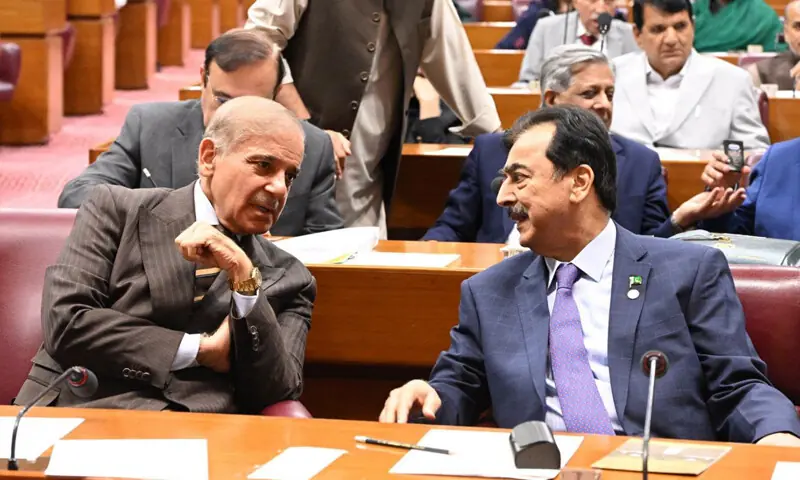
Parliament approves emergency and governor’s rule in Khyber Pakhtunkhwa amid opposition protests.
Parliament’s joint sitting approved the federal government’s imposition of emergency and governor’s rule in Khyber Pakhtunkhwa on Thursday, amid strong opposition protests.
The government justified the measures, imposed in the PTI-governed province on October 11, by accusing the provincial administration of “deliberate disengagement” from counterterrorism efforts. PTI rejected the allegations and vowed to challenge the decisions.
The proceedings followed weeks of tension between the federal government and PTI. The two sides had also held negotiations as the opposition prepared a protest march demanding the release of its jailed founder, Imran Khan.
Opposition lawmakers entered the session carrying placards that read “Emergency na manzoor” (Emergency is unacceptable). Prime Minister Shehbaz Sharif attended part of the proceedings and shook hands with opposition leaders from both houses.
Parliamentary Affairs Minister Tariq Fazal Chaudhry presented the proclamations and resolutions. He also moved a motion under Rule 232 of the Parliament (Joint Sitting) Rules, 1973, to suspend certain sub-rules and allow the resolutions to proceed. Despite loud protests, lawmakers approved the motion by 214 votes to 56.
Dr Fouzia Hameed Highlights Global Migration Challenges, Urges Wider Access to Historical Works
Law Minister Azam Nazeer Tarar explained the constitutional procedure and offered to answer questions from opposition members. After hours of debate, National Assembly Speaker Ayaz Sadiq put both resolutions to a vote. Parliament passed both measures as opposition members continued chanting slogans.
The joint sitting followed separate endorsements of the emergency proclamation by the National Assembly and Senate a day earlier.
Government Defends Emergency and Governor’s Rule
Interior Minister Mohsin Naqvi defended the decision, saying the government had “no option” but to impose emergency and governor’s rule. He said officials had tried until the last moment to avoid the move.
“By God, our hearts did not want to do this,” he said. Naqvi urged opposition parties not to accuse the government of using terrorism for political purposes.
The minister rejected PTI’s claim that the government delegation had abandoned negotiations. He insisted that the Centre had remained engaged until the end and had proposed an emergency in 12 districts of Khyber Pakhtunkhwa.
Naqvi claimed that PTI leader Asad Qaiser had initially agreed to sign an agreement but later sought advice to consult the provincial government.
He acknowledged that PTI representatives at the talks had opposed terrorism. However, he argued that the federal and provincial governments could not follow “two different policies” on counterterrorism.
Naqvi also criticised Chief Minister Sohail Afridi. He alleged that Afridi had not accompanied the army during counterterrorism operations and had expressed concerns about the political consequences of such actions.
Deputy Prime Minister Ishaq Dar described the measures as a difficult decision that followed the Constitution. He recalled previous counterterrorism operations and the National Action Plan, which the government adopted after the 2014 Army Public School attack. Dar argued that Pakistan must address terrorism before political differences.
Dar accused certain individuals within PTI of supporting policies that allowed terrorists to regain ground. However, he stressed that he did not consider the entire party supportive of terrorism.
He also criticised Afridi’s political mobilisation amid security challenges and claimed that governance in KP had collapsed.
PTI Rejects Government’s Allegations
PTI interim chairman Barrister Gohar Ali Khan rejected allegations that the provincial government supported terrorists. He demanded an apology from Prime Minister Shehbaz Sharif.
“The prime minister has alleged that we are supporting terrorists. We are disappointed to hear that. You have to apologise to the entire population of KP and us,” Gohar said.
He warned that portraying a federating unit as supportive of terrorism could damage Pakistan’s international standing.
Gohar called both emergency and governor’s rule unconstitutional. He said PTI would challenge the measures through every available forum. He also disputed the government’s account of the failed negotiations and urged the Centre not to politicise counterterrorism efforts.
National Assembly Opposition Leader Mehmood Khan Achakzai also opposed the measures. He blamed what he called faulty decisions by successive governments for the current security situation.
Achakzai said the opposition remained ready to negotiate ways to strengthen parliament and eliminate terrorism. He also called for meetings between Imran Khan and his family, friends and party workers.
Senate Opposition Leader Allama Raja Nasir Abbas accused the government delegation of derailing negotiations. He argued that both sides needed more time to reach an agreement.
PPP and JUI-F Raise Constitutional Concerns
Pakistan Peoples Party Vice President Sherry Rehman disputed PTI’s account of the October 3 negotiations. She maintained that the government delegation had stayed at the table and remained ready to continue discussions late into the night.
Rehman said President Asif Ali Zardari and PPP Chairman Bilawal Bhutto-Zardari had consistently supported dialogue. However, she stressed that terrorism remained a “red line” for the party.
She also warned that the PPP would not support an emergency that violated the Constitution.
“If you think PPP is going to support any sort of emergency which is against the Constitution, you are wrong,” she said.
Jamiat Ulema-e-Islam-Fazl Senator Kamran Murtaza also questioned the decision. He had earlier submitted a resolution opposing governor’s rule and argued that the government had not provided parliament with documentary evidence to justify the measure.
Murtaza said Article 234 required a report from the KP governor. He contended that parliament had not received a report explaining why governor’s rule was necessary.
Constitutional Provisions
Article 232 of the Constitution requires the president to present an emergency proclamation to both houses of parliament within 10 days if the president issues it on his own initiative.
Under Article 234, the government must place a proclamation imposing governor’s rule before a joint sitting of parliament. The proclamation expires after two months unless parliament extends it, and it cannot remain in force for more than six months.
The decision has intensified political disagreements over provincial governance, constitutional authority and the federal government’s counterterrorism policy in Khyber Pakhtunkhwa.