Finance Minister Says Private Sector Must Lead Pakistan’s Sustainable Growth
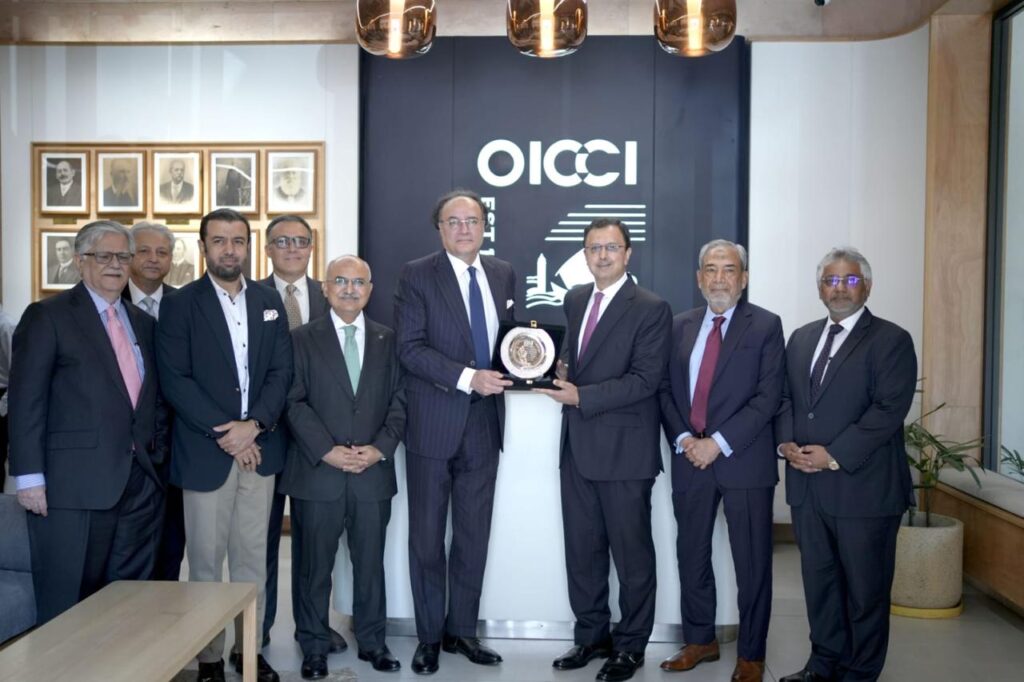
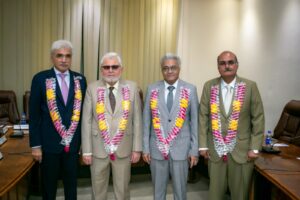
Federal Minister for Finance and Revenue, Senator Muhammad Aurangzeb, in a group photo with the leadership of Overseas Investors Chamber of Commerce and Industry (OICCI).
Federal Minister for Finance and Revenue Senator Muhammad Aurangzeb has said Pakistan’s economy is moving in the right direction, with the private sector expected to lead the next phase of sustainable growth and investment.
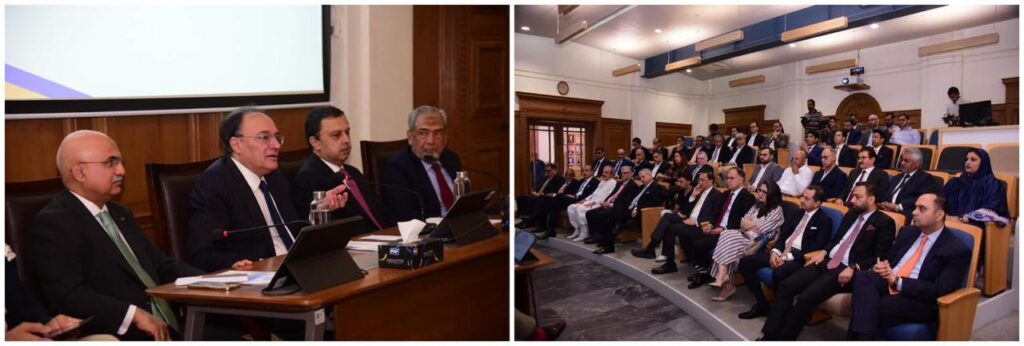
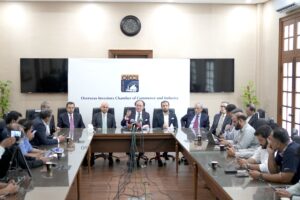
Speaking during a visit to the Overseas Investors Chamber of Commerce and Industry (OICCI) in Karachi, Aurangzeb said the government would focus on policy stability, business facilitation and an enabling investment environment.
The Finance Minister outlined six economic priorities for the government. These include strengthening macroeconomic stability, promoting sustainable growth, continuing structural reforms, shifting from aid to trade and investment, expanding access to finance and preparing Pakistan for the New Economy.
Focus on Sustainable Growth
Aurangzeb said Pakistan had moved from economic contraction and stabilization towards growth. He stressed that the government must now make that growth sustainable.
The minister called for stronger productivity, investment, exports and employment. He also warned against returning to the boom-and-bust cycle that has repeatedly affected Pakistan’s economy.
“The Government’s job is to provide a business-friendly and enabling environment; the private sector has to lead economic growth,” Aurangzeb said.
KGS Students to Be Honored for Gold Medal at Russia Climate Olympiad
He pointed to the PIA transaction as an example of domestic investment capacity. Major Pakistani business groups collectively mobilized close to US$1.2 billion, he said.
Government Seeks More Investment
Aurangzeb said Pakistan is attracting interest across several sectors. These include mining and minerals, technology, agriculture, oil and gas and refinery upgrades.
He also mentioned interest from Turkish investors in electricity distribution companies. Saudi and other international investors have shown interest in various sectors as well.
The minister stressed that foreign investment takes time to materialize. Policy continuity, effective facilitation and a predictable investment environment remain important for investors.
The government will also engage with US EXIM Bank, export credit agencies and international partners to support investment and commercial activity.
Structural Reforms Continue
Aurangzeb said the government has moved its reform agenda from planning towards implementation. The programme covers taxation, energy, state-owned enterprises, privatization and public finance.
Tax digitalization will play a larger role in revenue administration. The minister said the number of tax filers has crossed 5.7 million, compared with about 3.9 million last year.
He said the government would combine revenue mobilization with taxpayer facilitation. Digital tools and data, he added, can improve compliance and strengthen trust in the tax system.
Expanding Access to Finance
The Finance Minister also highlighted efforts to expand financing for SMEs, agriculture, housing and underserved groups.
Under the Prime Minister’s Apna Ghar Programme, around Rs60 billion has already been financed, according to Aurangzeb. Banks have also approved a substantial pipeline of additional financing.
He said the challenge now extends beyond credit availability. The government wants financing to translate into construction, investment, employment and broader economic activity.
Aurangzeb also stressed the need to deepen Pakistan’s capital markets. Stronger markets can channel domestic savings into infrastructure, housing, privatization and private-sector expansion.
Pakistan Eyes the New Economy
The Finance Minister said Pakistan must prepare for the changing global economy. He highlighted digitalization, blockchain, Web 3.0 and emerging technologies as areas with investment and export potential.
The government also wants to shift Pakistan’s international economic relationships from aid towards trade and investment. Aurangzeb said this approach can support innovation, exports and employment.
OICCI representatives shared their views on Pakistan’s business and investment environment during the meeting. They also discussed ways to increase international investor participation and improve business facilitation.
Aurangzeb concluded that the private sector will play a central role in Pakistan’s next phase of economic development. He said businesses must invest, innovate, create jobs and expand productive capacity.
The government, he added, will focus on policy continuity, facilitation and sound economic governance to support sustainable and inclusive growth.