
KCCI leaders renew confidence in Pakistan’s economic future on Independence Day
Zubair Motiwala and Rehan Hanif call for structural reforms, policy consistency and stronger public-private cooperation to sustain economic growth
Businessmen Group (BMG) Chairman Zubair Motiwala and Karachi Chamber of Commerce and Industry (KCCI) President Muhammad Rehan Hanif have reaffirmed the business community’s confidence in Pakistan’s economic potential, calling for unity, reforms and stronger public-private cooperation to build a more competitive economy.
In a joint Independence Day statement, the KCCI leadership said August 14 should not only commemorate Pakistan’s creation but also serve as an opportunity to renew the national commitment to economic strength, self-reliance and greater opportunities for citizens.
They said Pakistan has significant economic potential but needs consistent policies and a business-friendly environment to turn that potential into sustainable growth, employment and prosperity.
KCCI welcomes Makkah defence agreement
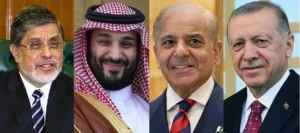
The KCCI leadership welcomed the Makkah Joint Defence Agreement between Pakistan, Saudi Arabia and Türkiye, describing it as a landmark development that reflects Pakistan’s growing strategic importance.
They said the agreement also highlights Pakistan’s role in promoting regional peace, stability and collective security.
Karachi crime rate falls 14% as Sindh police step up action against extortionists
The business leaders pointed to several indicators that they said reflect improving Pakistan’s international standing. These include the country’s reported rise to 101st position in the 2026 Henley Passport Index, compared with 103rd in 2025.
They also highlighted recent improvements in economic indicators as signs of greater resilience.
Pakistan economy shows signs of recovery
According to the statement, Pakistan’s GDP grew by 3.7 percent during FY2025-26.
The KCCI leadership said improving macroeconomic stability could provide a foundation for stronger economic growth if the government maintains reforms and addresses longstanding structural challenges.
They also praised overseas Pakistanis for their contribution to the economy.
Workers’ remittances reached $40.2 billion in calendar year 2025, compared with $34.7 billion in 2024, according to the statement. Remittances during July-May FY2025-26 stood at $38.1 billion.
The business leaders said the figures demonstrate continued confidence among Pakistanis living and working abroad.
IMF and credit rating improvements
Motiwala and Hanif also referred to the International Monetary Fund’s assessment that continued policy implementation had supported economic recovery, strengthened confidence and improved resilience.
They welcomed the reported upgrade by S&P Global of Pakistan’s long-term sovereign credit rating from B- to B.
The KCCI leadership described the upgrade as encouraging for Pakistan’s efforts to improve access to international capital markets and attract investment.
However, they warned that improving economic indicators should not lead to complacency.
Focus on exports and structural reforms
The KCCI leadership said Pakistan now needs to move from economic stabilisation towards sustained, high-quality growth.
They identified export-led growth, industrialisation, productivity, energy-sector reforms, agricultural modernisation and human capital development as key priorities.
They also called for greater investment in technology and infrastructure and urged authorities to broaden the formal economy and tax base.
The business leaders said economic policies should encourage investment and entrepreneurship while reducing the cost of doing business.
They also stressed the need to help Pakistani exporters compete more effectively in international markets.
Business community seeks stronger policy role
The KCCI leadership urged the government to consult the private sector before introducing major economic, taxation, trade and regulatory measures.
They described businesses as partners in nation-building and said the government should create an effective policy environment while the private sector contributes investment, production, exports, employment and tax revenues.
They argued that a stronger institutionalised public-private partnership could help Pakistan unlock its economic potential more quickly.
The KCCI leaders also paid tribute to Pakistan’s founders, armed forces, law-enforcement agencies, public servants, workers, entrepreneurs and citizens for their contributions to the country’s development and security.
They called on political leaders, businesses, professionals, academics, civil society and young people to work together and make economic development a shared national objective.
They said political and economic stability, institutional continuity, the rule of law and consistent policies remain essential for Pakistan to achieve its long-term economic potential.