
Motherhood Pressure Takes Dark Turn in Netflix Docudrama A Child of My Own
The new Netflix docudrama revisits a shocking Mexican kidnapping case while examining the social pressure, grief and identity struggles surrounding motherhood.
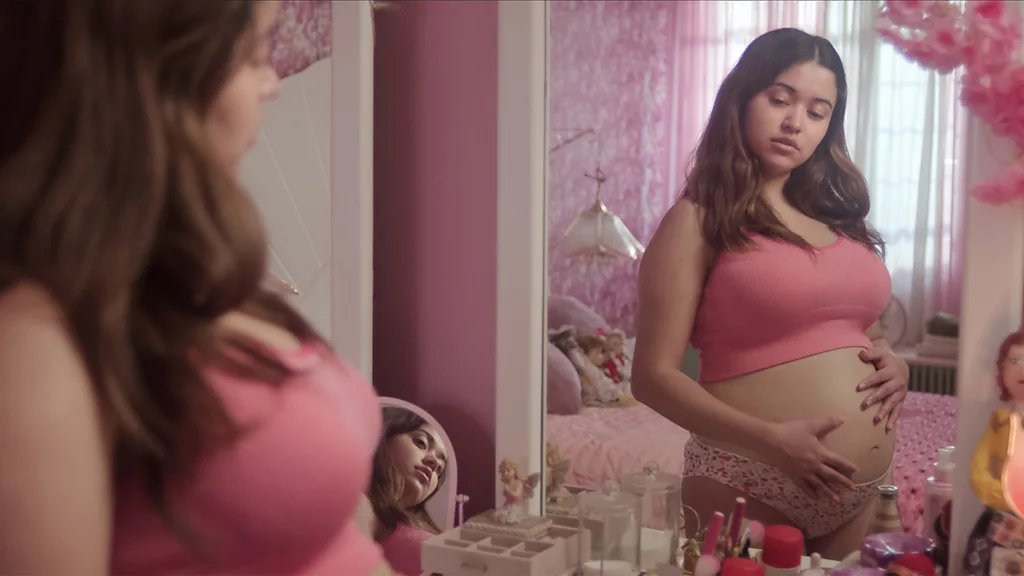
A Child of My Own revisits a Mexican kidnapping case while examining the pressures surrounding motherhood.
LOS ANGELES, August 11, 2026 — Motherhood pressure takes centre stage in A Child of My Own, a new Netflix true-crime docudrama based on a disturbing Mexican kidnapping case.
In June 2009, 26-year-old Eleonor Alejandra Marín Mendoza walked out of a Mexico City hospital carrying a newborn baby.
The child was not hers.
Police arrested Mendoza and her husband, Arturo, hours later at a motel. The baby, Katya Valentina, returned safely to her parents.
Mendoza later received a 13-year prison sentence for kidnapping. Her case attracted widespread attention because she had convinced people around her that she was pregnant.
The film revisits that case while exploring the circumstances that pushed Mendoza deeper into a fabricated pregnancy.
A True Crime Story Told Differently
A Child of My Own does not follow the usual true-crime formula.
Director Maite Alberdi combines dramatic reconstruction with documentary interviews and archival news footage.
The first half presents Mendoza’s version of events through a highly stylised recreation.
Mexican actor Ana Celeste Montalvo portrays Mendoza in these scenes.
The film uses soft lighting and pastel colours. Pink, yellow and blue dominate many scenes.
Anne Hathaway Jokes About Her Baby Bump After Fans Question Its Appearance
The visual style reflects Mendoza’s dream of motherhood and family life.
Alberdi says the fictionalised sections show events through Mendoza’s perspective.
The approach creates a sharp contrast with the documentary material that follows.
The real Mendoza later appears on screen. She discusses her experience in prison and the events that led to the kidnapping.
A Pregnancy Built Around a Lie
Mendoza married at 17 while pregnant. She later suffered several miscarriages.
According to her account, she feared the reaction from her husband and in-laws.
She eventually concealed one of the miscarriages.
Mendoza then created the appearance of a full-term pregnancy.
She changed her diet to gain significant weight and create a visible baby bump.
Her weight reportedly increased from about 54kg to nearly 89kg.
Because she worked in a hospital’s obstetrics and gynaecology department, she also altered parts of her medical records.
Mendoza claimed she had met a pregnant woman named Mayra who agreed to give her baby away.
That account, however, is strongly disputed by the child’s mother.
The Mother Rejects Mendoza’s Account
Mayra Navarro Vega gives a very different version of what happened.
She says she went to a hospital bathroom and returned to discover that her newborn had disappeared.
She denies ever making an agreement with Mendoza.
Mayra also says she never met Mendoza before the incident.
According to her account, Mendoza appeared on her hospital ward while pretending to work as a social worker.
The conflicting accounts form one of the central tensions in the film.
Mayra says she has no sympathy for Mendoza because, in her view, Mendoza showed no compassion when she took her child.
A Case Shaped by Social Expectations
Alberdi uses the case to ask broader questions about motherhood.
She does not excuse the crime. Instead, she examines the pressures that may have contributed to Mendoza’s actions.
The film explores expectations placed on women to become mothers.
Mendoza describes feeling pressure from her husband and his family.
Her husband also wanted a biological child and hoped for a son.
A judge involved in the case recalled testimony about Mendoza being made to feel worthless because she could not have children.
Those expectations became increasingly important in Mendoza’s account of her choices.
She says her desire to become a mother gradually turned into an increasingly complicated series of decisions.
When the Medical System Failed to See the Truth
One of the film’s most striking moments involves a doctor.
In the dramatisation, a doctor detects what appears to be a fetal heartbeat.
He then approves Mendoza’s maternity leave.
The incident reportedly reflects something that happened in real life.
The moment leaves Mendoza questioning whether she could actually be pregnant.
For Alberdi, the episode raises questions about the support available to women experiencing repeated pregnancy loss.
Mendoza had suffered multiple miscarriages but did not receive the mental health support that might have helped her deal with the situation.
The film therefore examines not only criminal responsibility but also whether institutions recognised her psychological distress.
The Psychology Behind the Deception
Forensic psychologist Dr Norma Romero Sanchez assessed Mendoza after her arrest.
She says social expectations played an important role in Mendoza’s fantasy.
Romero Sanchez explains that Mendoza viewed motherhood as essential to her identity.
She also points to cultural pressure across Mexico and Latin America.
Women often face questions about whether they have children, how many they have and why they may not have children.
The psychologist says these expectations can reinforce harmful ideas about what it means to be a woman.
She also believes Mendoza’s personality and difficulty confronting others contributed to the deception.
According to Romero Sanchez, Mendoza showed signs of dissociation and struggled to separate her imagined identity from reality.
Life After Prison
Mendoza completed her 13-year sentence and left prison in 2023.
By then, her understanding of motherhood had changed.
She says she spent years learning to accept that she would not become a mother.
Her final reflections in the documentary move beyond the crime itself.
Mendoza says her desire for a child had partly come from wanting to satisfy other people.
She eventually realised that motherhood did not have to define her entire life.
That change gives A Child of My Own a wider theme beyond its true-crime foundation.
The film asks how much pressure society can place on a person before personal expectations become impossible to escape.
It also raises difficult questions about responsibility, grief, mental health and the cultural definition of womanhood.