
Insect Wisdom: Five Decision-Making Lessons From Ants, Bees and Flies
From ants finding efficient routes to flies weighing risk and reward, the insect world offers surprising lessons about making better decisions.
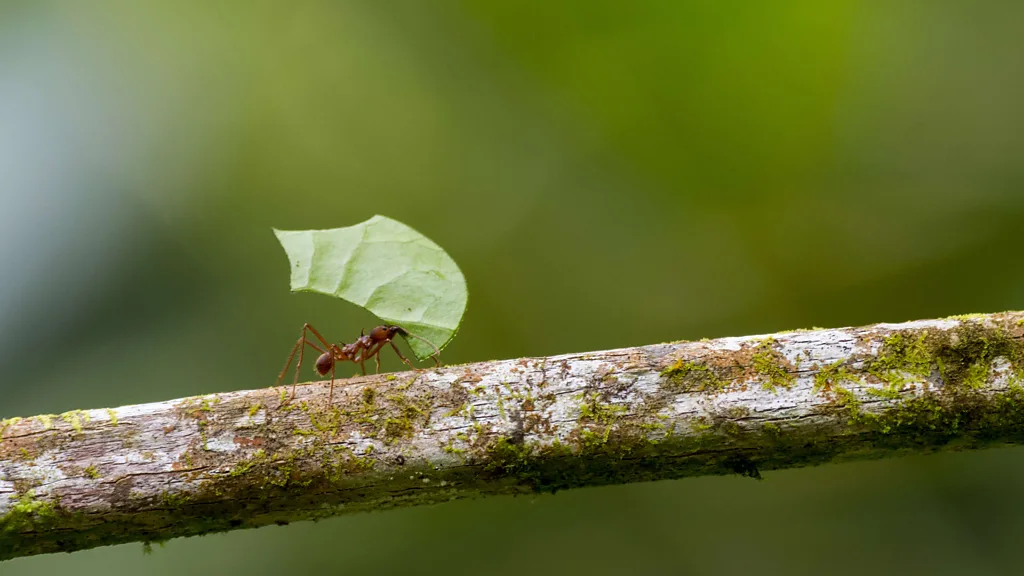
Ants, bees and other insects offer surprising lessons about decision-making and collective intelligence.
Humans often think careful reasoning sets us apart from other animals. Yet even the most thoughtful decisions can go wrong.
Insects may have tiny brains, but their behaviour reveals sophisticated ways to solve problems. Researchers have studied these strategies for years. Some have even turned them into tools for human industries.
Insect wisdom can teach us how groups reach decisions, how individuals handle uncertainty and why different personalities can improve collective thinking.
Here are five lessons from the insect world that could help us make better choices.
Ants Show the Power of Collective Decisions
Choosing the best option can become difficult when too many choices compete for our attention. Psychologists call this problem choice overload.
Ant colonies face a similar challenge when they search for food.
Scout ants leave their nests and explore different routes. They leave pheromone trails as they travel. Other ants can then follow these trails.
The most successful ants return quickly with food. Their journeys reinforce the trails they used.
Over time, more ants follow the strongest routes. The pheromone concentration increases along those paths. Less efficient routes gradually disappear.
The colony eventually identifies an efficient route without any single ant making the decision.
Mövenpick Hotel Karachi Launches Grand Pan Asian Food Festival
Researchers have turned this behaviour into the ant colony optimisation method. The approach has helped improve scheduling, transport, telecommunications and logistics.
The lesson is simple. A group can solve complex problems without relying on one central decision-maker.
Honeybees Offer a Lesson in Democracy
Honeybees also use collective decision-making when they search for a new nesting site.
Scout bees explore different locations. They then return to the colony and perform their famous waggle dance.
The dance communicates information about a potential site. Bees can signal its location, quality and suitability.
Better locations receive stronger support. Other bees then investigate the proposed sites themselves.
The process continues until enough bees support one location.
The colony then moves towards the preferred site.
This system resembles a form of collective voting. Each bee contributes information before the group reaches a final decision.
The lesson for humans is clear. Good decisions can improve when people explore different options and independently verify information.
Locusts Show Why Neutrality Matters
Groups can become trapped when people strongly support opposing choices.
Research on marching locusts suggests that neutrality can help break such deadlocks.
Young locusts cannot fly, so they move together on foot. Researchers observed groups repeatedly changing direction.
The turning point came when some locusts stopped moving. These neutral individuals created a temporary pause in the group’s behaviour.
Christian Yates, a professor of mathematical biology at the University of Bath, later tested a similar idea with human participants.
Participants could choose between two options or abstain.
The groups reached a clear consensus faster when people could remain neutral.
Neutrality reduced the number of active opinions. As a result, small changes could influence the wider group more easily.
The lesson is useful in human debates. Sometimes stepping back from a decision can help everyone reassess the situation.
Cockroaches Reveal the Value of Personality
Cockroaches may not have the best reputation, but research suggests they have individual personalities.
Some cockroaches behave boldly. Others remain cautious and prefer to stay hidden.
Researchers used computer simulations to study how these differences affect group decisions.
Groups with identical personalities did not behave like real cockroach colonies.
Groups with greater personality differences made decisions more quickly.
Too many bold individuals can make a group move constantly. Too many cautious individuals can cause the group to settle too quickly.
A mixture of personalities creates a better balance.
Researchers say behavioural diversity can strengthen collective intelligence.
The human lesson is equally important. Teams do not always need people who think alike. Different personalities can produce better discussions and faster solutions.
Fruit Flies Demonstrate Self-Awareness
Fruit flies provide another surprising lesson about decision-making.
Researchers have found that flies combine information from their surroundings with their internal state.
When flies encounter two similar smells, they often take longer to choose between them.
The hesitation suggests that they compare competing options before acting.
Flies can also weigh rewards against negative experiences.
For example, they may accept an unpleasant taste when the food provides important nutrition.
Their choices can also change when they feel hungry or stressed.
A stressed fly may avoid an uncertain option. A healthier fly may take the risk and investigate it.
Humans face similar influences.
Our emotions, stress levels and past experiences can affect the choices we make. Those influences do not always lead us astray. Sometimes they provide useful information about risk and reward.
The key is to recognise how our internal state affects our judgement.
What Insects Can Teach Us About Better Choices
These examples reveal that decision-making does not always require complex reasoning.
Ants show the strength of collective problem-solving. Honeybees demonstrate the value of independent information.
Locusts show how neutrality can break a deadlock. Cockroaches reveal the benefits of behavioural diversity.
Fruit flies demonstrate how internal states can influence judgement.
Together, these insects offer a broader lesson.
Better decisions often emerge when we explore different options, listen to others and remain willing to change direction.
The insect world may be small, but its lessons about decision-making are surprisingly large.