Fridge-Free Vaccines Show Promise in First Human Trial, UK Scientists Say
A room-temperature vaccine successfully produced a strong immune response, raising hopes of reducing global vaccine waste and improving access in remote regions.
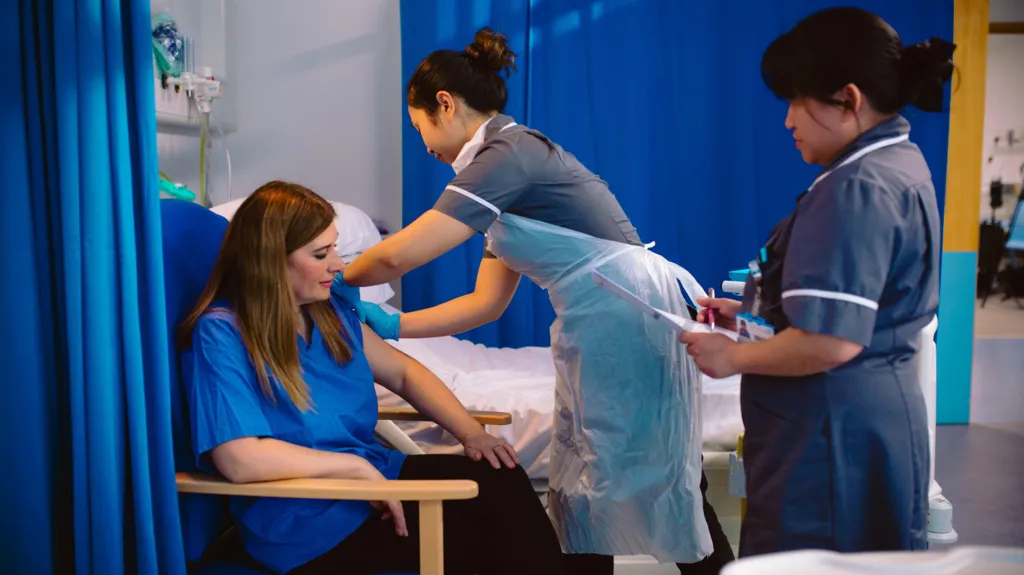
Scientists test a room-temperature vaccine that could transform global immunisation programmes.
LONDON, Aug. 6: Fridge-Free Vaccines have successfully completed their first human clinical trial, marking a major step toward making immunisation easier to deliver in remote and low-resource areas.
Iranian Footballers Become Australian Citizens After Defying Tehran
Scientists in the United Kingdom said the experimental approach produced an immune response comparable to a conventional refrigerated vaccine while remaining safe and well tolerated. Researchers believe the technology could reduce vaccine waste and improve access to life-saving immunisations around the world.
Fridge-Free Vaccines
The early-stage study involved 60 healthy volunteers and tested a tetanus-diphtheria vaccine developed by biotechnology company Stablepharma.
Instead of storing the vaccine as a refrigerated liquid, researchers converted it into a dry powder using a natural sugar called trehalose. The vaccine remained stable at room temperature for one year before being mixed with water and injected.
Technology Inspired by Nature
The new method was inspired by resurrection plants, which can survive long periods of drought by producing large amounts of trehalose. The sugar protects the plants’ cells until water becomes available again.
Researchers applied the same principle to preserve the vaccine’s active ingredients without refrigeration.
Professor Saul Faust, Director of the National Institute for Health and Care Research (NIHR) Clinical Research Facility in Southampton, said the vaccine generated an immune response equivalent to the standard version.
He said the technology could remove dependence on the cold chain, reduce wastage and expand vaccine access worldwide.
Cold Chain Remains a Global Challenge
Most vaccines must remain refrigerated from the factory to the patient. This temperature-controlled process, known as the cold chain, is difficult to maintain in remote communities, conflict zones and developing countries where electricity and refrigeration are unreliable.
The World Health Organization (WHO) estimates that about half of all vaccines are wasted globally because of storage failures, transport problems, expired doses and damaged supplies.
Researchers say a stable room-temperature vaccine could significantly reduce those losses.
Larger Clinical Trial Planned
Scientists plan to launch a larger trial involving 160 volunteers in the coming months.
Because the original tetanus-diphtheria vaccine is already approved, researchers only need to demonstrate that the new storage method remains safe and effective before seeking wider regulatory approval.
Laboratory data also suggest the dried vaccine remains stable after repeated temperature changes between -20°C and 40°C, making it suitable for transport through varying climates.
Experts See Major Global Health Benefits
Health experts welcomed the findings but said further research is needed.
Professor Tuck Seng Wong, Director of the UK–Southeast Asia Vaccine Manufacturing Research Hub, described the results as an important scientific breakthrough. However, he said larger and more diverse clinical studies would be needed before widespread adoption.
UNICEF Associate Director of Immunization Ephrem Tekle Lemango said reliable fridge-free vaccines could help protect millions more children by making vaccination programmes easier to deliver.
Stablepharma founder Dr Bruce Roser said the innovation has the potential to transform global immunisation by making vaccines more accessible, sustainable and reliable, regardless of where people live.
The findings have been published in eClinicalMedicine, part of The Lancet journal group.