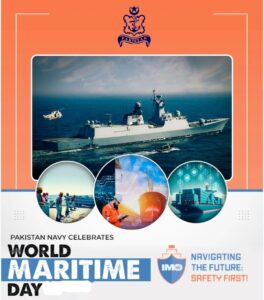
Pakistan Navy Remains Always Ready to Defend the Nation
From the 1965 Dwarka operation to modern maritime exercises, Pakistan’s naval forces continue to emphasise vigilance, training and national service

Pakistan Navy personnel stand ready during a maritime security operation.
By Sanobar Nadir
Karachi: The Pakistan Navy continues to uphold its tradition of vigilance, discipline and service as it safeguards the country’s maritime interests. For its sailors, faith and duty remain closely connected. Their commitment has shaped the force through moments of conflict, peace and national emergencies.
Remembering the 1965 Operation
September 8 is observed as a day to remember the courage of Pakistan’s naval personnel during the 1965 war. The date recalls the service and sacrifices of sailors who stood ready to protect the country’s waters.
On the night of September 7–8, 1965, a Pakistan Navy task group moved towards the Indian coastal town of Dwarka. The group included PNS Babur, PNS Khyber, PNS Badr, PNS Jahangir, PNS Alamgir, PNS Shah Jahan and PNS Tipu Sultan.
The operation was aimed at Indian coastal installations, including a radar facility. The ships approached under cover of darkness and carried out a bombardment of the target area.
Zakir Mastana Continues to Strengthen His Place in Pakistan’s Entertainment Scene
The operation later became known as Operation Somnath. It became an important part of Pakistan Navy history and demonstrated the importance of planning, training and coordination.
Strength Beyond Numbers
Naval strength is not measured only by the number of ships or weapons a country possesses. Instead, training, leadership and the ability of personnel to operate under pressure are equally important.
In 1965, Pakistan’s naval force faced a challenging strategic environment. Nevertheless, its personnel demonstrated confidence and discipline during the operation.
Moreover, the experience highlighted a broader lesson. Military capability depends not only on equipment but also on the people operating it.
Preparing for Modern Threats
Maritime security has changed significantly since 1965. Today, naval forces face a much wider range of threats.
These include long-range missiles, unmanned aircraft, cyber threats and electronic warfare. Satellite surveillance has also transformed the way maritime operations are conducted.
Therefore, modern naval readiness requires continuous training. It also demands close coordination between ships, submarines, aircraft, marines and specialised forces.
SEASPARK-2026 Tests Naval Readiness
This focus on preparedness was reflected in SEASPARK-2026, a major maritime exercise held in Karachi.
The exercise brought together Pakistan Navy ships, submarines and aircraft. It also involved unmanned systems, marines and special forces.
The drills tested the ability of different units to operate together in a changing security environment. In addition, they focused on communication, decision-making and coordinated responses.
SEASPARK-2026 was therefore more than a display of military equipment. It provided an opportunity to assess operational procedures and identify areas for improvement.
Such exercises are important because modern conflicts can develop across several domains at once. Naval forces must be prepared to respond quickly while maintaining effective coordination.
Protecting Pakistan’s Maritime Interests
Pakistan’s relationship with the sea extends far beyond national defence. Much of the country’s trade and energy supply depends on maritime routes.
Ports and shipping lanes therefore have major economic importance. Keeping these routes secure is essential for the country’s commercial activity.
For this reason, maritime security remains a national priority. The Navy’s responsibilities include safeguarding the coastline and supporting the security of vital sea routes.
Readiness During Times of Tension
Pakistan’s maritime preparedness also becomes particularly important during periods of regional tension.
During Marka-e-Haq, the Pakistan Navy was presented as maintaining vigilance across the country’s maritime domain. Naval platforms, aircraft and other assets were involved in surveillance and defensive operations.
The episode highlighted the importance of maintaining readiness in a modern battlespace. Today, maritime operations involve much more than traditional surface warfare.
Drones, satellites, electronic systems and information networks have become important parts of naval strategy. Consequently, constant training has become essential for maintaining an effective response.
A Role Beyond Warfare
The Pakistan Navy’s role extends beyond combat operations. It also contributes to maritime security and international cooperation.
Pakistan Navy ships have participated in multinational exercises and maritime security missions. These activities address challenges such as piracy, terrorism, trafficking and threats to commercial shipping.
Furthermore, Pakistani naval personnel have taken part in anti-piracy and maritime security patrols beyond the country’s territorial waters.
These missions support safer international sea routes. They also demonstrate Pakistan’s contribution to broader maritime stability.
Service During Natural Disasters
Naval personnel also respond when communities face natural disasters and humanitarian emergencies.
During storms, floods and other crises, the Navy can provide transportation, rescue support and relief assistance. Its helicopters and other assets can also support search-and-rescue operations.
A warship can carry relief supplies as well as military equipment. Similarly, aircraft used for surveillance can assist in locating people in distress.
Therefore, naval service is not limited to times of war. It also involves helping citizens during difficult moments.
Honouring Sailors and Veterans
September 8 provides an opportunity to remember the sailors who served during the 1965 war. It also honours veterans and personnel who made sacrifices for the country.
At the same time, the day recognises those serving in the Navy today. Many sailors remain away from their families for long periods while carrying out their duties at sea.
Their work often takes place away from public attention. Yet their readiness remains an important part of Pakistan’s maritime security.
A Tradition of Vigilance
The challenges facing naval forces may continue to evolve. Technology will advance, and new forms of warfare will emerge.
However, the fundamental principles of naval service remain unchanged. Discipline, courage, training and commitment continue to form the foundation of maritime readiness.
The sea presents challenges in every season. It can test personnel through darkness, storms and uncertainty.
Yet the Pakistan Navy continues to maintain its watch. Its mission remains focused on protecting the country, supporting its people and remaining prepared for emerging threats.